Flex Office - What It Is and Why Companies Choose Flexible Offices



A traditional 5–7-year lease increasingly fails to fit companies whose teams grow non-linearly and whose working model changes every quarter. Flex offices were created precisely to lift the burden of being simultaneously tenant, administrator, and provider of amenities off the company's shoulders.
In short:
A flex office is a ready-made space rented on flexible terms, at a single all-inclusive rate.
The contract starts at one month - not three years.
It works for freelancers, startups, and within corporations as a satellite location.
Price is driven by: location, format, number of people, contract length.
What is a flex office and how does it work?
A flex office (flexible office) is a flexible office space rented on an "everything in one price" model - with a short commitment period, full equipment, and complete operator support. The rate covers rent, utilities, internet, reception, cleaning, furniture, meeting rooms, and common areas. Scale is matched to your current headcount, not to a forecast from three years ago.
In practice, it looks like this: instead of signing a multi-year contract, designing a fit-out, and buying furniture, you move the team into a ready-made office within a few days. The operator handles the entire backstage - building maintenance, IT, coffee, printers, mail. Your role comes down to working.
The strongest feature is scalability. Your team grows from 6 to 12 people - you change rooms in the same location. The structure shrinks - you reduce space without penalties.
Types of flex offices - from a hot desk to a private room
What a flex office means in practice depends on the format you choose. Operators typically offer four forms.
Hot desk - access to any available spot in the coworking space, on a membership model. It works for mobile work and for people who do not need a permanent workstation every day.
Dedicated desk - a permanent workstation in the open space, assigned exclusively to you.
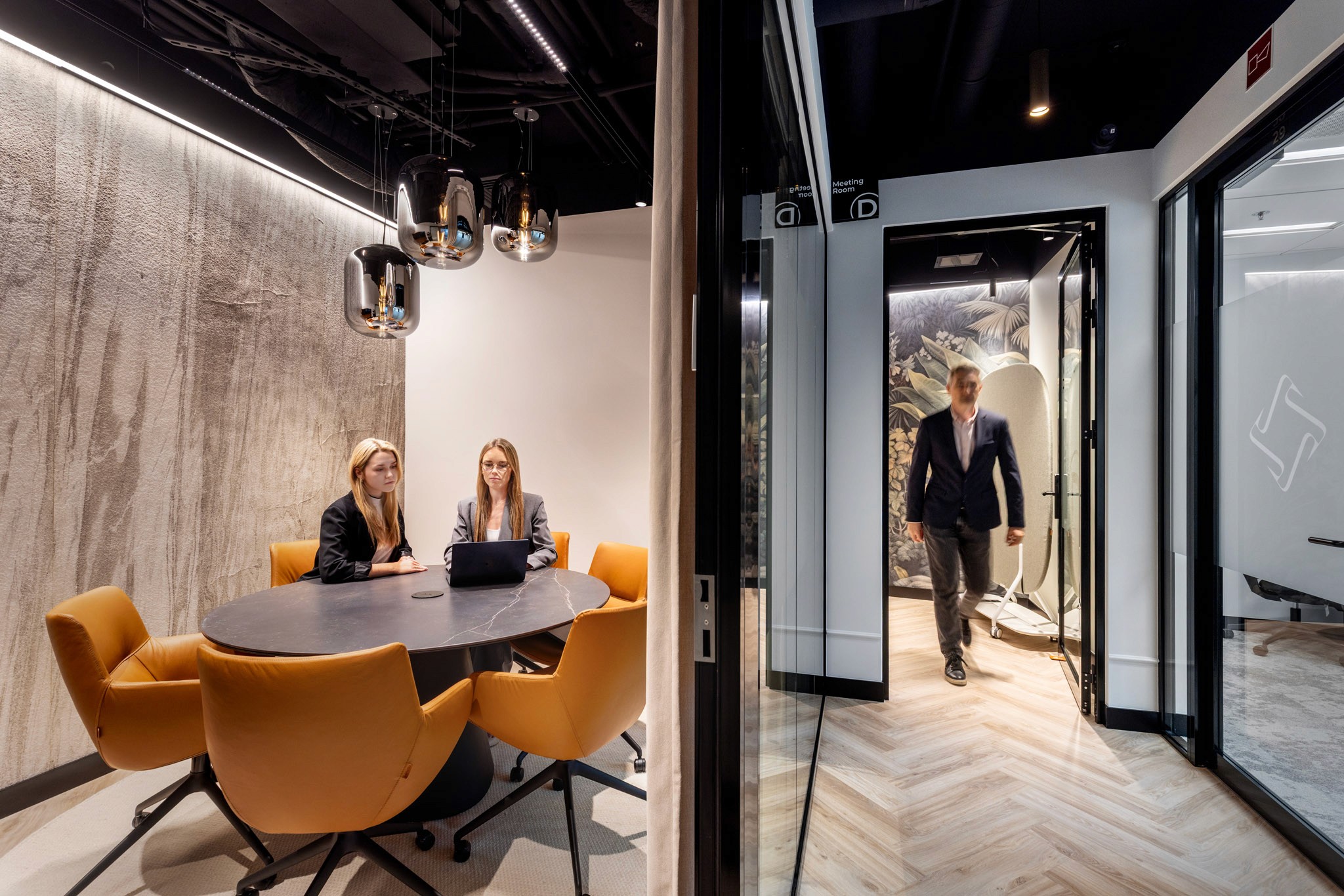
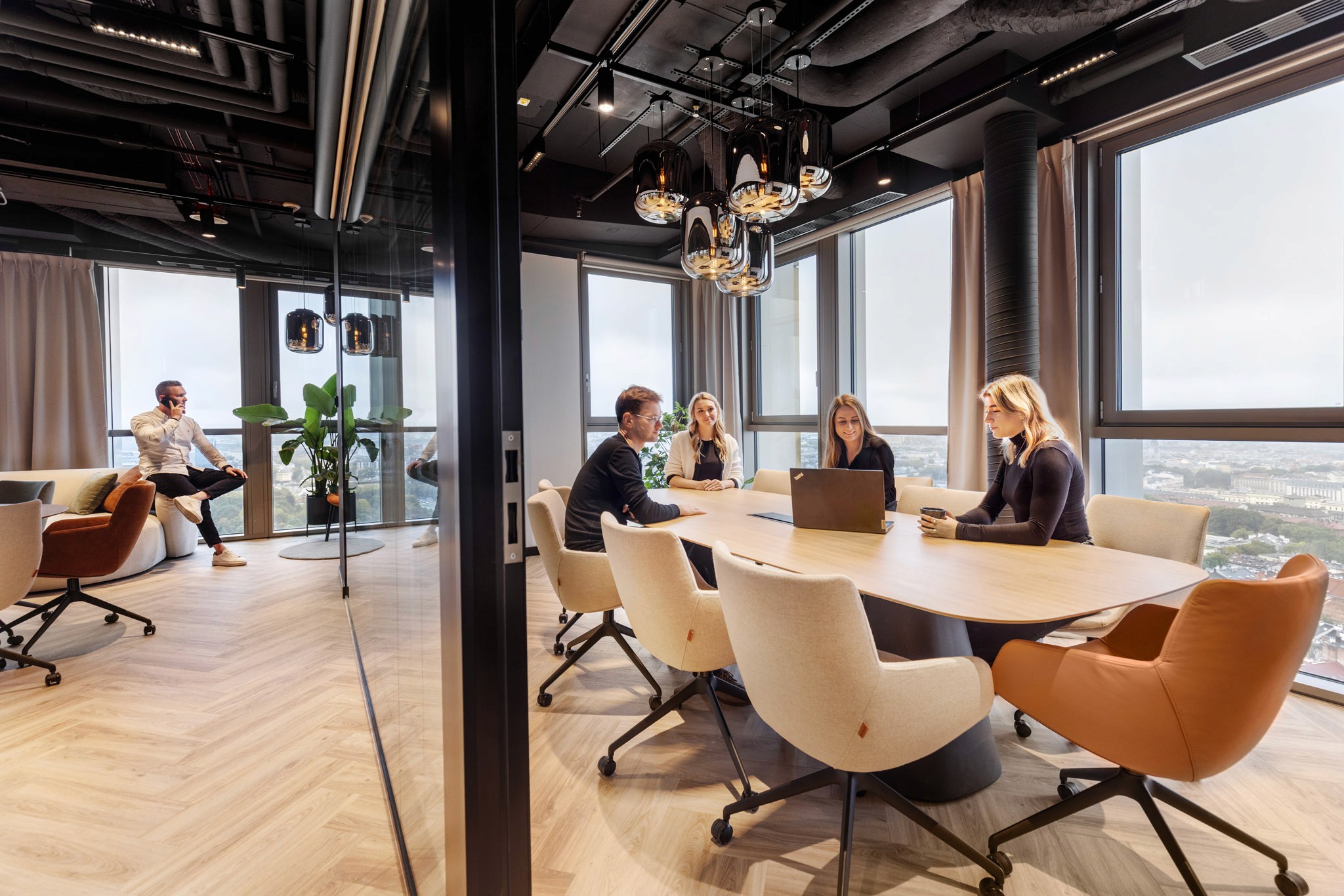
Private office - a closed room for a team of between two and several dozen people. Full privacy, your own work culture, and at the same time you use the operator's infrastructure. The format most often chosen by companies with a stable team.
Virtual office - a prestigious address for company registration, mail handling, and access to meeting rooms. A solution for online businesses and regional branches.
Within a flex office you usually also have access to meeting rooms by the hour - as part of an hourly package or ad hoc.
If you are looking for coworking space in Poland's largest cities, take a look at our locations:
For whom does a flexible office pay off?
A flexible office fits several different business profiles.
Startups and companies in a growth phase - a team of 5 people in January and 20 in September cannot plan a traditional lease rationally. A flex office for startups provides a predictable cost per person and scale changes without relocation.
Small and medium-sized companies - zero CAPEX and zero administration. The funds that would go on fit-out stay in operations.
Corporations and regional branches - flexible offices for companies function as a third place of work (headquarters, home, flex), a satellite location, or an entry point to a new market.
Freelancers - a flex office for freelancers is an alternative to working from home. It provides daily structure, a community, and a representative address.
Hybrid teams - if people come in 2–3 days a week, maintaining a full 5/7 space is a waste.
Flex office vs traditional lease - key differences
The differences between the flex model and a traditional lease come down to three dimensions: time, cost, and responsibility - and these are what determine when a flex office vs traditional office wins out.
In a traditional lease, you sign a 3–7-year contract. You receive shell condition - fit-out, furniture, and IT are your costs. You pay separately for rent, service charges, utilities, cleaning, and internet. Every scale change requires an annex or an exit penalty.
In the flex office model, the contract starts at one month and usually does not exceed 24 months. The price covers everything you need from day one. The most significant difference lies on the operational side: in a traditional lease, the company is also the property administrator. In the flex model - it is not.
How much does a flex office cost and what drives the price?
There is no single answer to how much a flex office costs - the price is a function of several variables. Flex office pricing responds primarily to four factors.
Location - flex office location is the number-one factor. The centre in a Class A building is priced differently from the city outskirts. The address is not just about cost - it is about prestige in client meetings and logistics for the team.
Space format - a hot desk is the cheapest, a private room is the most expensive per person, but the most cost-effective for a team of 4 or more.
Number of people and contract length - the rate drops with the size of the team and the length of the commitment.
Finish standard and scope of services - dedicated reception, community manager, quality of furniture and IT, meeting rooms in the package. Premium is a different category than mass-market coworking.
A specific quote is worth obtaining after a short conversation about the number of people, the city, and the working model.
How to choose a flex office - what to look out for?
Choosing a flex office essentially comes down to setting priorities - there is no space that wins in every category at once. Here are five points to work through before signing a contract, when you are wondering how to choose a flex office sensibly.
Location and commute. Check the commute time from where most of the team lives. A central office with a good transport hub beats an office 15 minutes closer but without metro access on attendance figures.
Scope of services in the price. How many hours of meeting rooms in the package? Printing limits? Are guests included?
Scalability. Does the operator have larger and smaller rooms in the same location? Does it give preference for renting the adjacent room?
Acoustics and privacy. Visit the office during working hours. Listen to what the open space sounds like. This has a real impact on attendance.
The contract. Notice period, price indexation, headcount-change policy. The devil is in the annexes.
And if the team needs something between flexible membership and a permanent room - with full support and the privacy of a private office - it is worth considering the serviced office segment:
A flex office is not a solution for everyone - but it is a solution for most companies that today are trying to fit a variable team into a rigid contract from a decade ago. It gives what a traditional lease structurally does not give: time to focus on the business instead of managing a building.
If you are wondering which format and location will fit your team - write to us via the contact form. We will tailor a solution to real needs, without unnecessary packages or multi-year commitments.