Micro-Office - Who Is It the Best Solution For?



Sometimes there is no need for a coworking space with 50 strangers at desks, and at the same time a whole room for the team is not needed. A small, private space for 1–3 people is enough. The micro-office was created precisely to fill this gap between a hot desk and a classic serviced office.
In short:
A micro-office is a small, fully equipped office for 1–3 people within the operator's space.
It combines the privacy of a private room with the flexibility of coworking.
It works for premium sole proprietorships, small teams, and consultants.
The offering is available mainly in Warsaw, Kraków, and Wrocław.
What is a micro-office?
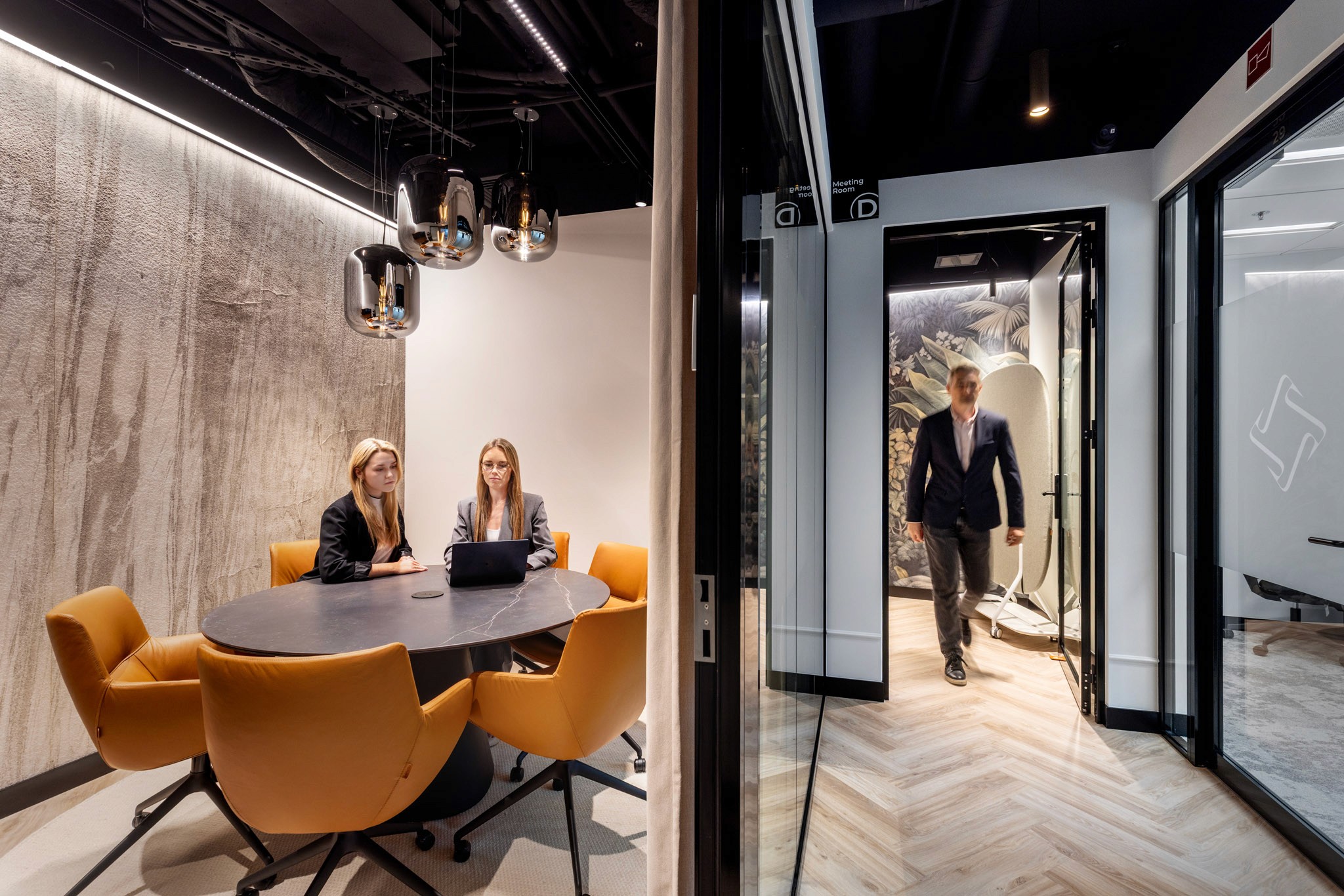
A micro-office is a small, closed office room for 1–3 people, rented on a serviced model. With ready-made equipment, IT, reception, and access to the operator's shared infrastructure. It is an office with its own door and its own walls, but it shares meeting rooms, kitchen, and support with other tenants. The micro-office is positioned between a hot desk (where you have no privacy) and a classic private office (where you rent a larger room for the whole team).
In practice, a micro-office is a small office for rent in an "everything ready from day one" format. You arrive with a laptop, connect the dock, close the door, and work. You can leave a monitor, documents, and personal items. No one apart from the tenant and their team has access to this space.
This solution makes sense mainly where one of two things matters. Confidentiality of conversations (client consultations, legal advisory, finance), or comfort of concentration (long sessions of focused work, without the noise of open space).
Micro-office vs other solutions - hot desk, coworking, serviced office
A micro-office sits in the catalogue of flexible solutions alongside three other formats. Each serves a different use case.
Hot desk - any spot in the open space, no privacy, the cheapest option. Works for mobile and ad hoc work.
Coworking (dedicated desk) - a permanent desk in a shared space, but still in the open space. You can leave items, but there is no door.
Micro-office (private room) - a small closed room for 1–3 people with full privacy. All the benefits of coworking plus walls.
Classic serviced office - a larger room for 4 or more people, usually with the company's own name on the door. Higher price, larger space.
The difference between a micro-office and a classic serviced office is mainly one of scale. A micro-office is a small format for 1–3 people; a classic private office serves larger teams. The operating philosophy is the same: a ready room, full support, a flexible contract.,
Who is the micro-office for?
A micro-office is not for everyone, but for a few specific profiles it is an excellent solution.
Premium sole proprietorship - a consultant, lawyer, business coach, financial advisor. Someone who works alone but needs space for confidential conversations with a client.
A small team of 2–3 people - a partner with an assistant, two developers, a small creative studio. A hot desk does not work (conversations are needed), a classic office is overkill.
Regulated industries - accounting, legal practice, private advisory. Where a wall with a door is not an option but a requirement.
Remote workers for foreign companies - someone working remotely for a foreign company but needing daily structure. Home does not fit, a café does not fit, a micro-office fits.
What does a micro-office include as standard?
As standard, a micro-office contains all the elements needed for immediate work.
Room equipment - a desk (or desks), ergonomic chairs, a monitor, lighting, air conditioning, shelves or document cabinets.
IT infrastructure - high-speed internet (usually a minimum of 300/300 Mbps), a private network, optionally a VLAN for the company. Full access to the operator's printers.
Access to shared infrastructure - reception (receiving guests and mail), meeting rooms (usually with hours included in the package), kitchen, relaxation zones, community events.
Support - room cleaning, rubbish removal, refilling water and coffee, basic technical support.
The price usually also includes utilities, security, building insurance, and cleaning of common areas. This is essentially everything a traditional office administrator handles, but without the need to manage it yourself.
How much does a micro-office cost?
The price of a micro-office in Poland depends on three things: the city, the location within the city, and the size of the room (1, 2, or 3 people).
What affects the price:
City and building class. A micro-office in Warsaw in a Class A location is priced differently from a micro-office in Kraków or Wrocław on the outskirts.
Number of people in the room. A 3-person room does not cost three times as much as a 1-person room. Scale works in favour of larger formats.
Contract length. The rate usually drops with a commitment of 12+ months.
Scope of services in the price. Meeting-room hours, printing, guest spots.
Relative to a traditional lease, a micro-office is more expensive per square metre, but cheaper in full accounting of working costs. Because you do not pay separately for fit-out, furniture, internet, cleaning, reception, and administration.
How to choose a micro-office? - checklist
Before signing a micro-office contract, work through these points.
Location vs lifestyle. Commute time from home, access to public transport, dining options around.
Room acoustics. Walls to the ceiling or only to the false ceiling? Can you hear neighbours? Test: close the door and listen for 30 seconds.
Internet connectivity. Check the actual speed. For video conferences, a minimum of 50/50 Mbps stable is required.
Scope of meeting-room hours in the package. Without this, a micro-office will force surcharges for every client meeting.
Guests and scalability. Can a guest be brought into the room? If the team grows to 4 people - what then? The operator should have larger rooms available for swaps.
The contract. Notice period, indexation, penalties for early termination.
When does a micro-office NOT pay off?
A micro-office is not for everyone. In several scenarios, another solution is better.
Working in the office 1–2 days a week. A hot desk or flexible membership will be cheaper.
The team has 4 or more people. The price per person drops in larger rooms. Better to go straight for a classic serviced office.
Only a registered address is needed. A virtual office costs a fraction of a micro-office.
Loud work requires a lot of open space. A small micro-office space may feel cramped.
For those considering a private-room format in a serviced space, check out the private room - Private Room offering. This is exactly the micro-office category in the flexible solutions catalogue.
A micro-office is a niche format, but for its target group it is extremely precise. It provides privacy, comfort, and flexibility on a scale at which nothing else offers all three at once.
If you are wondering whether a micro-office matches your needs, get in touch. At The Shire we will help verify whether this format fits your way of working, or whether it is better to consider an alternative.