An office for freelancers - coworking, virtual office or home office?


When you are starting out, an office feels like a problem the kitchen table solves. A few months in, the table turns out not to be enough. A client expects to meet somewhere professional. Home is distracting. Working from bed drains your energy and blurs the line between life and work. The question arises: where exactly should a freelancer work? There is no single answer. It depends on how you work, what you earn, and what you genuinely expect from a workplace. This article sets out the available options and helps you choose the right one.
Who is today's freelancer?
A freelancer today is rarely a lone operator earning a little on the side from home. More often they are a professional or micro-entrepreneur running a fully-fledged business, with clients, invoices and growing needs. It is a highly varied group - from designers and developers, through marketers and copywriters, to consultants and trainers. What unites them is flexibility in how they work and sole responsibility for results, rather than any single pattern of operating.
The common denominator is independence. A freelancer decides for themselves when, how and from where they work. That is the model's greatest advantage. At the same time, they are responsible for everything: winning clients, brand image, organising the work, and the place where it is done. Choosing a working environment is therefore a business decision, not merely a matter of convenience.
This self-reliance has a flip side. A freelancer has no administration department behind them to organise an office, and no HR department to look after working conditions. Everything has to be solved personally, with limited time and budget. Ready-made, flexible solutions therefore become particularly valuable - ones that provide professional conditions without building them from scratch and without committing to long agreements. This need is exactly why models such as coworking or a virtual office suit the way freelancers work so well.
Freelancers' needs vary enormously. One works entirely through a screen and never meets clients in person. Another holds meetings regularly and needs somewhere presentable. One values quiet and solitude. Another looks for people and community, because working alone can be isolating. These differences mean there is no such thing as a single "perfect office for a freelancer".
The stage of development matters too. Someone just starting out has different needs and a different budget from a freelancer with an established client base who is beginning to think about scaling up or taking on their first collaborators. A good solution is therefore one that can be matched to the situation and changed as the business develops.
For a freelancer, a workplace serves more functions than simply "a desk with internet". It is an element of image in front of clients. It is a tool for maintaining discipline and healthy working habits. Often it is also a way of meeting people, which is what working alone lacks. The decision about an office should therefore be taken as seriously as the choice of equipment or tools. Indirectly, it affects the quality of the work, how you feel, and how the business is perceived from outside.
Types of office for a freelancer
There are four main models to choose from today: home office, coworking space, virtual office and private serviced office. Each distributes cost, comfort, prestige and access to people differently, and each suits a different working style. It is worth understanding their strengths and weaknesses before deciding where to invest.
A home office means working from home. It is the cheapest option and the most convenient logistically, with no additional rental costs and no time lost commuting. The drawbacks tend to be distractions, the lack of a clear boundary between work and private life, poorer ergonomics and a sense of isolation. It is a good solution for fully remote work and tasks requiring concentration, and a poorer one when you need contact with people or somewhere to hold meetings. A home address is not always appropriate to give to clients or enter into company registers - which is often an additional argument for a different arrangement.
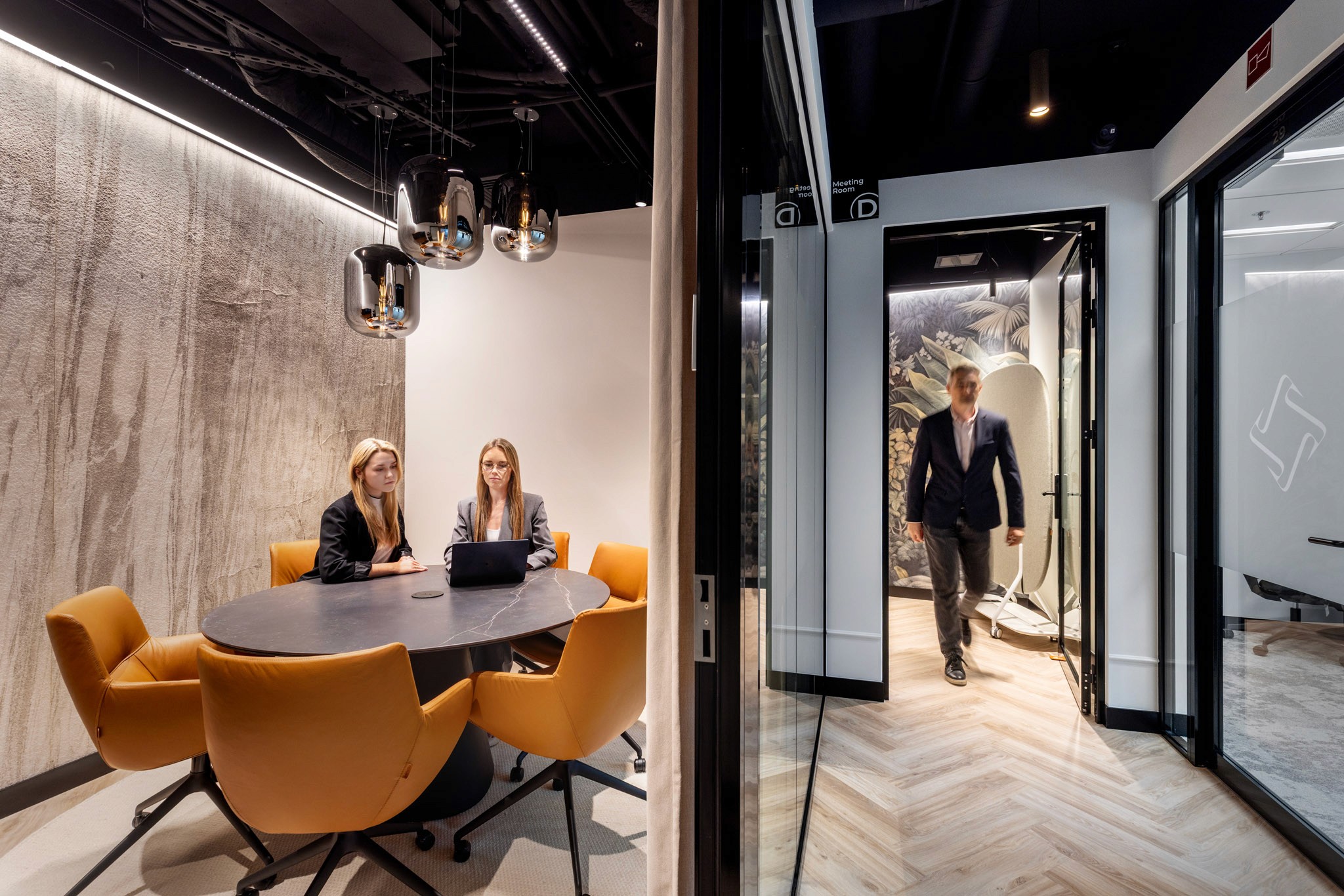
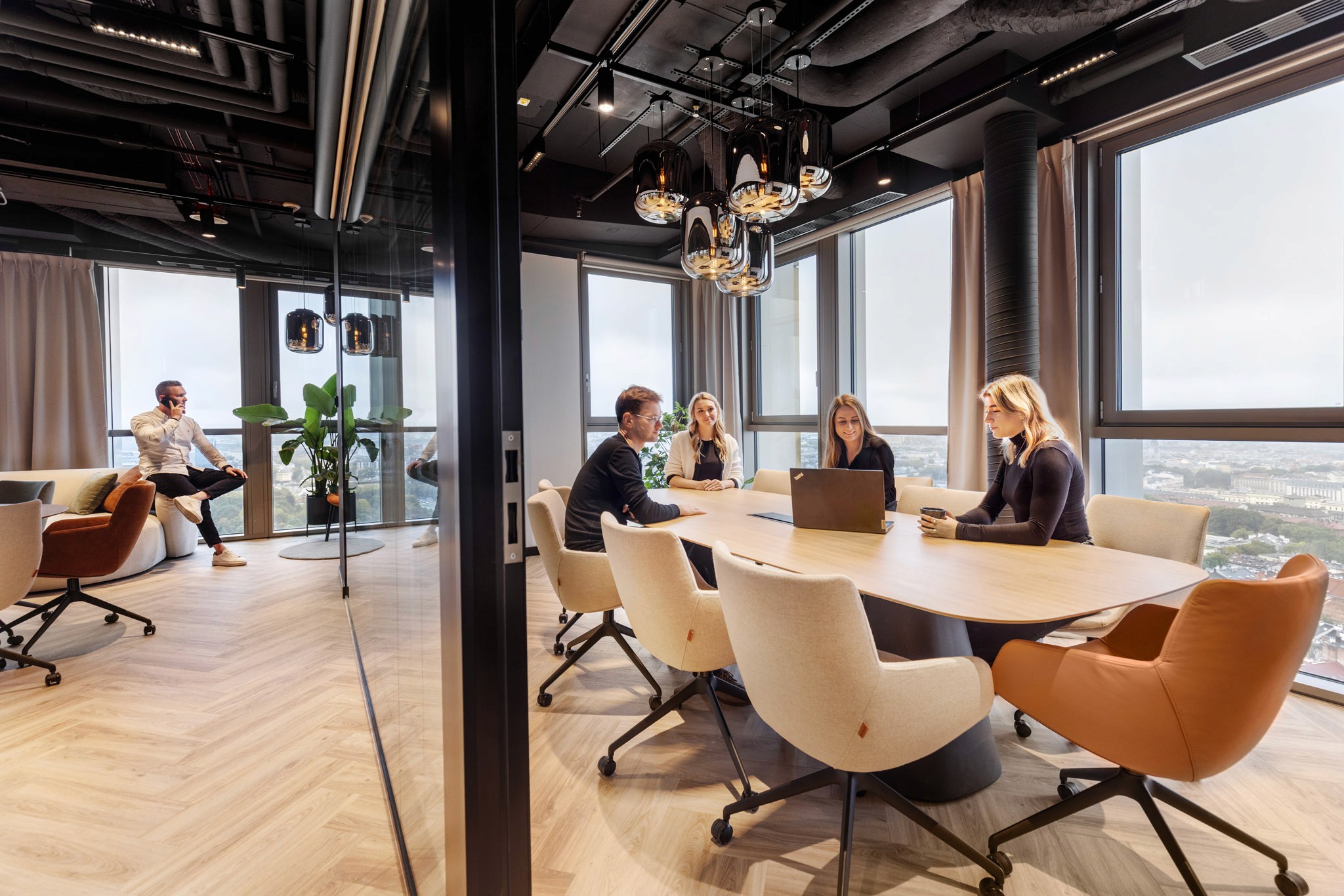
Coworking is shared space in which you rent somewhere to work: a desk in an open zone or in a more intimate layout. In return you get a professional environment, high-speed internet, meeting rooms and, importantly, a community and opportunities to network. The cost is lower than an office of your own, and the conditions are hard to match at home. It is usually the best compromise for freelancers who want to work away from home but without a rigid, expensive lease.
Coworking also solves a problem many freelancers underestimate at the outset: isolation. Working alone, day after day, without contact with people can lower motivation and hinder development. There is no exchange of ideas, no opportunity to consult someone, no ordinary conversation over coffee. Shared space restores this social dimension of work. It can also be a source of commissions, since some clients and subcontractors are met there naturally. For a freelancer who wants to grow rather than simply work through jobs, this is often the model's most important advantage.
A virtual office is above all a prestigious address for registration and mail handling, without a permanent physical workstation. It works well for remote work when you need a credible business address and a professional image, plus occasional access to a room for a meeting. The model also protects privacy, since it means not registering your business at a home address. A private serviced office, in turn, is ready, dedicated space for one person or a small team. It combines the privacy of your own office with the convenience of a ready-made solution and a flexible agreement.
These models do not exclude one another - which is one of the most important things to remember. Many freelancers combine them depending on the moment. They work mainly from home, use coworking on days that call for concentration or contact with people, and keep a virtual office for the address and correspondence. Such a combination allows a solution tailored to your own working rhythm, instead of squeezing into one rigid pattern. What matters most is that the choice follows from real needs - the type of tasks, the frequency of meetings, and how much contact with people genuinely helps - rather than from habit or from what seems expected.
Which option to choose? Five scenarios
The choice depends on how you work and what you need most: low cost, concentration, contact with people, prestige or privacy. Below are five typical scenarios to help you quickly recognise your own situation and match a solution to it. They are a starting point - and many people combine several models at once anyway.
Scenario one. You are starting out, the budget is tight, the work is fully remote, and there are no face-to-face client meetings. A home office will do to begin with, possibly supplemented by flexible access to coworking on days when you need a change of surroundings or some concentration. It is the cheapest way to get going, without freezing money in a permanent office.
Scenario two. You work from home but sense it is slowing you down. Concentration, energy and contact with people are all lacking. This is the classic moment for coworking. You gain a place that structures the working day, separates it from private life, and provides access to a community and networking that can be a source of further commissions. For many people, the ritual of leaving home for an office is by itself enough to restore discipline and markedly raise productivity.
Scenario three. The work is remote, but you need a professional business address and want to protect your privacy - without registering the business at your home address. Here the answer is a virtual office. It provides a credible address, mail handling and access to rooms for occasional meetings, without the cost of a permanent workstation.
Scenario four. You meet clients regularly and care about image. It is then worth combining a virtual office address with access to presentable meeting rooms, or considering flexible membership in a prestigious location. Where you receive a client says more about your business than you might think. A meeting in well-kept, professional space builds trust and raises the perceived value of your services.
Scenario five. You have stable clients, a lot of work requiring concentration, or your first hires. A private serviced office then provides quiet, privacy and somewhere that grows with the business. It is the natural step when a freelancer stops being a one-person operation and starts building a small team. The kitchen table or a shared zone stops being enough.
In each of these scenarios, the point is not to find one perfect solution for ever. It is to match the workplace to your current stage and way of operating. A good strategy for a freelancer is to choose a flexible model - one that can be extended or changed as the number of clients, the nature of the work or the scale of the business changes. This avoids both overpaying for space you do not yet need to rent and working in conditions that slow you down.
The Shire for freelancers
At The Shire, we know that freelancers differ in their needs and their stage of development. Rather than one rigid solution, we therefore offer a flexible range of options that can be matched to you and changed over time. Whether you need a change of surroundings for a few days a month, a prestigious address, or a space of your own, there is plenty to choose from.
For working away from home, we offer flexible membership in our coworking space, with high-speed internet, comfortable relaxation zones, good coffee and a community that helps build valuable contacts. Where a professional address and mail handling are the main consideration, a virtual office is a good choice. And where you need your own dedicated space, for one person or a small team, a serviced office is worth considering.
On top of that comes something hard to find at home: a community and a network of trusted partners. Through them, support in finance, legal matters and accounting is easier to come by, as are new business contacts. Get in touch or visit one of our locations, and we will help you choose an option tailored to your particular way of working.