Remote Work or Office Work? Why Companies Are Returning to the Office in 2026


Remote Work or Office Work? How the Way We Work Is Changing
Just a few years ago, remote work meant freedom for many people: no commute, more time for themselves and the chance to plan the day at their own pace. The pandemic, however, turned working from home from an occasional perk into everyday reality - and revealed both its advantages and its limitations.
Today, the question “remote work or office work?” is no longer a simple choice between two models. Companies are increasingly looking for a solution that combines flexibility with the need for collaboration, smooth communication and strong team relationships. That is why the hybrid model and flexible office spaces are becoming more important.
Companies Are Scaling Back Fully Remote Work
The shift is also visible in the data. According to Grant Thornton’s report “Remote Work Through the Eyes of Employers 2026”, only 55% of medium-sized and large companies in Poland currently allow employees to work outside the office - 16 percentage points fewer than in 2024. At the same time, only 13% of companies give employees complete freedom to choose where they work.
One in five companies plans to further limit remote work in 2026: 4% want a full return to the office, while 16% plan to increase the number of in-office days. Among the reasons for these changes, employers point to issues with information flow, productivity and team atmosphere.
Why Is Working from the Office Gaining Importance Again?
Working from home can work well for tasks that require individual focus. At the same time, working exclusively from home over a long period can hinder the spontaneous exchange of information, team bonding and the onboarding of new employees. These are exactly the things that are hard to fully replace with messaging apps and video calls.
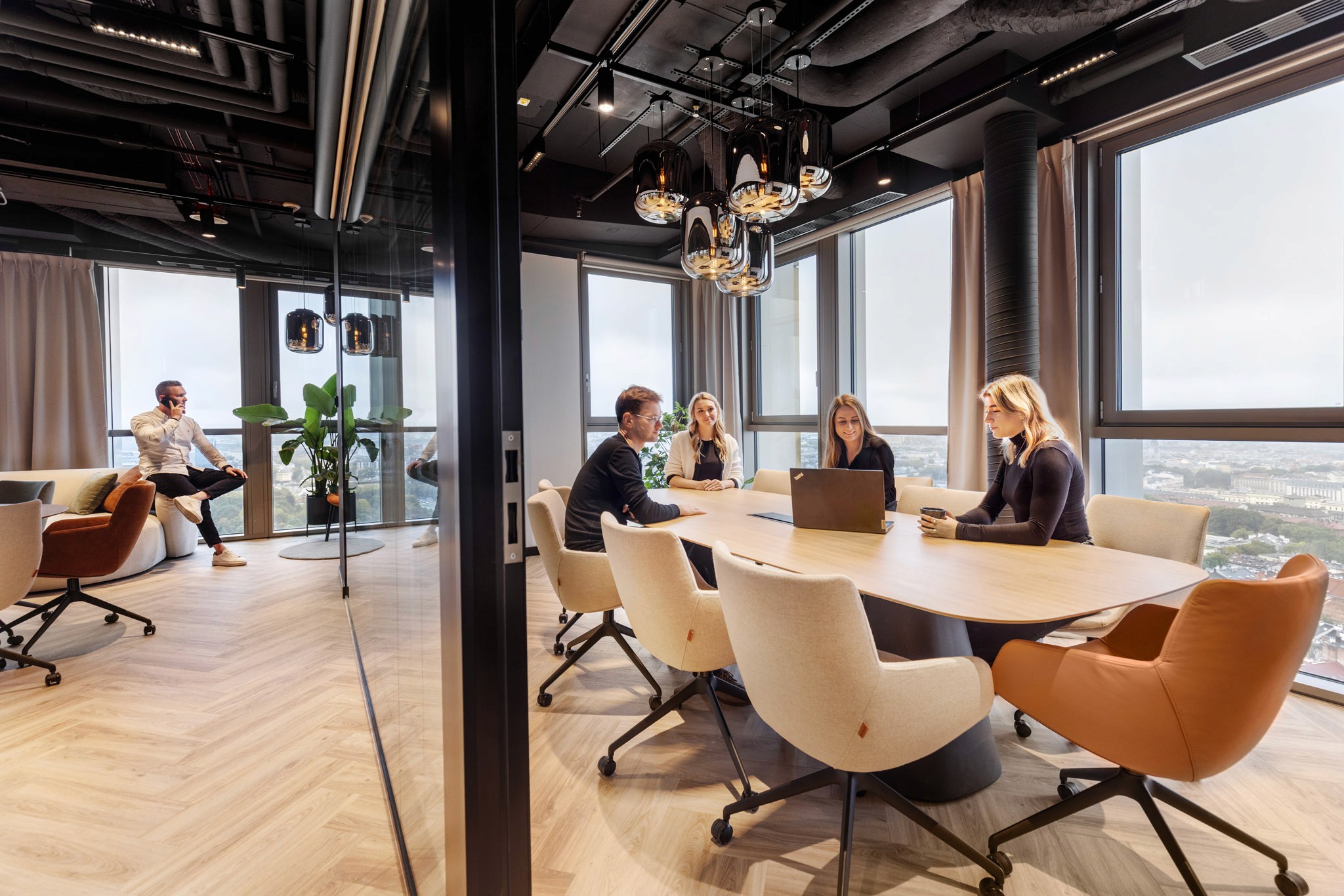
An office gives a team a shared space for meetings, conversations and creative work. It also makes it easier to separate private life from work and provides a workstation designed for everyday use.
5 Benefits of Working from the Office
1. Better collaboration and information flow
A face-to-face conversation often makes it quicker to solve a problem, make a decision or develop an idea than a series of messages and online meetings.
2. Relationships and team bonding
Informal chats, a coffee together or a quick catch-up in the common area help build relationships that carry over into everyday collaboration.
3. Easier onboarding
New employees find it easier to get to know the team, the company culture and how the business operates when part of their onboarding takes place in person.
4. A setting suited to different tasks
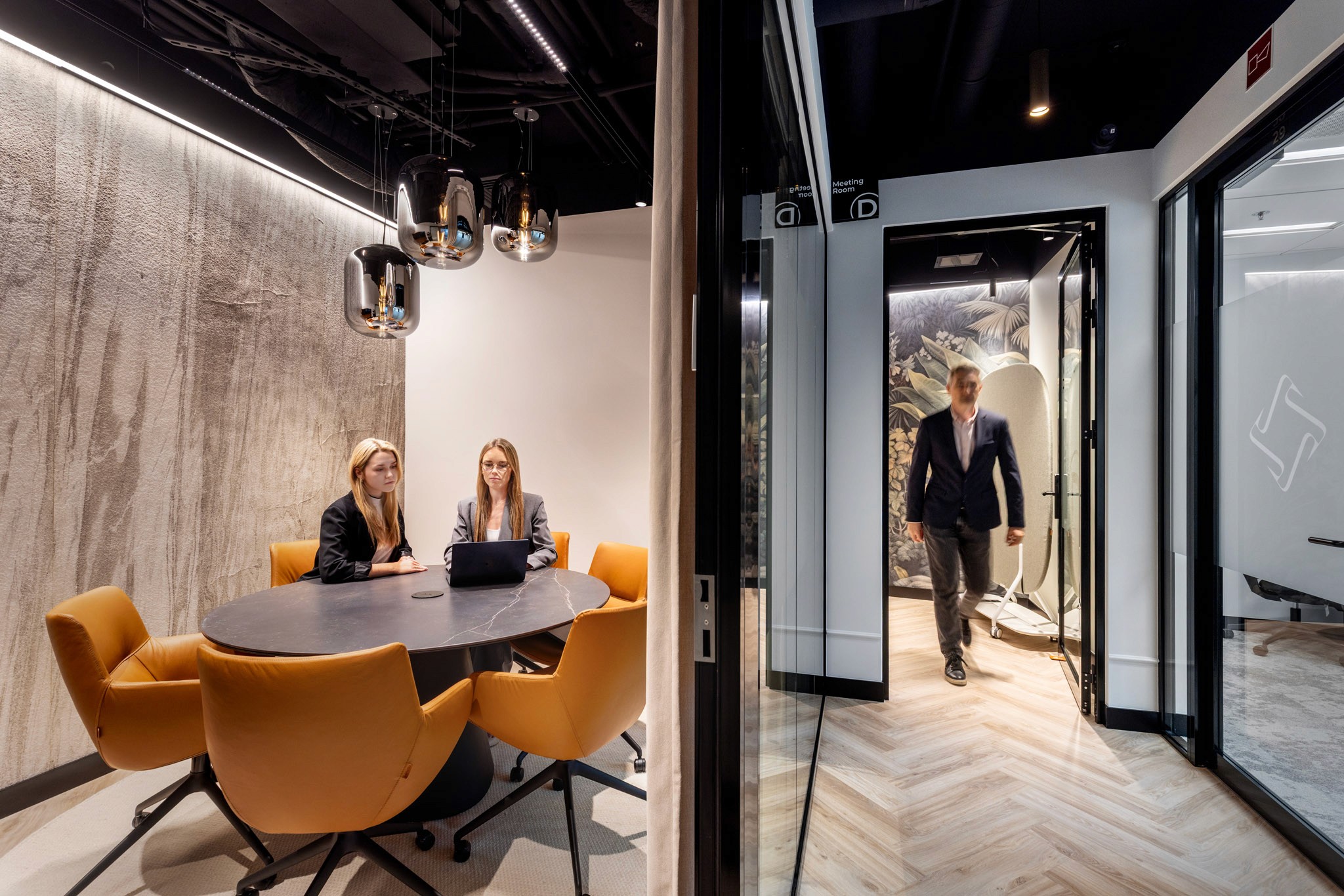
A good office offers choice: a desk for everyday work, a focus room for deep concentration, a phone booth for confidential calls and a conference room for teamwork.
5. A clearer boundary between work and private life
Leaving the office can be a natural end to the working day - something that is often much harder to achieve when working from home.
Hybrid Work – a Compromise Instead of an “Either–Or” Choice
Returning to the office doesn’t have to mean going back to five days a week on-site. In many organizations, hybrid work remains the answer: part of the week at home and part in a space that enables meetings, focus and collaboration.
This model also changes how we think about the office itself. A workspace no longer has to be just a place with an assigned desk. It should accommodate different scenarios throughout the working day and allow a company to respond flexibly as its team grows or shrinks.
The Flexible Office as an Answer to the New Way of Working
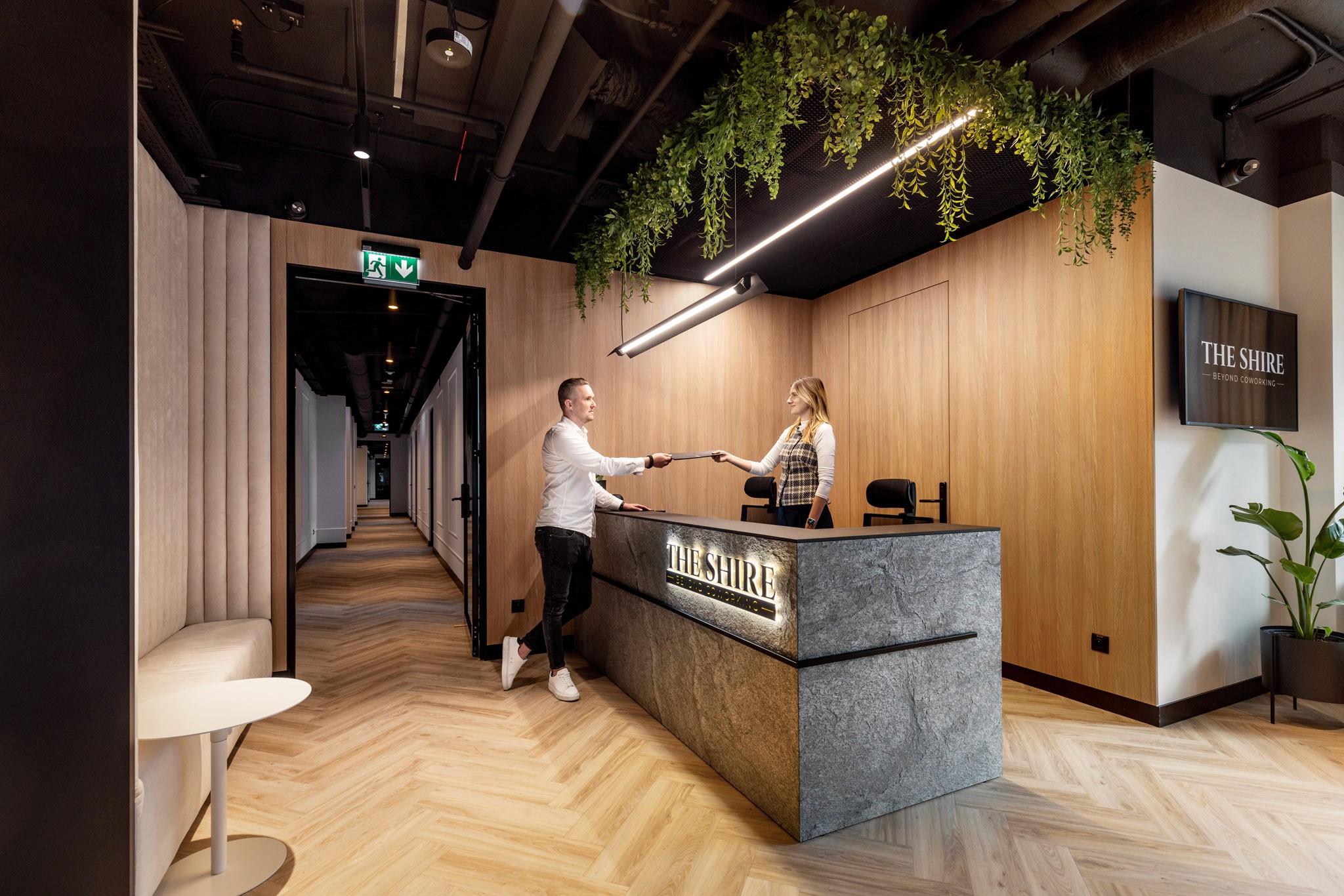
At The Shire, we create flexible office spaces for companies and teams who want a professional workplace without having to fit it out and organize all the infrastructure themselves. We offer private offices, shared spaces, meeting rooms and solutions that support both focus and collaboration.
Depending on the task, you can work at your own desk, move to a focus room, use a phone booth or meet your team in a conference room. The common areas, in turn, encourage more informal conversations and relationship building.
The Shire operates in Warsaw, Kraków, Wrocław, Poznań and Gdynia. Each location combines flexibility with high-quality spaces and a hospitality-driven approach.
An Office Worth Commuting To
If employees are expected to come to the office more often, desks alone are not enough. The space should genuinely support their work: providing room to focus, hold confidential conversations, meet as a team and build relationships.
One example is The Shire Waterfront in Gdynia, where, in addition to spaces for work and meetings, there are also common areas and terraces. It’s an approach in which the office becomes not just a company address, but an environment designed around the team’s different needs.
Remote Work or Office Work? Flexibility Is What Matters Most
Remote work isn’t going away, but the way companies use it is evolving. More and more organizations are looking for a balance between employee autonomy and the need for in-person meetings, smooth communication and a strong team culture.
That’s why the future of work will probably not be a simple choice between home and the office. For many companies, it will be a flexible model in which the office has a clear purpose and gives the team more than just a place to sit.
Looking for a flexible office for your team? Explore The Shire’s locations in Warsaw, Kraków, Wrocław, Poznań and Gdynia and choose a space that fits the way your company works.
FAQ
Is working from the office more productive than working remotely?
It depends on the type of tasks, the team and how work is organized. The office is particularly helpful for tasks that require collaboration, a quick exchange of information, meetings and relationship building.
What is hybrid work?
Hybrid work combines remote work with regular time in the office. The exact number of days depends on the policy adopted by each organization.
How is a flexible office different from a traditional lease?
A flexible office space is ready to work in and lets you use its infrastructure and amenities without having to set up an entire office yourself. Terms can also be adjusted more easily to a team’s changing needs.
Data Source
Grant Thornton, “Praca zdalna okiem przedsiębiorców 2026” [Remote Work Through the Eyes of Employers 2026], 6 February 2026.