Beyond Access – A New Dimension of Flexible Work at The Shire Beyond Coworking
Published: Apr 9, 2025


Beyond Access – A New Dimension of Flexible Work at The Shire Beyond Coworking
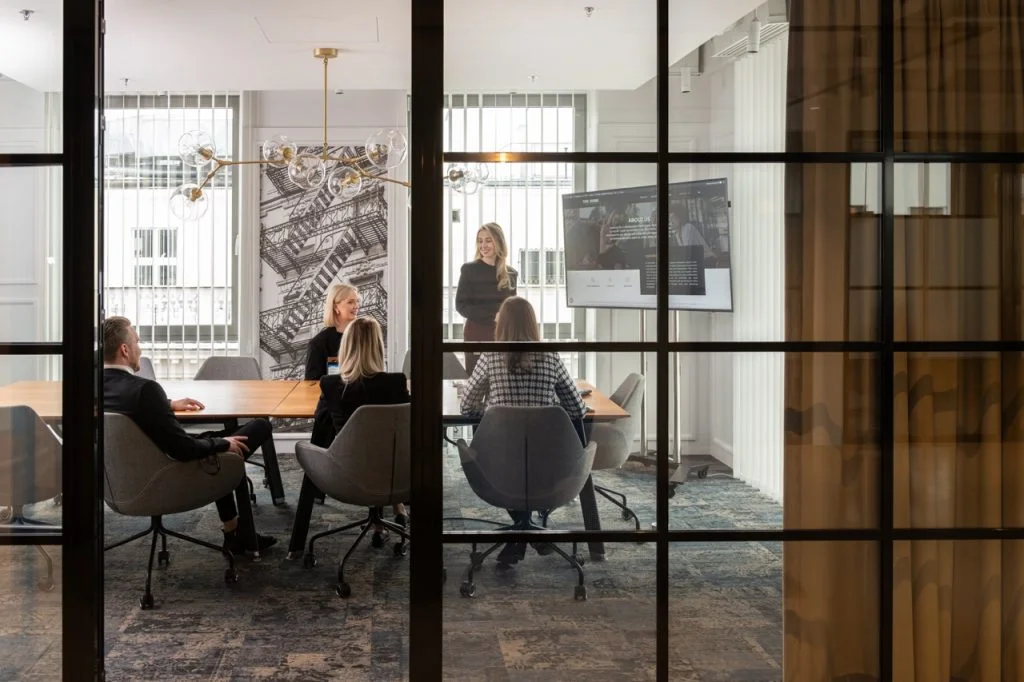
The Shire Beyond Coworking is synonymous with prestigious, fully serviced offices that combine elegance, comfort and functionality. Now, with our new Beyond Access product, our clients gain even greater flexibility in their work.
Beyond Access – Freedom to Work in Multiple Locations
Beyond Access is a solution designed for those who need mobility and access to inspiring workspaces in various locations. If your primary office is in one of The Shire locations, you can now take advantage of available workspaces in our other facilities on a daily pass basis. This is the perfect solution when:
You travel for business and want to work in a comfortable environment without searching for random spots or working in a café.
You have meetings in another city and need a professional workspace.
You’re looking for a change of work environment for a day to boost creativity and productivity.
How Does Beyond Access Work?
Beyond Access offers maximum convenience with minimal formalities. Just follow these simple steps:
Check workspace availability in your chosen location using The Shire’s dedicated app.
Book a daily pass through the app.
Arrive and work in a comfortable setting, enjoying all the amenities of The Shire’s serviced office spaces.
With Beyond Access, you can always work in a professional environment that fosters focus and efficiency.
Why Choose Beyond Access?
Prestigious locations – The Shire offers premium offices in prime business districts.
Comfort & professionalism – Ergonomic workspaces, high-speed internet, access to shared areas with fully equipped kitchens, and networking opportunities with other professionals.
Flexibility – Work wherever you need to, without long-term commitments.
Beyond Access is a modern approach to work, allowing our clients to operate without limits and take full advantage of The Shire Beyond Coworking’s network of office spaces.
Check out the details and experience a new dimension of flexible work!
Published: Feb 25, 2026
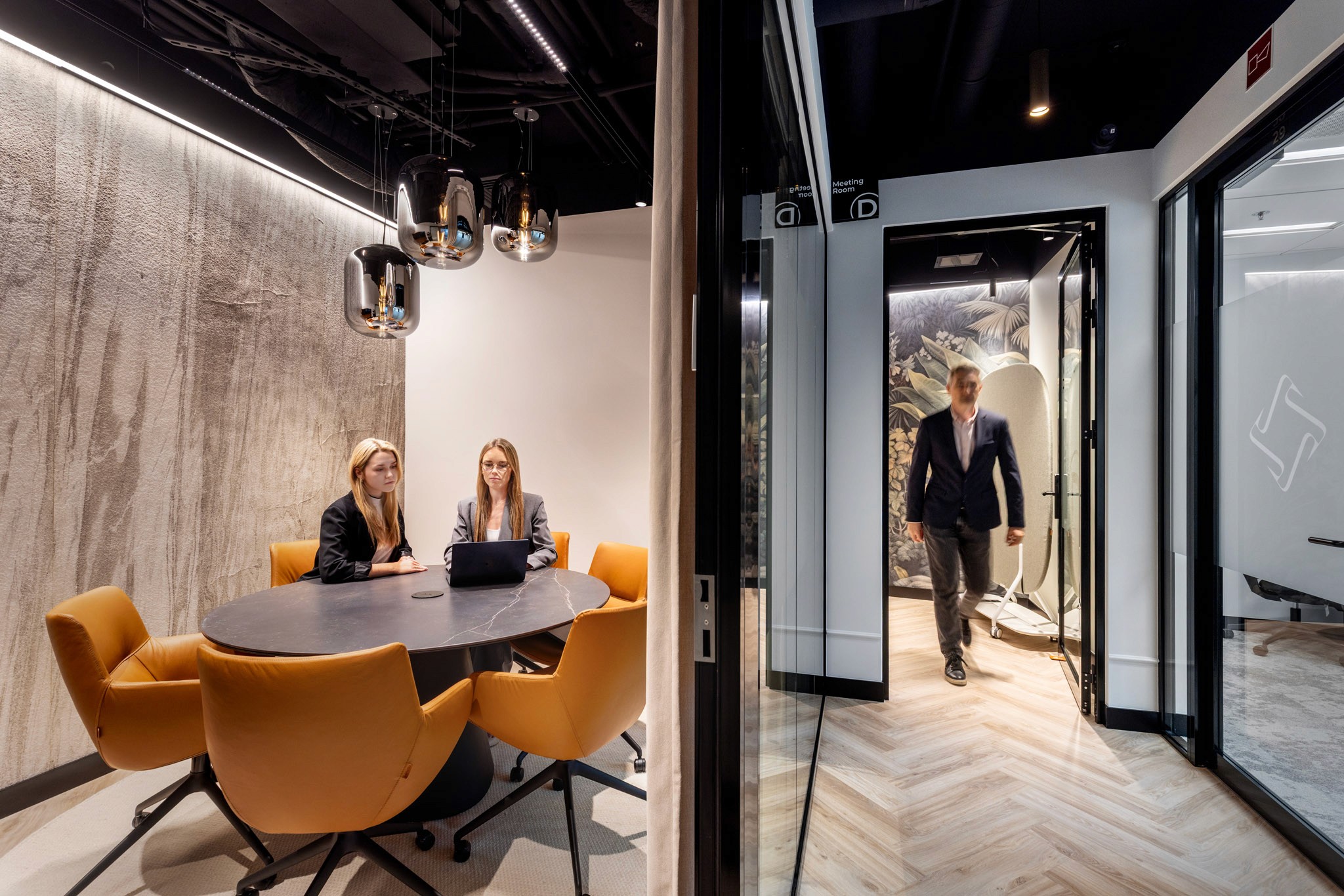
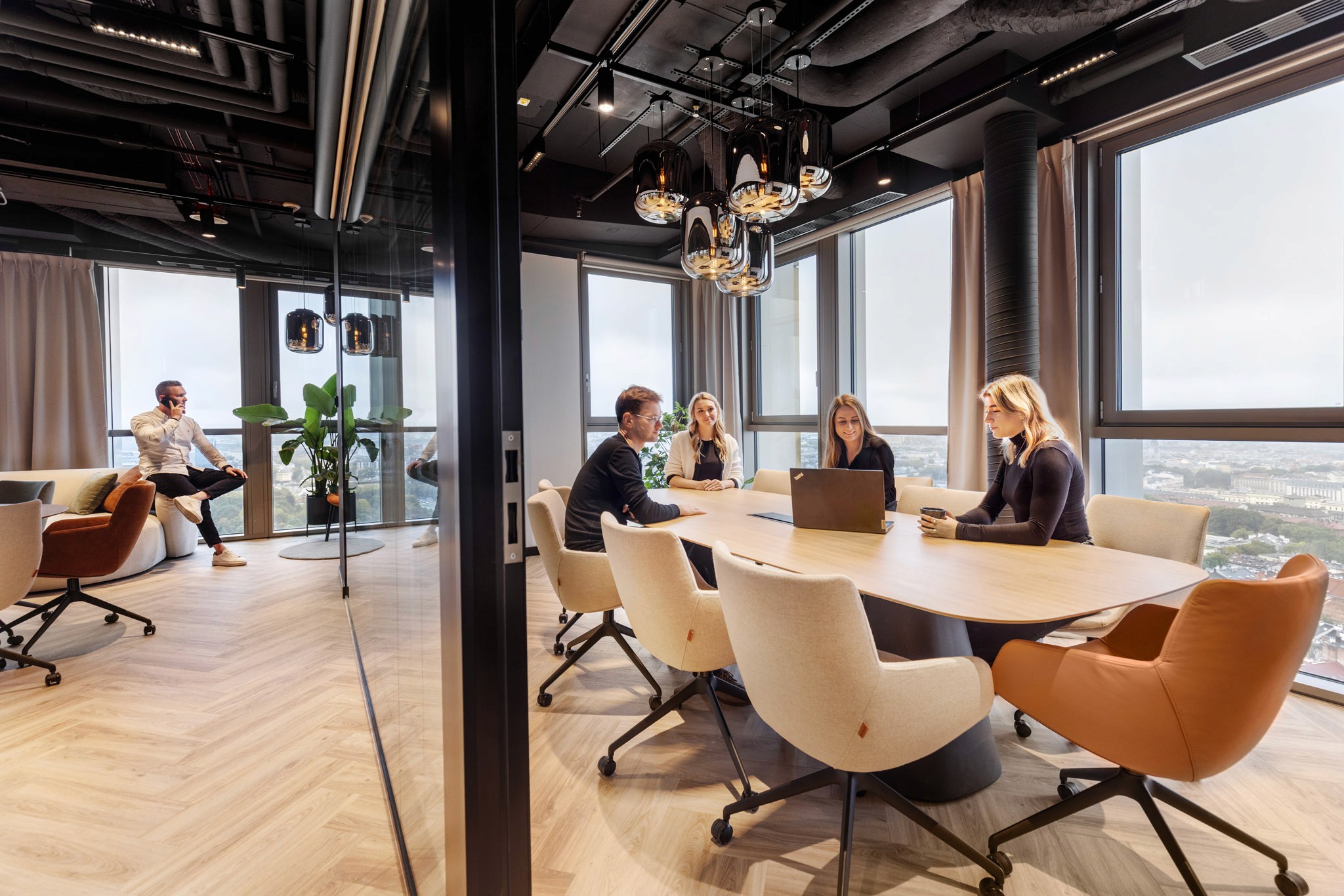
Employee Wellbeing and the Workplace: Why Companies Are Choosing Coworking
In discussions about returning to the office, many organizations still focus on one question: how do we increase attendance?
From an HR perspective, that is too narrow.
The real question is:
Do employees have a meaningful reason to come in — and does the workspace genuinely support how they work?
This is where three critical areas intersect:
employee wellbeing
employee experience
engagement
And this is not a “soft” topic. Global engagement levels have dropped significantly in recent years, costing organizations hundreds of billions in lost productivity. At the same time, only a minority of employees report truly thriving in their overall lives.
Wellbeing is no longer a perk.
It is a business variable.
Wellbeing as a Strategic KPI — Not a Benefit Add-On
Employee wellbeing has become one of the most important global management trends. Increasingly, it is discussed not as an isolated initiative, but as a driver of:
productivity
retention
organizational resilience
financial performance
Leading global institutions highlight that investing in workplace wellbeing can generate enormous economic value. This represents a major shift for HR: wellbeing is no longer solely a culture or communication topic. It must be designed systemically — including through the physical work environment.
Why Employees Don’t Want to Return to the Office
In most cases, the issue is not resistance to office work itself. It is the absence of a compelling “why.”
If the office does not offer better conditions than working from home, employees mainly see the cost:
commute time
logistical effort
disruption of daily rhythm
Research consistently shows that the biggest hybrid challenges are:
relationship building
cross-team collaboration
cultural cohesion
These are precisely the areas owned jointly by HR and leadership. If the workspace does not actively support collaboration and connection, attendance policies alone will not solve the problem.
Enforcement Doesn’t Replace Experience
Many companies attempt to increase attendance through stricter policies. Meanwhile, employees point to practical barriers — especially commuting time and daily convenience.
For HR leaders, the critical questions are:
Does coming to the office make work easier?
Does the environment improve collaboration?
Are employees offered better conditions than at home?
Does the commute feel worth it?
Without clear answers, office return strategies risk being perceived as pressure rather than support.
HR’s New Role: Designing the Work Experience
Today, HR’s strategic role is shifting from managing attendance to designing the work experience.
Engagement rises when employees:
have space for deep focus
collaborate efficiently
avoid organizational chaos
feel purpose in their presence
Research also shows that team engagement is strongly influenced by managers. And managers need environments that enable them to:
lead effective meetings
onboard new team members
build trust and relationships
establish a productive team rhythm
The workspace becomes a leadership tool.
Why Coworking Is Becoming a Strategic Solution
More companies now see coworking not as a substitute office, but as a deliberate HR and business tool.
Well-designed coworking environments:
provide conditions for focused work
offer comfortable collaboration areas
support natural human interaction
allow flexibility based on tasks and team rhythm
Location also plays a critical role. Reduced commute times and accessible transport options significantly influence whether employees consider office attendance worthwhile.
This shifts the logic entirely.
Employees come not because they must — but because they see value.
What This Means for Organizations
The key question is no longer: “How many days in the office?”
It is:
Does our work environment provide a meaningful reason to be here?
Organizations seeking to improve:
engagement
retention
collaboration quality
overall performance
must treat workspace as part of HR strategy.
In this context, high-quality coworking — such as The Shire Beyond Coworking — is not a fallback option. It is a conscious choice by companies building modern work environments that support wellbeing, strengthen engagement, and align with how teams truly operate today.
READ MORE

Published: Feb 25, 2026
The Future of Work: Why Leaders Choose the Office in the Remote Era
The first wave of enthusiasm for remote work was inevitable. Flexibility, saved commute time, operational continuity — it all worked.
But after several years of experience, one thing has become clear: a fully remote model is rarely the long-term solution for companies that aim to grow.
Today, leaders are asking a different question.
Not: Can we work remotely?
But: Where do we make our best decisions?
Because the modern office is no longer a cost.
It is a tool.
The Office as a Strategic Advantage
A modern workspace — especially in a premium coworking model — is no longer just operational infrastructure. It becomes an environment that supports:
strategic thinking,
high-quality decision-making,
synchronized team collaboration,
culture building and leadership presence.
In a space like The Shire Beyond Coworking, design is not decoration.
It is architecture for focus.
Light, acoustics, spatial proportions, ergonomics — these elements directly influence performance. And performance shapes results.
The Hidden Cost of Isolation
Remote work offers freedom. But it quietly removes something critical — shared energy.
No spontaneous conversations.
No intellectual cross-pollination between meetings.
No subtle signals that inspire new thinking.
Premium coworking is not about random networking.
It is about an ecosystem where:
knowledge circulates naturally,
business relationships form organically,
perspectives expand through proximity.
No digital platform fully replaces physical presence.
Professionalism That Speaks Before You Do
In business, environment communicates.
A home office may be convenient, but it rarely signals scale, stability, and long-term ambition.
A representative reception.
A refined meeting room.
A thoughtfully designed interior.
This is not about prestige.
It is about sending a clear message: we operate at a professional standard.
Restoring a Productive Work Rhythm
One of the silent risks of remote work is blurred boundaries.
When the workspace and living space merge, recovery weakens. And without recovery, long-term performance declines.
A premium coworking office restores:
structure to the day,
clear separation between work and personal life,
a rhythm that protects focus and energy.
This is not about control.
It is about sustainability.
The Office as an Investment in Growth
Mature organizations no longer ask:
How much does the office cost?
They ask:
What quality of decisions are made in this space — and what are they worth?
Premium coworking should be seen as an investment in:
sharper strategic thinking,
stronger business relationships,
team cohesion,
long-term performance.
In a world where competitive advantage depends on focus and adaptability, the work environment becomes a growth driver.
Remote Work Will Stay — But Not Alone
The future is not about abandoning flexibility. It is about choosing environments intentionally.
For leaders thinking about scale, positioning, and long-term impact, the office is not a return to the past.
It is a strategic decision.
In this context, The Shire Beyond Coworking is more than a workspace.
It is an environment designed to support clarity, relationships, and growth.
READ MORE

Published: Jan 6, 2026
Serviced Office vs Apartment for Office HQ
Serviced Office vs. Apartment Rental for Office Headquarters — What Really Pays Off?
The workplace market is evolving faster than ever. With hybrid work becoming the norm, more and more companies are facing a key decision: serviced office or renting an apartment as a registered office headquarters?
While an apartment may seem like a cheaper and simpler option at first — especially for new businesses — in reality, serviced and flexible offices increasingly prove to be a more functional, cost-effective, and professional solution.
Why Turning an Apartment into an Office Means Compromises and Hidden Costs
Adapting a residential space into an office comes with limitations that quickly become noticeable — especially as the company grows.
The most common challenges include:
no clear separation between work zones and meeting areas,
lack of space for professional client meetings,
the need to organize internet, cleaning, and mail handling on your own,
additional purchases for furniture and office infrastructure,
difficulty maintaining a boundary between private and business life.
Even if apartment rent looks lower, the real operating cost increases every month due to added operational expenses.
Serviced Office — A Plug & Work Space That Starts Working from Day One
Serviced offices operate in a true "plug & work" model — meaning no need for self-managed fit-out or service coordination.
What does one monthly fee include in a serviced office?
high-speed internet and utilities,
professional cleaning service,
24/7 building security,
administrative and mail support,
reception services and a prestigious company address.
Most importantly, companies can choose flexible agreements such as: office for a day, office for a month, or flex office scaling — without changing the headquarters address.
Design and Infrastructure That Build Brand Credibility
An office is no longer just a place to work — it’s also a brand asset and business statement.
Client meetings held in adapted apartments rarely meet the standards expected by business partners.
Serviced offices offer companies:
representative reception areas,
modern meeting and conference rooms,
professional fit-out and premium interior design,
a business address that strengthens trust and recognition.
These elements are extremely difficult or impossible to recreate in an apartment without heavy investment.
Shared Areas That Cannot Be Replaced
Work comfort goes far beyond a desk — it includes a full environment that supports the team’s daily rhythm.
In coworking and serviced offices, employees benefit from:
stocked kitchens with unlimited hot drinks,
phone booths for online calls,
chillout and regeneration zones,
comfortable spaces that enable natural conversations and collaboration.
All of this increases team wellbeing, comfort, and efficiency — without extra operational costs.
Community and Networking as a Real Business Advantage
An apartment cannot provide what is one of coworking’s greatest strengths: community, relationships, and business inspiration.
In coworking spaces:
companies meet potential clients and partners on-site,
members exchange contacts and knowledge daily,
new employees go through onboarding faster in a dynamic professional ecosystem,
networking happens naturally — without pressure or scripted scenarios.
These interactions often generate real, unplanned business opportunities.
Conclusion: Apartment as Office or Serviced Office?
Criteria | Apartment Adapted into Office | Serviced / Coworking Office |
|---|---|---|
Costs | Lower rent, rising hidden costs | One fee, full predictability |
Equipment | Self-purchased | Included in the fee |
Image | Often compromised | Premium, professional |
Flexibility | Usually long contracts | Day, month, flex |
Networking | No community | Real business value |
Renting an apartment as an office works only temporarily.
For companies that want to grow responsibly, work comfortably, and scale without risk — serviced offices, coworking, and flex spaces are the natural choice.
READ MORE