Beyond Access - what an office without a contract means and who it is built for


"An office without a contract" sounds like a contradiction. Access to space normally means paying for it and signing something. And yet a growing number of people work in exactly this way - with no multi-year commitment, no fixed rent, using an office when it is genuinely needed. That is the idea behind Beyond Access. Below we explain what an on-demand office is, who it was created for, and how it differs from other flexible working models.
What is Beyond Access?
Beyond Access is a model for using an office on demand, with no rigid long-term lease and no fixed commitment. Instead of renting space permanently, you gain access to it when you need it, using professional facilities on flexible terms matched to actual usage. It is a response to the way people work now: variably, on the move, and without any need to tie themselves down for years.
The heart of the idea is access rather than ownership. In the traditional model you pay for space to be at your disposal at all times, whether or not you use it. Beyond Access reverses that logic. What counts is access to a ready, professional office at the moment it is needed, not the upkeep of permanent premises - which means the cost of empty space disappears.
"An office without a contract" should be understood correctly, though. It does not mean an absence of any rules of use. It means the absence of the rigid, multi-year commitment that characterises a traditional lease. You do not sign up to several years of rent or freeze capital. You use the space on flexible terms that can be adjusted to changing needs. The distinction matters: "without a contract" does not mean "without a guarantee of quality". The standard, the equipment and the service remain professional. All that changes is the degree of commitment on the user's side.
The model fits a broader trend in which access wins over ownership. As in many other areas of life and business, we are ceasing to buy outright the things we use occasionally, and choosing flexible access instead. In the case of an office, this means no more paying for space held in reserve, and no more treating premises as a burden to be maintained regardless of real needs.
The result is a freedom a conventional office cannot offer. Professional space can be used exactly when it is needed - for a day of intensive work, a client meeting, or a team working on a project - without having to ask whether it will definitely be useful for the next few years. It is a model built for people whose work is variable, mobile and hard to plan in advance.
Beyond Access is also worth assessing on cost. In a traditional office you pay a fixed amount regardless of how much you actually use it. With only occasional visits, the cost of a single working day becomes very high. On-demand access removes this problem: you pay for actual use, so office spending matches how the work really looks. For individuals and companies with an irregular working rhythm, this is often the most economically rational choice. The cost of maintaining something that stands empty most of the time simply disappears.
The absence of organisational baggage matters too. There is no office to fit out, no furniture to buy, no cleaning, internet or equipment servicing to arrange. All of it is already provided and included in the ready-made space. Instead of dealing with the logistics of a workplace, you simply use it when you need it. That lifts from an entrepreneur's shoulders a good many small but time-consuming obligations which, in the classic model, fall to them.
Who is Beyond Access for?
Beyond Access was created for those whose need for an office is irregular and hard to predict: mobile entrepreneurs, freelancers, remote and hybrid workers, and companies that need space from time to time rather than permanently. It is a solution for people who value freedom and paying for real usage instead of maintaining a fixed office. Work that does not fit the pattern of "every day, nine to five, in the same place" usually suits this model.
The first group is mobile entrepreneurs and freelancers. They work from various places, move around a great deal, and need professional space irregularly - for a meeting, for a day of focused work, for the moment when home or a café stops being enough. On-demand access gives them an office exactly when it is needed, with no unnecessary commitments.
The second group is remote and hybrid workers. Someone who works mainly from home but occasionally wants or needs to work in a professional environment will find Beyond Access a convenient alternative. They use the office on chosen days without bearing the cost of a permanent workstation. It is also a good solution for companies wanting to give a distributed team access to space without maintaining fixed premises.
The third group is companies with variable, project-based needs. Teams that periodically need somewhere to work together, run a workshop or push through an intensive stage of a project can reach for space on demand instead of maintaining it all year. It also suits companies from outside a given city whose employees are only there occasionally and need a professional place for a few hours or days.
Beyond Access is not, however, optimal for those who need an office every day and want a permanent place of their own. In that situation, fixed coworking or a private serviced office will serve better. The same applies where the work requires the same personalised workstation every time, or the constant presence of a whole team in one place. The on-demand model then stops being the most convenient, so it is worth assessing your own working rhythm honestly. Beyond Access wins where flexibility and irregularity matter, not where daily routine does.
The difference between Beyond Access and flexible membership
Beyond Access and flexible membership are two flexible models without a long-term lease. They differ in their degree of regularity. Beyond Access is access on demand: you use it when the need arises, with no volume agreed in advance. Flexible membership is based on a regular package - a set number of days per month, for instance. Choosing between them depends on how predictable your use of an office is.
Flexible membership works well for regular, if not daily, use. Where you know an office will be useful a few days a month on a reasonably steady basis, a package gives predictability and usually a better cost per day. It is a model for those who can roughly estimate their needs in advance.
Beyond Access answers needs that are even less regular. Where it is impossible to predict when and how often space will be needed, on-demand access means you pay for no fixed volume at all - only for using the office at specific moments. That is maximum flexibility, at the cost of the predictability a package provides.
In practice the two models often complement each other, and the best choice depends on your working rhythm. It is enough to ask yourself a simple question: is your use of an office reasonably regular, or rather unpredictable? The answer will suggest whether you are closer to flexible membership or to Beyond Access. If in doubt, it is best to discuss both options directly and choose the one that genuinely fits.
There is also nothing to stop you changing model over time as your needs change. Someone who starts with occasional on-demand use may notice after a few months that they are in the office regularly enough for a package to work out better. The reverse happens too. The flexibility of these solutions lies precisely in the fact that they do not tie you down for years and allow the way you use them to be adjusted to how the work actually develops. A "try it first, decide later" approach is particularly valuable for people and companies still working out their rhythm.
How to get started with Beyond Access at The Shire
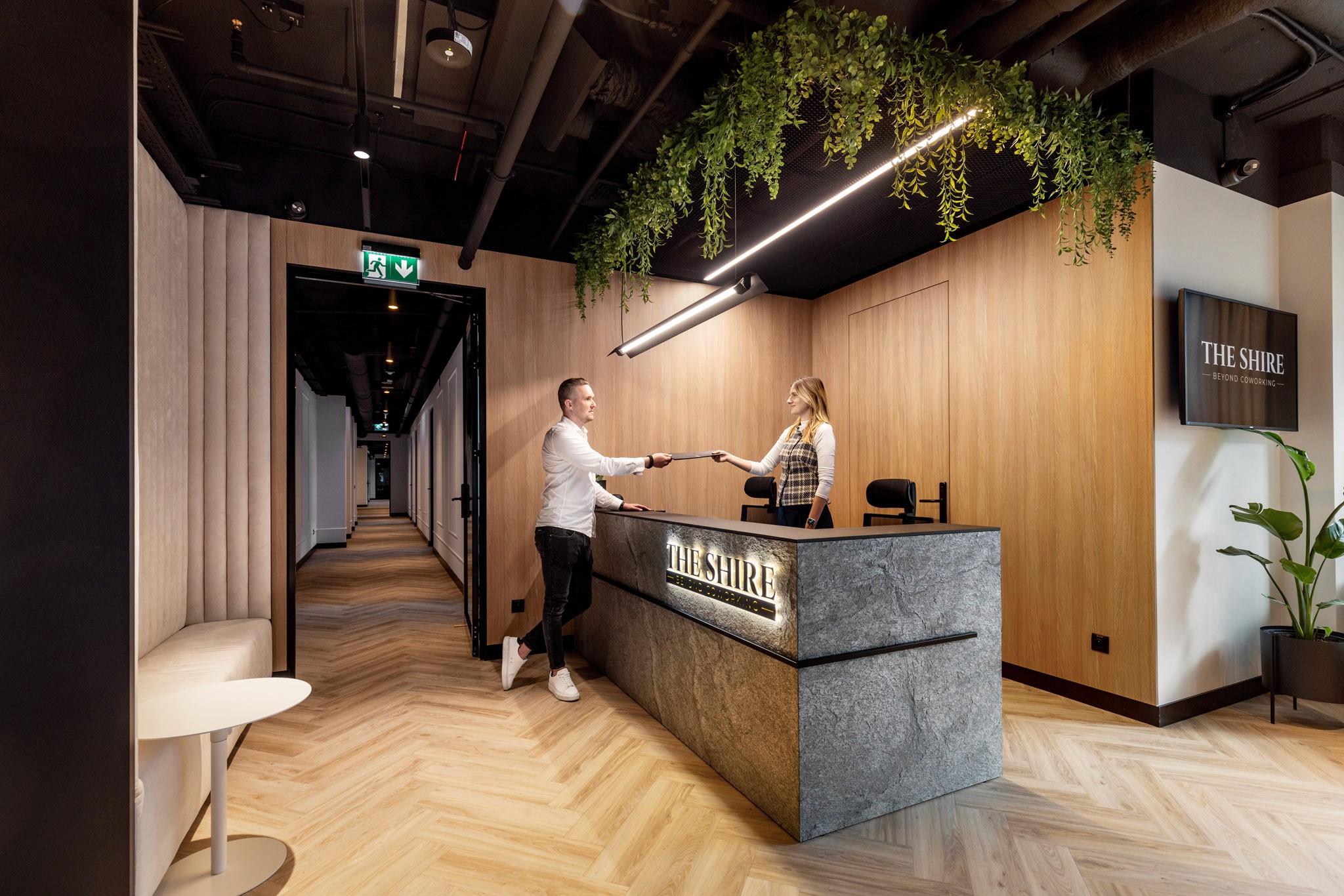
At The Shire, we see Beyond Access as an answer to what work looks like today: mobile, variable and demanding flexibility. We give access to professional space without rigid, costly lease agreements. At your disposal are a comfortable office, high-speed internet, reliable equipment, comfortable relaxation zones and good coffee - available when they are genuinely needed.
It is more than just somewhere to work. Along with access, we offer contact with our community, our events and our network of trusted partners in areas such as finance, legal, HR and IT, who support a company's growth and help build valuable relationships. We therefore combine flexibility with the real value of a professional environment and the people in it.
Getting started is simple. Get in touch and we will explain how Beyond Access works and help match a solution to your particular way of working. You can also visit one of our locations and see a The Shire space from the inside. And if your needs turn out to be more regular, we will tell you about flexible membership too - so that whichever model you choose genuinely fits.