Flexible office membership - how it works and what it costs


Not everyone needs an office full time. Some companies and specialists are in the office a few days a week. Others use space only during intensive periods. Others still want access to an office just in case, without paying for it every day. Flexible membership was created for them. It is a model in which the fee covers real access to a coworking space rather than a rigid, permanently assigned desk. Below we explain how it works, who it is for, and what affects the price.
What is flexible membership and how does it differ from fixed coworking?
Flexible membership is a way of using coworking space on a flexible basis. The fee covers access to the office on selected days of the month, rather than renting a fixed, assigned desk full time. Unlike fixed coworking, there is no single place occupied every day. Instead, the arrangement lets you use the space whenever the need arises. It is a solution for those who value flexibility and pay for actual use.
The difference comes down to billing and access. In classic fixed coworking, you rent a specific desk permanently. It remains at your disposal all month, regardless of how many days you actually work there. In the flexible model, the fee covers an access package - a set number of days per month or individual entries. You take a place in a shared office alongside other users on the day you come in, with access to the common areas and unlimited beverages. It works much like a pass: the purchase gives you access, which you use at a convenient moment.
The consequence is a different distribution of cost and freedom. Fixed coworking gives predictability and a place of your own, but costs the same whether you work there daily or once a week. Flexible membership lets you match the outlay to actual usage. A few days in the office each month means a lower cost than renting a workstation outright.
Flexibility does not mean giving up quality. Access to professional space, high-speed internet, work zones and facilities remains unchanged. What changes is the form of access, not the standard. For many people this is the most sensible way to use coworking: full comfort when it is needed, without paying for days worked elsewhere.
Flexible membership also fits well with the way work has changed. Daily presence in the same office has stopped being the only standard. More and more people work hybrid, on a project basis, or to a variable rhythm. Rigidly renting a workstation does not always match that reality, because it assumes a regularity that often simply is not there. Flexible membership answers this shift: it gives access to a good office, with a fee that stays proportionate to how you actually work.
Who is flexible membership for?
Flexible membership works best for people and companies who use an office irregularly: freelancers, entrepreneurs working hybrid, remote teams needing somewhere from time to time, and people looking for an alternative to a home office without a full-time commitment. The common denominator is a variable rather than daily need for space, together with a preference for paying for real usage.
The first group is freelancers and one-person businesses. Many work mainly from home, but a professional space is still needed a few days a month - when they need to concentrate, meet a client, or change surroundings and recover their working rhythm. Flexible access to coworking provides this without the cost of a permanent desk.
The second group is hybrid employees and companies. Part of the week falls to remote work, part to the office. Flexible membership means paying for the days actually spent there rather than for a full rental. It is an increasingly popular arrangement among companies that have abandoned daily attendance for every employee but still want to give their team access to quality space.
The third group is distributed and project teams. A team working mainly remotely occasionally needs somewhere to meet, run a workshop or push through an intensive sprint. It can use flexible access instead of maintaining a permanent office. For an employer, this is also a way to offer the team a good workplace without the cost of a full office that nobody would use every day in any case.
Flexible membership is not, however, optimal for those who are in the office every day and need a permanent workstation of their own. For them, fixed coworking or a private office tends to be better. The same applies where someone wants a guaranteed, personalised place with their own equipment; the flexible model may then prove less convenient. What counts is recognising your own working pattern accurately. Flexible membership rewards those who use an office irregularly, not those for whom it is a fixed daily fixture.
What does flexible membership cost and what affects the price?
The price of flexible membership depends above all on the scope of access, the location and the contents of the package. There is therefore no single universal rate. The more days of access, the more prestigious the location and the broader the range of additional services, the higher the cost. Rather than looking for one figure, it is better to understand the factors that shape it and match a package to your real needs.
The main influence on price is the scope of access - the number of days or entries per month. A package covering a few days will be cheaper than one giving almost daily access. The second factor is location. Space in a prestigious building in the centre of a large city is priced differently from a less central location, because it also carries the value of the address and its surroundings.
The third factor is what the package contains. Access to a work zone is one thing; membership may also include an allowance of hours in meeting rooms, additional services and amenities. The broader the scope, the higher the value and the price. It is therefore better to compare not the headline figures but what stands behind them.
Thinking in terms of a real working day helps when assessing cost. Simply take the cost of renting a workstation permanently and divide it by the number of days you actually work in the office. It often turns out that each day is surprisingly expensive. Flexible membership usually comes out better precisely because it eliminates paying for days of absence. Its greatest value is therefore for those who use an office markedly less than full time. The rarer and more irregular the usage, the greater this model's advantage over a fixed rental.
Specific rates depend on these factors and on the current offer. The most reliable way to establish a price remains contacting the manager of the space you have in mind and matching a package to your own needs. It is good practice to estimate the realistic number of days you would use an office each month. That is the best starting point for choosing a cost-effective option.
How flexible membership works at The Shire
At The Shire, we see flexible membership as a way of using our coworking space whenever the need arises, without rigid, costly agreements. We understand that the traditional model does not suit everyone. That is why we offer configurable arrangements matched to you and your whole team. The fee covers real access, not square metres that go unused.
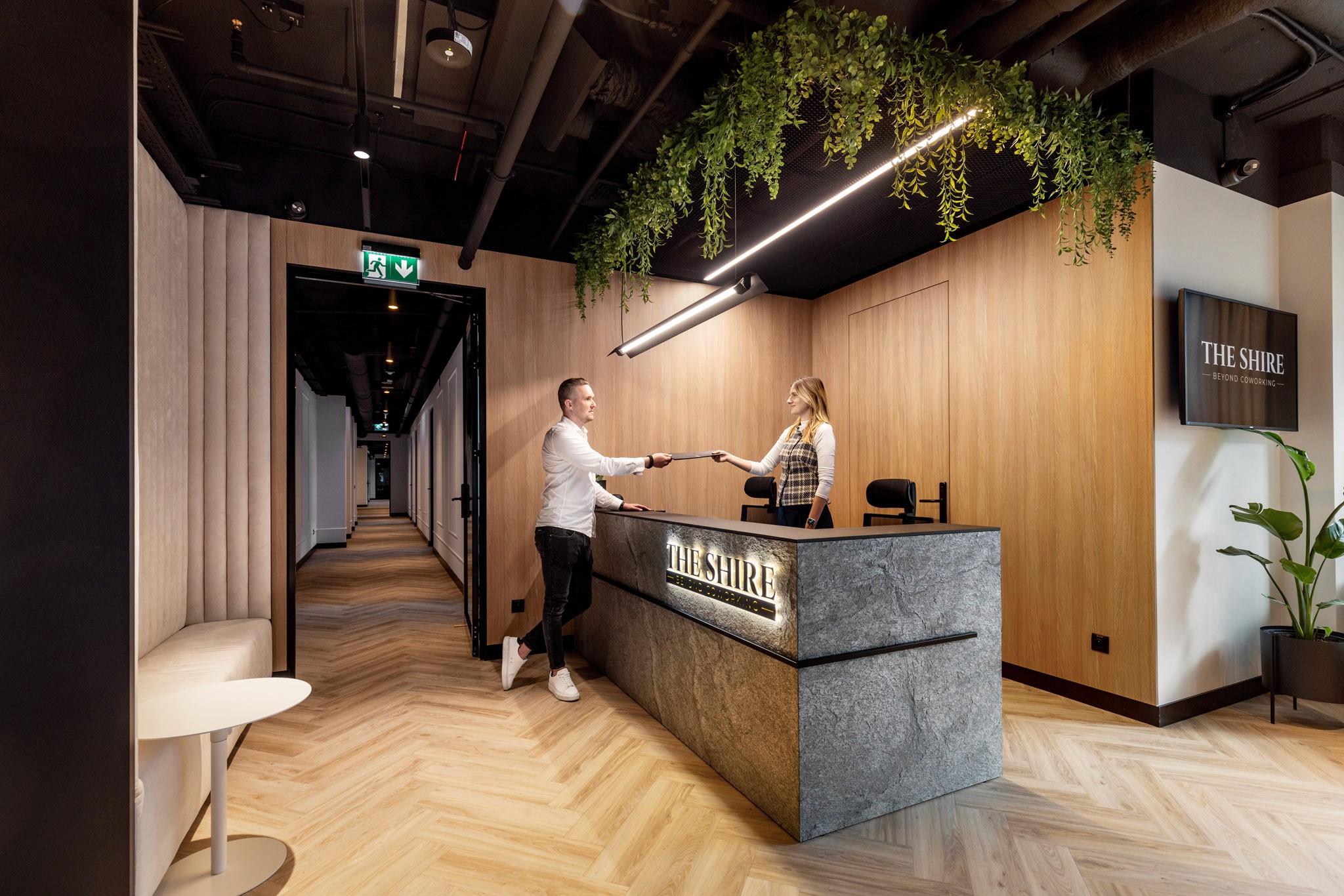
Membership gives access to the best of The Shire: comfortable work zones, high-speed internet, reliable equipment, comfortable shared areas and good coffee. All of it lets you work with full concentration and enjoyment. Added to this are our community, our events and our network of trusted partners, which make valuable contacts and support for your company's growth easier to come by.
Get in touch or visit one of our locations. We will help you choose a package tailored to your particular needs.