Hiring a training room - what to check before booking


One thing can ruin a good training session: a badly chosen room. Not enough space for a workshop. A projector that will not pick up the signal. An echo that means the back row hears nothing. No coffee at the break. Every one of these details tells on participants' attention and on the outcome you are paying for. Before clicking "book", it is worth working through a few specific points. They are what separates just any room from one matched to the particular session. This guide covers them in order.
Capacity and layout versus the type of training
Room capacity should be matched to the format of the training, not to the number of participants. The same group of 20 people needs an entirely different floor area in a theatre layout than at workshop tables. Always check how many people fit in a specific configuration, not how many will fit in the room at maximum. A room that is too cramped is tiring; one that is too large is distracting and drains the group's energy.
Seating layouts are what decide. Theatre style - rows of chairs - accommodates the most people and works for presentations and lectures where participants mainly listen. A classroom layout, with chairs and tables, gives room for taking notes and using a laptop, but reduces capacity. A horseshoe or circle encourages discussion and helps the group gel. Islands of separate tables are the choice for workshop activity in small teams.
The principle is simple: the more interaction and group work, the more space per person. A lecture needs little room per participant. A workshop with flipcharts, movement and work at tables needs markedly more. Ask about the possibility of reconfiguring the room. A good training room allows the layout to change from module to module.
Pay attention to the additional space as well. Somewhere for participant registration. A coffee corner. A wall on which work can be hung. Easy access to every table. These are the elements a description of "capacity for 20" usually omits, and they determine how comfortable the trainer and the group will be.
What can a training session not do without?
Audio-visual equipment is the foundation the whole session stands on. When it fails, even the best trainer cannot save it. Before booking, confirm several things specifically: the resolution and size of the screen, sound reinforcement appropriate to the room, stable internet, and a full set of adapters and clickers. Ask about the details. "A room with a projector" can mean anything from a modern 4K screen to a tired projector from a decade ago.
Start with the picture. A large, legible screen or monitor matters more than you might think. In the back rows, slides with small type simply disappear. Ask about the diagonal, the resolution and how legible the image is from the furthest seat. Check how a laptop connects too: HDMI, USB-C, wireless connectivity and the availability of adapters for different devices.
Sound is the other half of the equation. With larger groups, or in rooms with poorer acoustics, a microphone is needed - ideally wireless, so the trainer can move freely. If the programme includes video recordings or remote connections, the room must have good-quality speakers along with a camera and microphone for video conferencing.
Internet must not be forgotten. A fast, stable connection that copes with many devices at once is a basic requirement today, especially when participants are to use online tools or when part of the group joins remotely. Ask whether the network will support a dozen or several dozen simultaneous connections. Finally, check the small things that save training sessions: a flipchart with spare paper, markers, access to sockets at every seat, and the availability of prompt technical support should something stop working.
Acoustics and light
Acoustics and lighting affect participants all day long, though few people consciously notice them. Poor acoustics are tiring and make hearing difficult. Poor light causes drowsiness and headaches. A good room has damped echo, access to daylight and the ability to control it. These elements do not show up in photographs. You have to ask about them directly or view the room in person.
On acoustics, pay attention to echo and noise from outside. A room with bare, hard walls and no sound-absorbing elements can turn a discussion into a cacophony in which concentration is difficult. Ask about the neighbours too: a room beside a busy corridor, a reception desk or another conference room can be noisier than you would expect.
Light has two dimensions. Natural daylight improves wellbeing and maintains the group's energy, so windows are a considerable asset. At the same time you need to be able to cover them, because sunlight falling on the screen effectively kills the legibility of slides. Ideally, artificial lighting should be adjustable - dimmed for presentations and brightened for workshop activity.
Then there is temperature and ventilation. A stuffy, overheated room induces drowsiness faster than a dull slide. Check whether the room can be properly aired or whether it has effective air conditioning. For a full-day session with a full room, this is not a luxury but a condition for holding attention.
Catering and breaks
Breaks and catering are not an extra. They genuinely affect the outcome of a training session. Participants who are hungry and short of fresh air stop absorbing knowledge after about an hour. Establish in advance what the coffee breaks look like, whether there is access to lunch, and where the group can recover. Well-planned break logistics do more for concentration than many a methodological trick.
Constant access to drinks is fundamental. Coffee, tea and water available all day is the standard, and their absence immediately reduces comfort. Ask whether the coffee machine and drinks are in the room or right next to it. Trekking for coffee to the other end of the building lengthens breaks and disperses the group.
Longer sessions raise the question of food. Check whether the space offers catering or whether there are places to eat lunch nearby, and whether participants' dietary requirements can be accommodated. Somewhere to eat outside the training room matters too. Stepping away from the working table lets participants genuinely rest and return with fresh energy.
It is also worth thinking about a recovery area. A comfortable spot where people can sit for a moment, talk informally or simply take a breath from intensive work raises the assessment of the whole event. It is also a natural opportunity for networking between participants - often as valuable to them as the programme itself.
Transport links and parking
The location of the room determines how many participants arrive on time and in what frame of mind they start the day. A good training room is easily accessible by public transport and has the parking question resolved. Even the best programme loses value when half the group arrives late after circling in search of somewhere to park.
Check access by public transport. Proximity to tram and bus stops or urban rail stations matters particularly when participants come from various parts of the city or from outside it. Ideally the location should be easy to describe in one sentence in the invitation. The simpler it is to find, the fewer late arrivals.
Consider parking separately. Ask how many spaces are available, whether they are chargeable and whether they need to be reserved in advance. For participants arriving by car, especially from out of town, this is often the decisive comfort factor. Where spaces are limited, it is good to give the group alternatives in advance: nearby car parks, or encouragement to use public transport.
Accessibility for everyone must not be overlooked. A lift, the absence of architectural barriers and a convenient building entrance are the condition for anyone to take part without difficulty. It is also a signal of professionalism that reflects well on the organiser.
Flexibility of booking
Flexible booking terms protect you from costs when plans change - and in training, they change often. Before signing, check the rules for changing dates, the cancellation policy, and whether you pay only for the time you genuinely need. A rigid agreement can turn a minor schedule adjustment into an unnecessary expense.
Pay attention to the billing unit. Being able to hire a room for a few hours, half a day or a full day, rather than only in fixed packages, means paying for real needs. Ask exactly what the price covers: whether AV equipment, staffing and basic refreshments are standard or separate items.
The policy on changes matters too. Clear rules for postponing a date and a reasonable window for cancelling free of charge give peace of mind when a client moves a session or the number of participants changes. Check also how quickly a booking can be extended with an additional room or extra hours, should the group turn out to be larger.
Finally, think about repeatability. When planning a series of sessions, ask about terms for regular bookings, and whether the space offers support with organisation - from preparing the room to technical help on site. A capable partner takes weight off the organiser and lets them focus on content rather than logistics.
Before confirming a booking, it is worth running through the whole list mentally. Capacity in the appropriate layout. Verified AV equipment. Good acoustics and light. Catering and breaks. Access and parking. And finally, flexible contract terms. Where possible, view the room in person or ask for photographs and a detailed description of the equipment. Those fifteen minutes protect you from unpleasant surprises on the day. The best test is a simple question: will a participant in this room be able to hear, see and concentrate all day without fighting their surroundings? When the answer to each of these is yes, the room is ready for the session.
Training rooms at The Shire
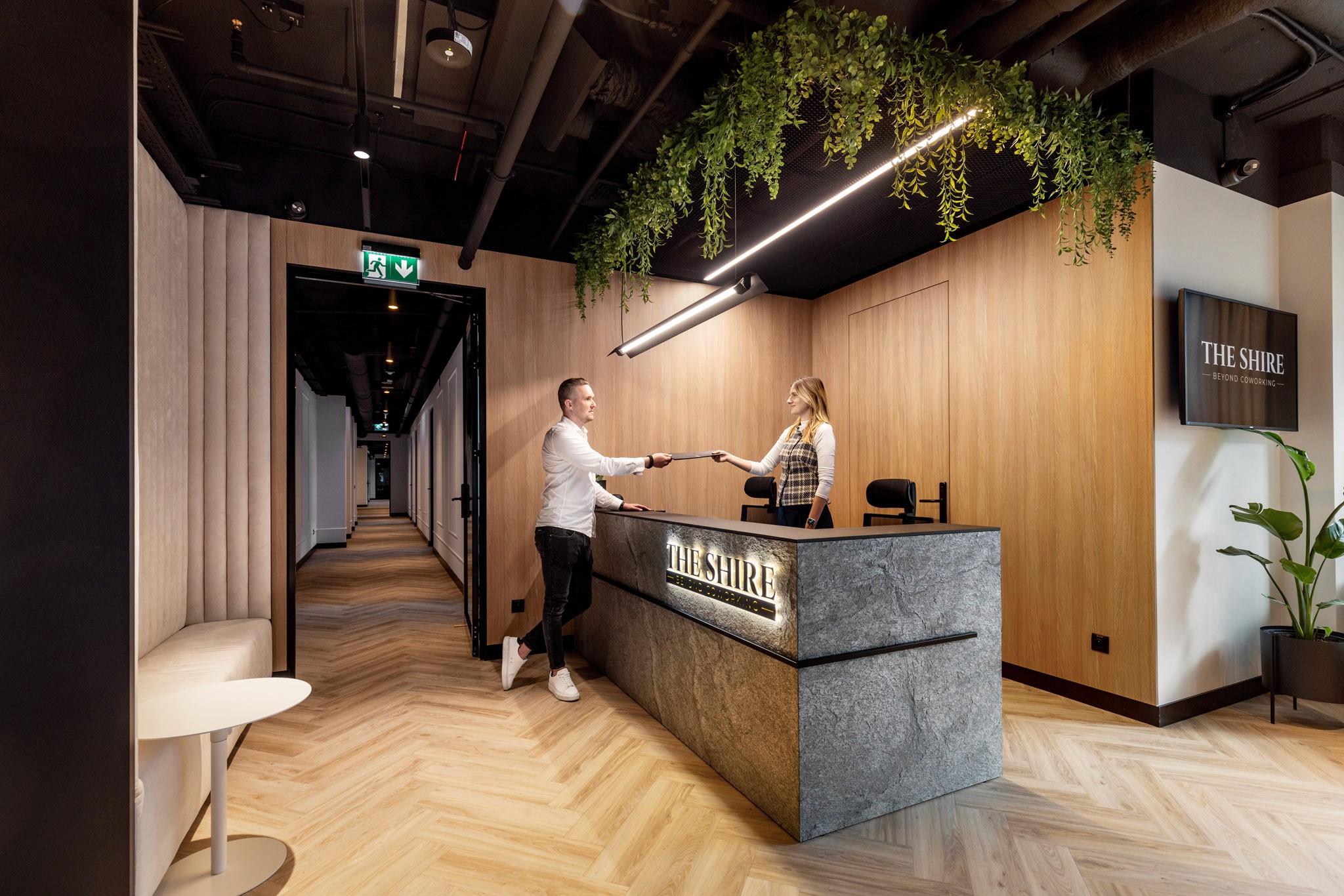
At The Shire, we design spaces to combine prestige with comfort, and we carry exactly that philosophy over to our meeting and training rooms. We offer modern equipment, comfortable relaxation zones, good coffee and fast, reliable internet - everything participants need to work with focus throughout the day.
We focus on flexibility, because we understand that rigid rental terms can be inflexible and expensive. With configurable arrangements, you choose the room and services to match the size of the group and the format of the session, without overpaying for things you do not need. Our locations in Warsaw, Kraków and Wrocław are well connected, which makes it easier for participants from across the city and beyond to reach you - and from September 2026 they are joined by Gdynia, followed by Poznań in October.
Would you like to check availability and find a room for a specific session? Get in touch. We will help match the space, the equipment and the logistics so that the event simply works.