Hot Desk - What It Is and Why It Changes the Way We Work



More and more companies are moving away from the "desk forever" model. The reason is simple and purely arithmetical. In a hybrid team, fewer than half of the people are usually present at the same time. Hot desking allows the space to be optimised without pushing employees out of the office.
In short:
A hot desk is a flexible desk without permanent assignment. You sit wherever there is space.
The format works in hybrid teams, for freelancers, and for consultants.
The main advantage is cost optimisation. One desk serves 1.5–2 people.
Hot desk vs dedicated desk is a choice between flexibility and a permanent, private workstation.
Hot desk - definition and how it works
A hot desk is a desk in an office space available on a first-come, first-served basis. It is not assigned to a specific person. The employee books a spot for a given day or chooses an available workstation directly on site, works for a few hours, and then leaves a clean surface. The next day they can occupy a completely different desk in a different part of the office. Put plainly: in this model, the space follows the person, not the other way around.
The idea of hot desking originated in the navy. Sailors working different shifts shared the same bunk, because it never had time to cool down. In an office it works similarly. If a team rotates, there is no point in maintaining empty desks for half the week. One desk can serve 1.5–2 people. This is a real reduction in the cost of space per employee.
In a full hot desking model, a clean desk policy applies. When leaving the office, you must take all your belongings and leave a clean workstation for the next person. Most operators provide lockers for personal items and equipment.
What does working at a hot desk look like in practice?
The day starts with a booking. In the operator's app or directly in the space. Then simply take the chosen desk, connect the laptop to the dock, and put on headphones. That is the extent of the formalities. Most operators provide full equipment: high-speed internet, an external monitor, cables, unlimited coffee and water.
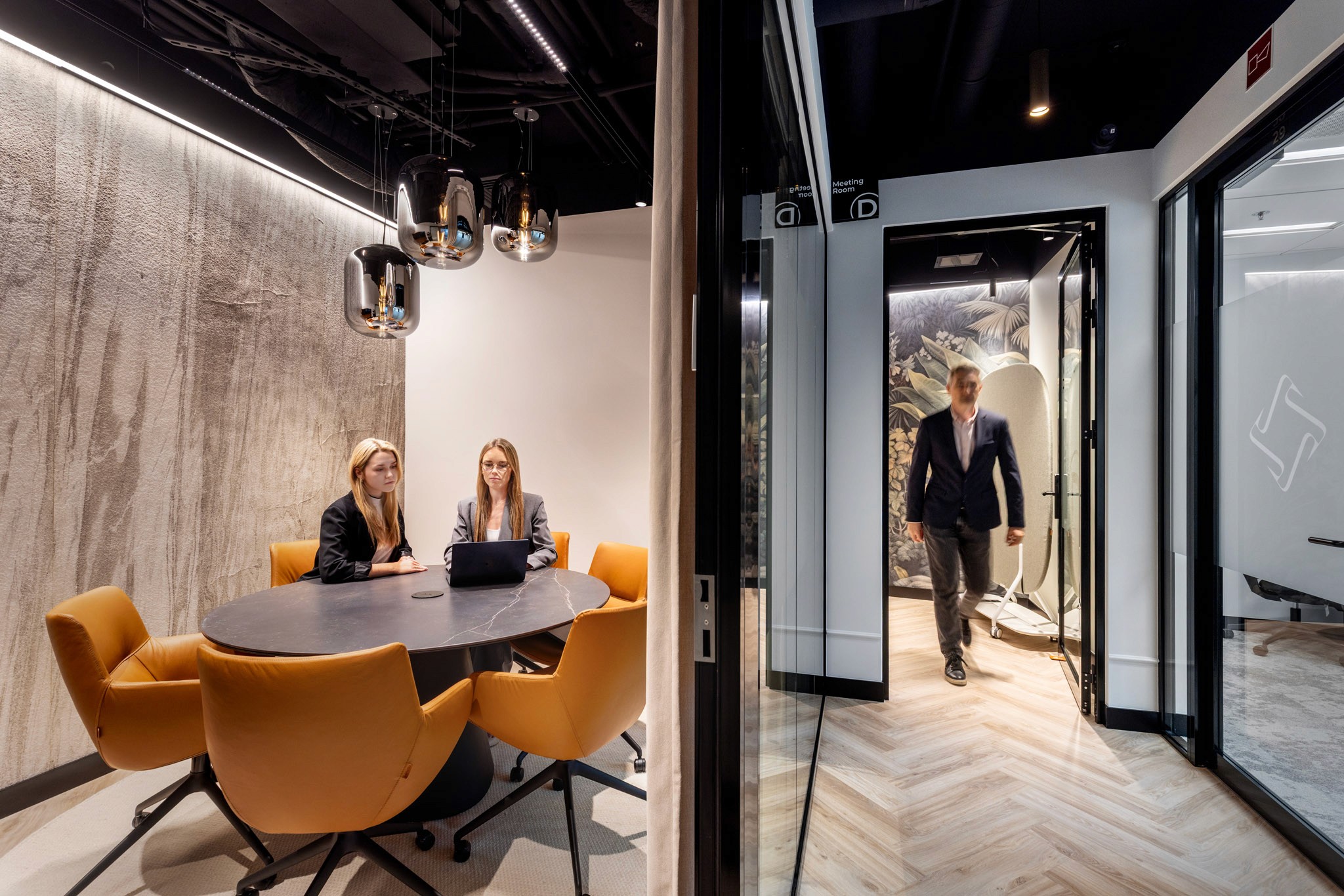
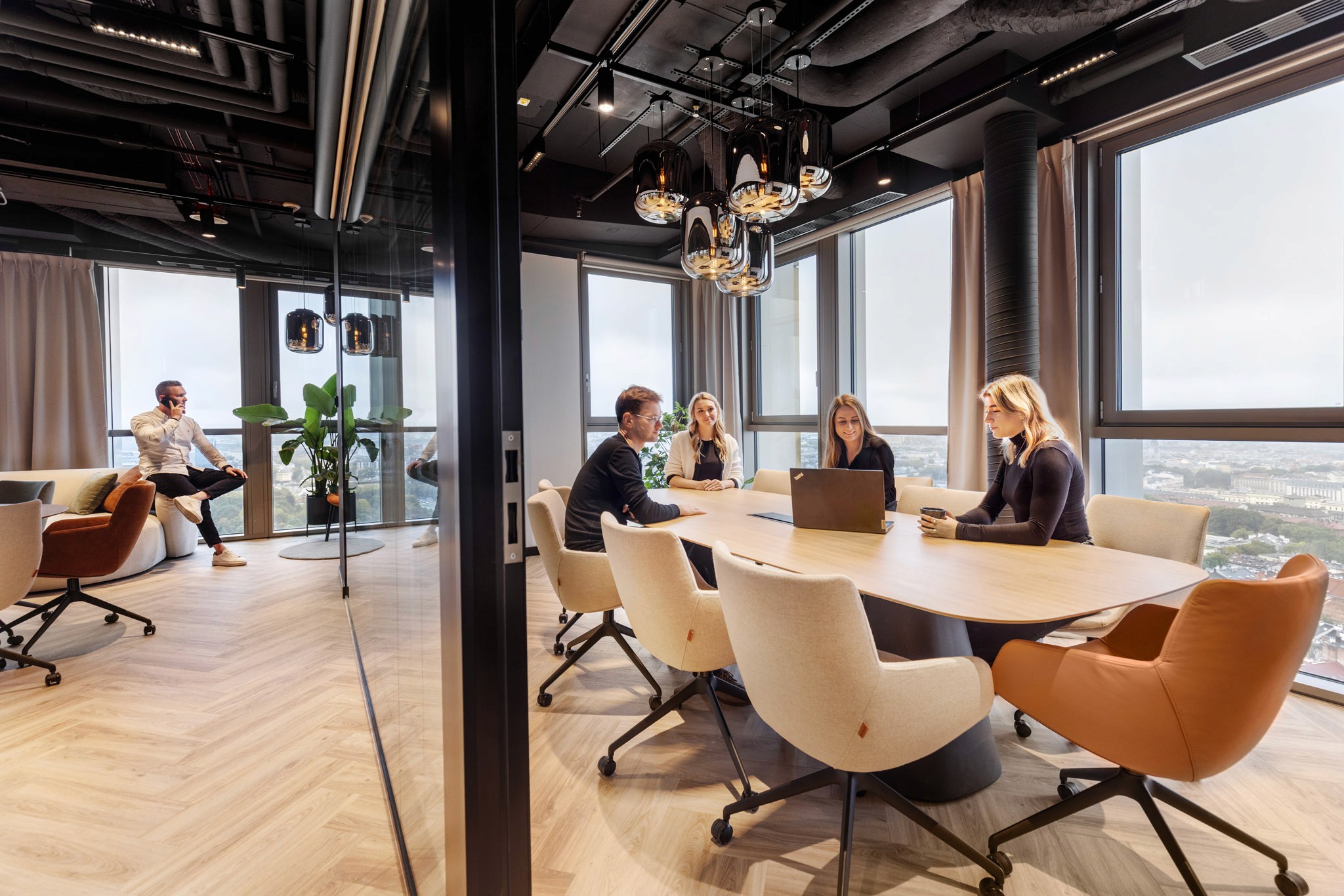
A typical hot desk space layout is a mix of zones. An open space with workstations at large surfaces. Focus spots for concentrated work. Meeting rooms booked by the hour. Phone booths for 1:1 calls. Kitchen areas. Over the course of a single day, you can comfortably change locations three times, depending on whether you need quiet, a conversation, or a light exchange of ideas with others.
A hot desk in a coworking space adds additional value. Working alongside people from other companies, industries, and teams means a change of environment. It also offers potential networking and the exchange of experiences absent when working from home.
The benefits of hot desking for employees and companies
The benefits of a hot desk are distributed on both sides. Differently for management, differently for the team.
From the company's perspective: Value here is measured primarily by the cost of space per employee. In a hybrid model (3 days in the office, 2 remote), the rational ratio is 6–7 desks per 10 people. The rest is savings. The second obvious value is scalability. New people do not need to be "squeezed" into the existing layout.
From the employee's perspective: The most important factor is variety. A different view, different neighbours, a different daily rhythm. For many people, this is a specific productivity boost compared with the monotony of a permanent workstation. There is also freedom - choosing a spot according to what the day brings.
Benefits also appear in the dimension of organisational culture. Less hierarchy in the space. More chance encounters between departments. Fewer silos.
Hot desk vs dedicated desk - which to choose?
The choice between a hot desk and a dedicated desk is essentially a decision about whether flexibility matters more than predictability.
Hot desk: Lower price, free choice of spot, but starting from scratch every day. Every morning you have to unpack the laptop, connect peripherals, and adjust the monitor. It works for 2–3 days in the office per week.
Dedicated desk: A permanent desk where you can leave a monitor, documents, and personal items. The price is higher, but daily setup is eliminated. This model is chosen by people who are in the office 4–5 days a week and need predictability.
The actual price difference is usually 30–50 per cent. The fixed monthly rate for a dedicated desk is higher precisely because you reserve the space exclusively, and the operator cannot share it.
How much does a hot desk cost and where to find one?
The price of a hot desk depends on the city, the location within the city, and the package. Four things affect the bill. The city and the building class. The prestige of the location (centre vs outskirts). The number of access days in the package. The scope of additional services: meeting rooms, printing, events.
A hot desk in Kraków and Wrocław is usually priced lower than in Warsaw. However, differences between Class A locations are sometimes smaller than expected. A multi-day package is typically cheaper than ad hoc daily access. The best way to make a sensible choice is to visit 2–3 venues in person during working hours.
For those looking for a hot desk in a coworking space in Poland's largest cities, the list of locations below will be helpful:
Who is a hot desk the best solution for?
Hot desking is not a solution for everyone. For a few specific profiles, however, it works exceptionally well.
Freelancers and consultants. A hot desk is an alternative to working from home and cafés. It provides structure to the day, access to a community, and a representative address. You pay only for what is actually used.
Hybrid teams. If people come in 2–3 days a week, maintaining full-sized workstations for everyone is plain waste.
Mobile and sales employees. They appear in the office occasionally but need a well-equipped point for client meetings and work between trips.
Small project teams. A few people for 3 months to close a project. A hot desk allows entry and exit without contracts, penalties, or relocation.
If the team needs predictable access to space with the option of choosing a location, it is also worth considering membership formats. Details are available here: flexible membership.
Hot desking is not just a trend or a cheaper office substitute. It is a different way of thinking about space. One in which a desk is a tool, not a possession.
If you are wondering whether a hot desk fits the rhythm of your team and which location is worth considering, get in touch. At The Shire we will help you match a package to your real way of working, without unnecessary services in the price.