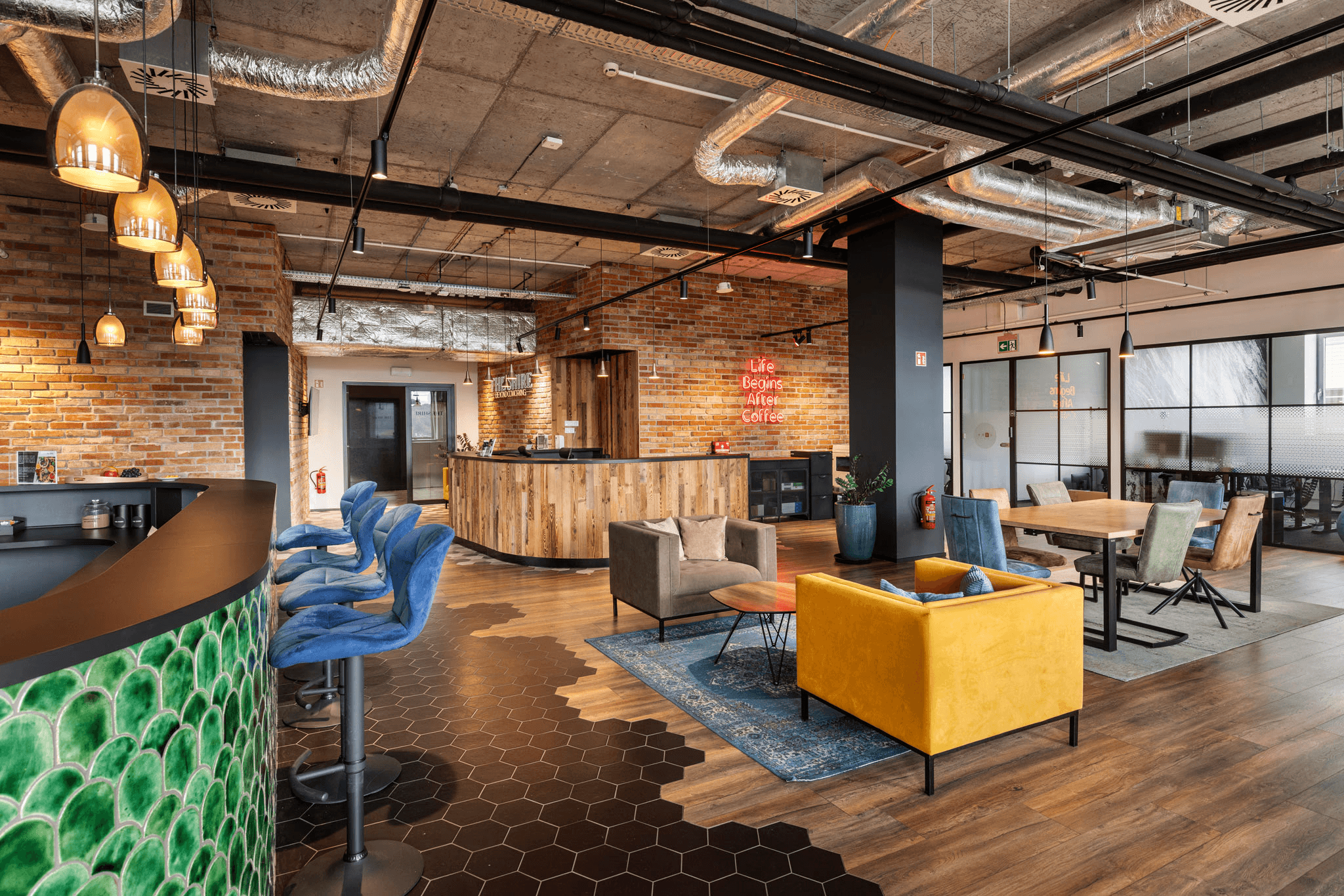
How to Choose an Office Location?
Published: Mar 31, 2026


Choosing a company's location usually starts with one question: "Where will it be convenient for us to work?" - and ends with a much harder one: "Will this decision still work in one year and in three?" The office location affects commutes, costs, recruitment, team comfort, and how the company is perceived by clients. This article will show you which non-obvious factors to consider and which solutions will work best for you.
Quick Answer:
The best office location is one that shortens commutes and removes friction from daily work - not one that merely "looks good on a business card."
A city-centre office makes sense when meetings, prestige, and transport accessibility matter; peripheral locations win when logistics and parking are the priority.
Costs are not just rent - factor in staff turnover, absenteeism, commuting time, and top-ups for infrastructure (meeting rooms, privacy, parking).
In practice, locations that can scale are the ones that win: they fit the team today and do not block growth tomorrow.
Before you sign a lease: test the commutes, check nearby amenities, and draw up a quick "client map" of the places you actually travel to.
Transport Accessibility and Employee Commute Times
The ideal office location is not the one "in the best spot on the map" but the one people can actually reach without losing half a day and their nerves. The most common mistake is eyeballing the commute ("there is a tram, after all") instead of checking specifically: which districts does the team commute from, how long does it take during rush hour, and whether anyone faces two transfers and a 15-minute walk. In HR, this usually becomes visible first: tardiness increases, people come to the office less often, and the hybrid model turns into "home office with one compulsory commute per week."
If the team is spread across the city or you work in a hybrid model, sometimes a better move than a single rigid headquarters is a model in which some people choose a location closer to home. Then "location" becomes flexible rather than a single fixed point - and this can genuinely improve office attendance and working comfort. If you are looking for solutions in the capital, a good example of this approach is a coworking zone in Warsaw - useful when you need a professional space without a multi-year commitment and want to see how working across different zones (quiet, conversation, meetings) feels in practice.
If the majority of the team commutes by public transport and predictability matters, a location near a transport hub wins; if people mostly drive and the working day starts early or finishes late, ease of exit routes and parking become the priority.
Office Location and Rental Costs
Rental costs do not end with the headline rent. The office location influences how much you will top up (or "burn through" indirectly) over time: higher commuting costs, harder recruitment, turnover, more frequent absenteeism, or the need to rent additional meeting space. That is why, when choosing an office location, it is worth thinking like a CFO and an HR director simultaneously: does the office support work and attract people, or does it just look good in a spreadsheet?
In practice, the most common dilemma is: the city centre or the outskirts. Below is a comparison to help you avoid the "cheaper = better" or "prestige = essential" trap.
Criterion | City Centre | Outskirts / Near Major Roads |
|---|---|---|
Public transport commute | Usually the best and most predictable | Can be more difficult; depends on the district and routes |
Car commute | More frequent congestion and parking restrictions | Usually easier logistically |
Client meetings | More convenient to arrange and easier to find | Practical if clients are also "on that side" |
Costs (broadly defined) | Often higher, but you gain time and accessibility | Often lower, but the risk of "invisible" commuting costs rises |
Recruitment & employer branding | Usually a plus with candidates | Depends on the industry and role profiles |
Flexibility in case of change | Good, if you choose a model that is easy to scale | Good, if you have a stable team and logistics |
If you want to lower costs while maintaining a professional address and "not paying for empty desks," consider separating functions: the registered and correspondence address can be standalone, while team work can be flexible. Then the company's headquarters and its location stop being "one expensive package." An example of such a solution is a virtual office - useful when you do not need a permanent office presence every day but want your formalities in order.
Address Prestige and Its Impact on Company Image
Prestige is not a vanity project when it genuinely affects sales, trust, and B2B processes. An address can ease the first conversation with a client, strengthen credibility during recruitment, and make a difference when you invite partners to meetings. The problem begins when prestige is the sole criterion and the office becomes inconvenient day-to-day: a difficult commute, no sensible meeting zone, logistical chaos.
The straightforward approach is this: if your company sells services, meets clients face to face, conducts recruitment interviews, or needs a representative space, address prestige carries more weight. If work is primarily project-based and meetings are online, prestige is a "nice-to-have" rather than a key condition. The best office location is one that supports your real processes, not your image of the company.
If you sell "face to face" and frequently host visitors, go for an address and building that require no explanation ("it is over there, where parking is impossible and you have to navigate two entrances"); if meetings are rare and you mainly need formal order, prestige can be achieved in ways other than large floor space.
Proximity to Clients, Partners, and Institutions
An office location makes sense when it shortens the distance to the things you do most often. For some companies, that means clients and business partners; for others, institutions; for still others, transport hubs (airport, railway station) or venues where industry events take place. Surprisingly often, companies choose an office "for the team" and then spend most of the week in transit because key clients are on the other side of the city. The reverse also happens: the office is perfect "for clients," but the team does not want to commute, creating tension and falling attendance.
A simple approach to the decision is a "week map": list the 5–10 places you visit most frequently (clients, partners, institutions, events) and check whether the office sits at a logical midpoint. If it does not, that is a signal that the choice of office location should account not only for employees but also for the direction in which the company actually moves.
Nearby Amenities - What Really Matters
Nearby amenities sound like a "nice extra" until you start relying on them every day. In practice, what counts are not the ones that look good in a description but the ones that save time and improve working comfort. Three things usually win: decent food nearby (so that a break is not an expedition), places for a quick off-site meeting (coffee, lunch), and access to services that "take care of life" (parcel locker, pharmacy, small shopping). For some teams, nearby spots for a short reset also matter - but this always comes back to the work profile and the people you employ.
It is also worth remembering image in practice: if you invite clients, the "neighbourhood" becomes part of the experience. The ideal office location is not just the building but also the context: can a guest find it easily, is there somewhere to wait, can a meeting be conducted without stress?
Parking, Bicycles, and Alternative Commuting Options
Parking is a criterion that companies often underestimate during the search phase and then pay for daily in frustration. If even part of the team drives, the lack of a workable parking solution acts as a tax on work: lateness, circling for a spot, tension, and "I will stay home today because I do not want to deal with it." On the other hand, if most people commute by public transport and parking is expensive and rarely used, there is no point building the entire decision around cars.
Cycling and alternative commuting options (scooters, car-sharing) gain importance when the office is meant to be genuinely "within reach" and encourage attendance. Then practical details matter: secure bicycle storage, convenient surrounding infrastructure, and the ability to commute flexibly when the weather changes. This topic carries the most weight where a company wants the office to be a living space, not merely a formal location on the website.
If the headquarters is "meeting-oriented" and visitors arrive regularly, plan access and parking with them in mind; if the office is primarily for the team, match the solution to the dominant commuting mode.
Today's Location vs the Company's Needs in 2–3 Years
The biggest mistake when choosing an office location is making the decision solely based on the current situation. In 2–3 years, what most commonly changes is: headcount, the working model (more hybrid or a return to the office), meeting requirements, team structure, and whether the office is meant to be the "centre of company life" or a streamlined collaboration hub. If you have 8 people today but plan to grow to 20, the location and office model should be able to handle that. If meetings are online today but you are building enterprise sales tomorrow, the importance of representative space and guest accessibility suddenly rises.
That is why, instead of asking only "where now?", it is better to ask: "how easily will I be able to change the floor space, the number of workstations, or the number of days we work from the office?" This is the practical filter for the best office location: the point is not to predict the future perfectly, but to avoid blocking your own next move. Within this logic, solutions that are ready-made, scalable, and do not require building an office from scratch with every change work exceptionally well.
Checklist - A Quick Method for Choosing a Location
Check where the team commutes from and calculate realistic travel times during rush hour (at least 2–3 routes per person).
Draw up a short client/partner map: where do you travel most often and how frequently?
Decide whether the office is "for the team," "for meetings," or "mixed" - and weight prestige accordingly.
Evaluate nearby amenities for daily needs (food, quick errands, meeting spots).
Verify parking and alternative commuting options against the dominant model (car vs public transport vs bicycle).
Ask the future question: how will headcount and the working model change over a 2–3 year horizon, and can the location handle it?
Choose the Ideal Location for Your Office with The Shire
Choosing a company location becomes simpler when you stop looking for the "best address in the city" and start matching the place to your work process: commutes, meetings, recruitment, and growth plans. If you want a headquarters that is ready, professional, and easy to scale without office logistics, explore The Shire's serviced office offering across three cities: serviced offices in Warsaw, serviced offices in Kraków, and serviced offices in Wrocław.

Published: Mar 30, 2026
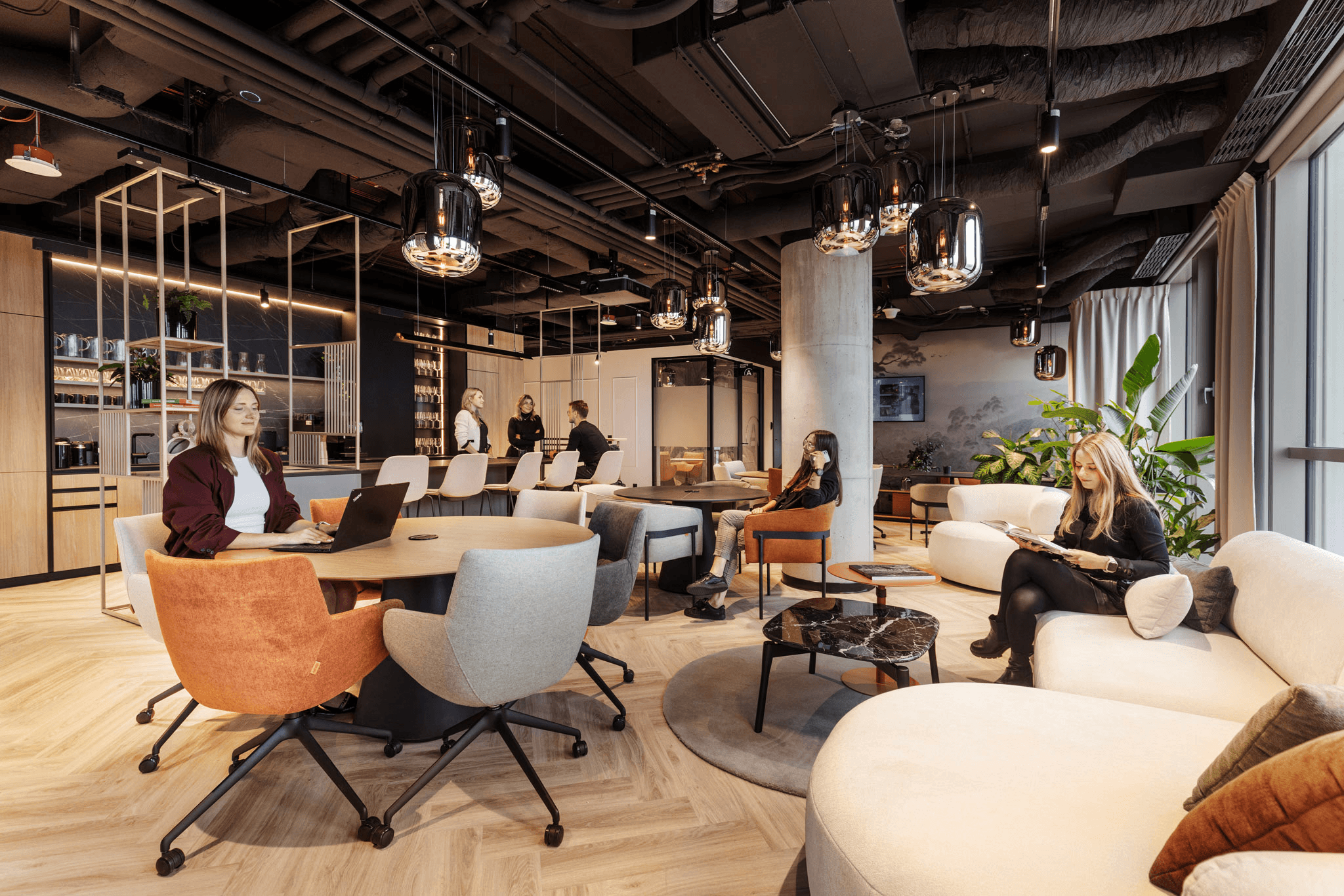
Coworking - What Is It and When Does It Pay Off?
If you are considering coworking, you probably want to work in a professional environment without having to deal with the entire "office management" layer: contracts, renovations, utility bills, breakdowns, or space organisation. In practice, coworking is a fully equipped workspace where you choose a usage model tailored to your needs - from a flexible desk to a private room - while the day-to-day maintenance and management are handled by the operator. This guide will help you match the type of coworking to your working style, avoid common mistakes, and assess when a coworking zone truly pays off.
Quick Answer:
Coworking works when you want an immediate start and minimal operational overhead on the company's side.
The choice of model depends on privacy, the volume of calls, and whether you need a permanent spot.
Price is driven mainly by location, standard, contract flexibility, access to meeting rooms, and the level of privacy.
The most common mistakes are: "buying too many desks," a lack of team rules, and ignoring acoustics.
It is safest to start with a flexible model and scale up later.
Coworking in practice - what does a working day in a coworking space look like?
A well-designed coworking space functions as a ready-made back office: you arrive and work without having to set up an "office" from scratch. In the morning, you pick a spot (or sit at your assigned desk if you have a dedicated one) and get started. Throughout the day, you switch between modes: focused work, quick conversations, a client meeting, a fast video call. The key point is that coworking gives you different zones - and a coworking zone is not a decorative label but a real division of space into quiet work, conversations, and meetings, making it easier to maintain momentum without disturbing others.
If you want to see this layout in practice (work zones, conversation areas, meeting facilities), take a look at The Shire coworking zone in Warsaw.
Coworking for teams - how do companies "set it up" so that it works?
For companies, coworking is most cost-effective when it is simple to use and does not generate chaos. Typically, it works like this: HR or a team leader establishes who comes in on which days (to avoid "everyone on Wednesday"), and the team has clear rules about where phone calls happen and where meetings take place. Without these, even the best coworking space can turn into a problem: some people search for a free spot, others have nowhere to make a call, and managers see a decline in work quality. The good news is that a few simple rules and a one-week trial are usually enough to get everything in order.
What are the types of coworking?
Types of coworking differ primarily in the "permanence" of the spot and the level of privacy. This matters because many people choose an option that is too flexible (and then become frustrated by the variability) or too rigid (and overpay for unused workstations).
Type | How It Works | Best For | Key Benefit | Watch Out For |
|---|---|---|---|---|
Hot desk | Sit wherever a spot is free | Hybrid workers, soloists, rotating schedules | Maximum flexibility | Less predictability and "no spot of your own" |
Dedicated desk | You have an assigned, permanent desk | Permanent roles, small teams, work with accessories | Comfort and a "home base" routine | Less flexibility when headcount changes |
Private office | A separate, private office within the coworking space | Teams, roles requiring confidentiality, heavy call load | Privacy without managing an office | Match the number of seats and meeting-room needs carefully |
Which option to choose depending on the situation?
If you work 1–2 days a week in the office and simply want to drop in, work, and leave - a hot desk usually wins.
If your work requires a stable setup (equipment, documents, routine) or you want to eliminate "finding a spot" entirely - a dedicated desk is typically more comfortable.
If the team has a high volume of sales calls, recruitment conversations, or confidential topics, or you simply need quiet and control - a private office is the most predictable option.
Who does coworking pay off for?
For business owners and individuals who want to operate "without office logistics"
Coworking pays off when you want a fast start and working conditions that support focus rather than consume it. It is a good direction if working from home is starting to blur with personal life, if you need regular meetings with clients or candidates, or if you do not want to commit to a long contract because you know your needs may look different in a month or two. In practice, coworking also serves as a "safe transitional stage" during company growth: instead of investing in a full office fit-out, you have a ready-made coworking space, and your budget stays focused on what actually drives the business.
For HR / office managers and teams (on behalf of the company)
For HR, coworking pays off when flexibility and the ability to quickly organise workspaces without a large investment matter. It is a good solution for hybrid working, distributed teams, periods of organisational change, or whenever you want to give people a sensible alternative to home. It is worth remembering, however, that "coworking for a company" requires a minimal rollout: attendance rules, zones (quiet vs conversations), and a room-booking process.
When coworking may not be the best choice
If you need absolute silence for most of the day and any background noise disturbs you, coworking with an open section may be draining - in that case, look for options with greater privacy or a better zone layout. If you have very specific infrastructure requirements (storage, specialist equipment) or need full control over the fit-out and branding of the space, coworking may be more of a transitional stage than a long-term destination.
How much does coworking cost and what drives the price?
In coworking, the biggest pitfall is comparing only the "price per desk," because in practice you pay not just for a spot but also for the standard, flexibility, and access to meeting infrastructure. Cost is driven primarily by location and building class, level of privacy (open space vs dedicated desk vs private room), availability of meeting rooms and call zones, and how easily you can change the number of desks or the usage model over time.
What Is included in the price and what Is typically an "add-on"
Usually, the package covers core work infrastructure and space management, while the differentiators are: quality and availability of meeting rooms, quiet-work options, flexibility (shorter commitments, easy scaling), and whether the space is designed for different work modes or merely "looks nice." If you want to start as safely as possible and see how coworking works for you or your team, a sensible starting point is our flexible membership at The Shire - it lets you test real needs before committing to a more permanent model.
Common cost mistakes (and how to avoid them)
The most common overspend happens when you buy more desks "just in case" instead of measuring actual occupancy over 2–4 weeks. The second mistake is underestimating calls and meetings: if the team has a heavy call load, the absence of a plan for conversation zones and room bookings quickly hits productivity. The third mistake is a lack of simple team rules - at that point, coworking starts costing "hidden" time because people spend more effort organising than working. Best practice is straightforward: pilot, measure, adjust.
How to test coworking without risk (a short plan)
First, choose a small test group (e.g. 2–5 people), establish attendance days, and after two weeks gather feedback: where is quiet missing, where are conversation spaces lacking, how does meeting logistics work? Only then choose the model. This way, you match the solution to the work - not to the assumptions.
Pros and cons of coworking
Pros
The biggest advantage of coworking is very down-to-earth: you reclaim time and peace of mind because you are not managing an office. Instead of dealing with utility contracts, servicing, breakdowns, and space organisation, you have a ready-made work environment that supports the rhythm of the day. For a business owner, this often means a faster start and fewer operational decisions; for HR, it means easier workspace provisioning in a hybrid model. Additionally, a well-executed coworking space provides a natural division into zones: where quiet is needed, it is quieter; where conversations happen, the conditions are right; and meetings can be held in a more professional setting than "on headphones at a desk."
Cons (and how to work around them)
Coworking also has limitations, and it is worth naming them directly. First: noise and distractions in the open area - this can be resolved by selecting the right zone, using conversation rooms, and choosing a model (dedicated desk or a more private option). Second: less privacy compared to your own office - if you handle sensitive conversations or documents, the key is matching the space to the specifics of your work, not opting for the "cheapest option." Third: in hot-desking, the workspace can vary day to day, which does not suit everyone - if you find yourself losing time to "settling in" every morning, switching to a dedicated desk can radically improve comfort.
Decision Checklist: Is coworking right for You or Your Company?
Do you want to start working in an office quickly, without fit-out and service contracts?
Could the number of people and office days change over time?
Does the team have a high volume of calls and need meeting/call spaces?
Is a professional setting important for clients or candidates?
Does working from home reduce focus or blur into personal life?
Do you need a sensible division into zones (quiet, conversations, meetings)?
Are you able to implement simple usage rules (especially for a company)?
Coworking at The Shire
Coworking pays off most when you are buying not "a desk" but an efficient working system: a ready-made space, sensible zones, meeting capability, and flexibility tailored to your situation. If you want to see how coworking looks in practice and choose a location that suits you or your team, explore the available locations across the 3 cities where we offer coworking zones:
Coworking in Warsaw
Coworking in Kraków
Coworking in Wrocław
If you want to start as simply as possible and test the model without "overshooting" your assumptions, a good first step may be our flexible membership.
READ MORE

Published: Mar 29, 2026
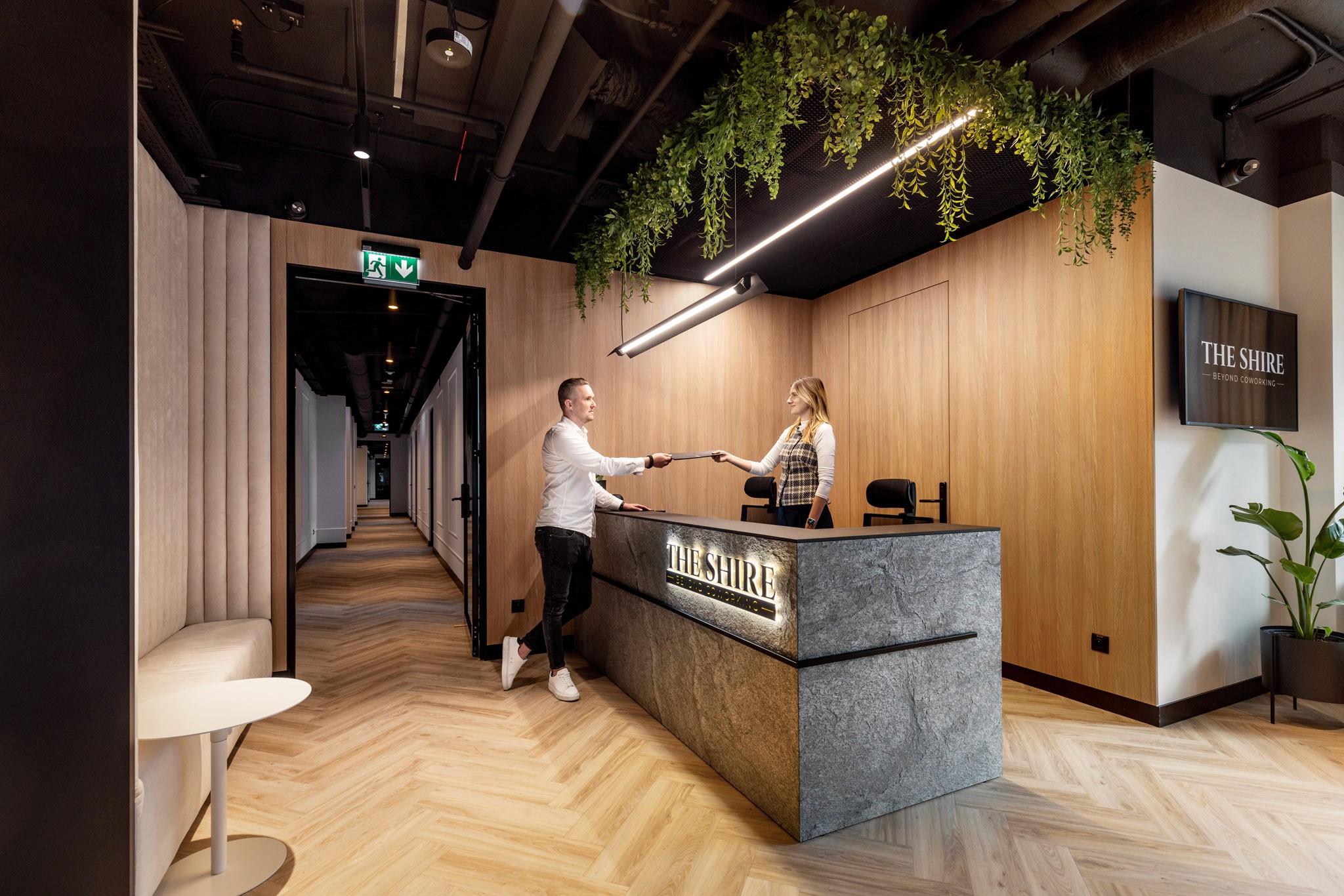
5 Signs Your Company Should Move to a Serviced Office
Not long ago, having your own office was a symbol of stability.
Today, it often becomes a limitation.
Work models are changing. Teams are evolving. Business moves faster than ever.
But office space? It often stays the same — misaligned, costly, and inflexible.
More and more companies are asking:
Is our office still supporting growth — or is it slowing us down?
Serviced offices are no longer an alternative.
They are becoming the new standard.
1. Your Office Is Too Big… or Too Small
Empty desks or lack of space for new hires both point to the same issue:
your workspace no longer matches your real needs.
Traditional leases force you to plan years ahead — in a reality that changes every few months.
Serviced offices work differently:
expand your space as your team grows,
scale down when projects end,
avoid relocations and unnecessary costs.
Your office adapts to your business — not the other way around.
2. You’re Paying for What You Don’t Use
Office costs go far beyond rent. They include:
utilities,
reception services,
cleaning,
maintenance,
furniture and fit-out.
In a traditional office, you pay for everything — whether you use it or not.
In a serviced office, you pay for the outcome:
a fully operational workspace, ready from day one.
one predictable fee,
no hidden costs,
complete transparency.
3. Managing the Office Is Draining Your Time
Your office was meant to support your business.
Instead, it often becomes a distraction.
Daily issues like:
internet outages,
dealing with building management,
organizing deliveries,
coordinating services
consume time and energy that should be spent on growth.
In a serviced office, operations are handled for you.
You focus on what actually matters.
4. Your Team Expects More Than Just Desks
The office is no longer just a workplace.
It is an experience.
Employees expect a space that:
supports focus,
enables collaboration,
offers comfort and aesthetics,
creates a positive work environment.
Natural light. Quiet zones. Meeting areas. Great coffee.
These details may seem small — but they directly impact engagement and satisfaction.
Modern serviced offices are designed for people — not just function.
5. You Need Flexibility, but Your Lease Is Fixed
Business no longer operates on five-year plans.
New markets, shifting teams, evolving priorities — change is constant.
Long-term leases limit your ability to adapt.
Serviced offices give you flexibility.
scale your space when needed,
respond faster to change,
make decisions without long-term risk.
This is a model built for today’s pace of business.
An Office That Grows With Your Business
Moving offices is not just about changing location.
It’s about changing how you think about work.
A serviced office means:
less management,
less risk,
more flexibility,
more room for growth.
From startups to large organizations, companies are increasingly treating this model as the new standard.
Time for a Change?
If you recognize your company in these signals,
it’s probably not just about the office.
It’s about the next stage of your business.
Visit The Shire Beyond Coworking and discover what a workspace that truly works for you looks like.
READ MORE

Published: Feb 25, 2026
Employee Wellbeing and the Workplace: Why Companies Are Choosing Coworking
In discussions about returning to the office, many organizations still focus on one question: how do we increase attendance?
From an HR perspective, that is too narrow.
The real question is:
Do employees have a meaningful reason to come in — and does the workspace genuinely support how they work?
This is where three critical areas intersect:
employee wellbeing
employee experience
engagement
And this is not a “soft” topic. Global engagement levels have dropped significantly in recent years, costing organizations hundreds of billions in lost productivity. At the same time, only a minority of employees report truly thriving in their overall lives.
Wellbeing is no longer a perk.
It is a business variable.
Wellbeing as a Strategic KPI — Not a Benefit Add-On
Employee wellbeing has become one of the most important global management trends. Increasingly, it is discussed not as an isolated initiative, but as a driver of:
productivity
retention
organizational resilience
financial performance
Leading global institutions highlight that investing in workplace wellbeing can generate enormous economic value. This represents a major shift for HR: wellbeing is no longer solely a culture or communication topic. It must be designed systemically — including through the physical work environment.
Why Employees Don’t Want to Return to the Office
In most cases, the issue is not resistance to office work itself. It is the absence of a compelling “why.”
If the office does not offer better conditions than working from home, employees mainly see the cost:
commute time
logistical effort
disruption of daily rhythm
Research consistently shows that the biggest hybrid challenges are:
relationship building
cross-team collaboration
cultural cohesion
These are precisely the areas owned jointly by HR and leadership. If the workspace does not actively support collaboration and connection, attendance policies alone will not solve the problem.
Enforcement Doesn’t Replace Experience
Many companies attempt to increase attendance through stricter policies. Meanwhile, employees point to practical barriers — especially commuting time and daily convenience.
For HR leaders, the critical questions are:
Does coming to the office make work easier?
Does the environment improve collaboration?
Are employees offered better conditions than at home?
Does the commute feel worth it?
Without clear answers, office return strategies risk being perceived as pressure rather than support.
HR’s New Role: Designing the Work Experience
Today, HR’s strategic role is shifting from managing attendance to designing the work experience.
Engagement rises when employees:
have space for deep focus
collaborate efficiently
avoid organizational chaos
feel purpose in their presence
Research also shows that team engagement is strongly influenced by managers. And managers need environments that enable them to:
lead effective meetings
onboard new team members
build trust and relationships
establish a productive team rhythm
The workspace becomes a leadership tool.
Why Coworking Is Becoming a Strategic Solution
More companies now see coworking not as a substitute office, but as a deliberate HR and business tool.
Well-designed coworking environments:
provide conditions for focused work
offer comfortable collaboration areas
support natural human interaction
allow flexibility based on tasks and team rhythm
Location also plays a critical role. Reduced commute times and accessible transport options significantly influence whether employees consider office attendance worthwhile.
This shifts the logic entirely.
Employees come not because they must — but because they see value.
What This Means for Organizations
The key question is no longer: “How many days in the office?”
It is:
Does our work environment provide a meaningful reason to be here?
Organizations seeking to improve:
engagement
retention
collaboration quality
overall performance
must treat workspace as part of HR strategy.
In this context, high-quality coworking — such as The Shire Beyond Coworking — is not a fallback option. It is a conscious choice by companies building modern work environments that support wellbeing, strengthen engagement, and align with how teams truly operate today.
READ MORE