How to organise a company event in a coworking office


A well-organised company event can build a team. It strengthens the employer brand and consolidates client relationships. Increasingly, such events take place not in hotels but in coworking spaces, which combine professional facilities with flexibility and a sensible budget. For an event manager, though, this means a series of decisions - from format and budget, through the room and the technology, to catering, logistics and promotion. This guide works through them in order, so that nothing catches you out on the day.
Why is coworking a good venue for a company event?
Coworking combines ready business infrastructure with a flexibility that hotels and restaurants cannot match. Conference rooms, high-speed internet, AV equipment, relaxation zones and a kitchen are all in one place. The space is professional yet less formal than a hotel function room, which encourages networking and a relaxed atmosphere. You also rent exactly as much as you need, from a single room for a workshop to a larger space for a conference. It is usually faster to organise and more flexible in cost than a classic event venue rental.
Coworking works for most formats: training sessions and workshops, team-building events, product launches, industry meetups, team meetings and business breakfasts. Many such spaces are located in prestigious city-centre office buildings, which makes it easier for guests to get there and looks good on an invitation.
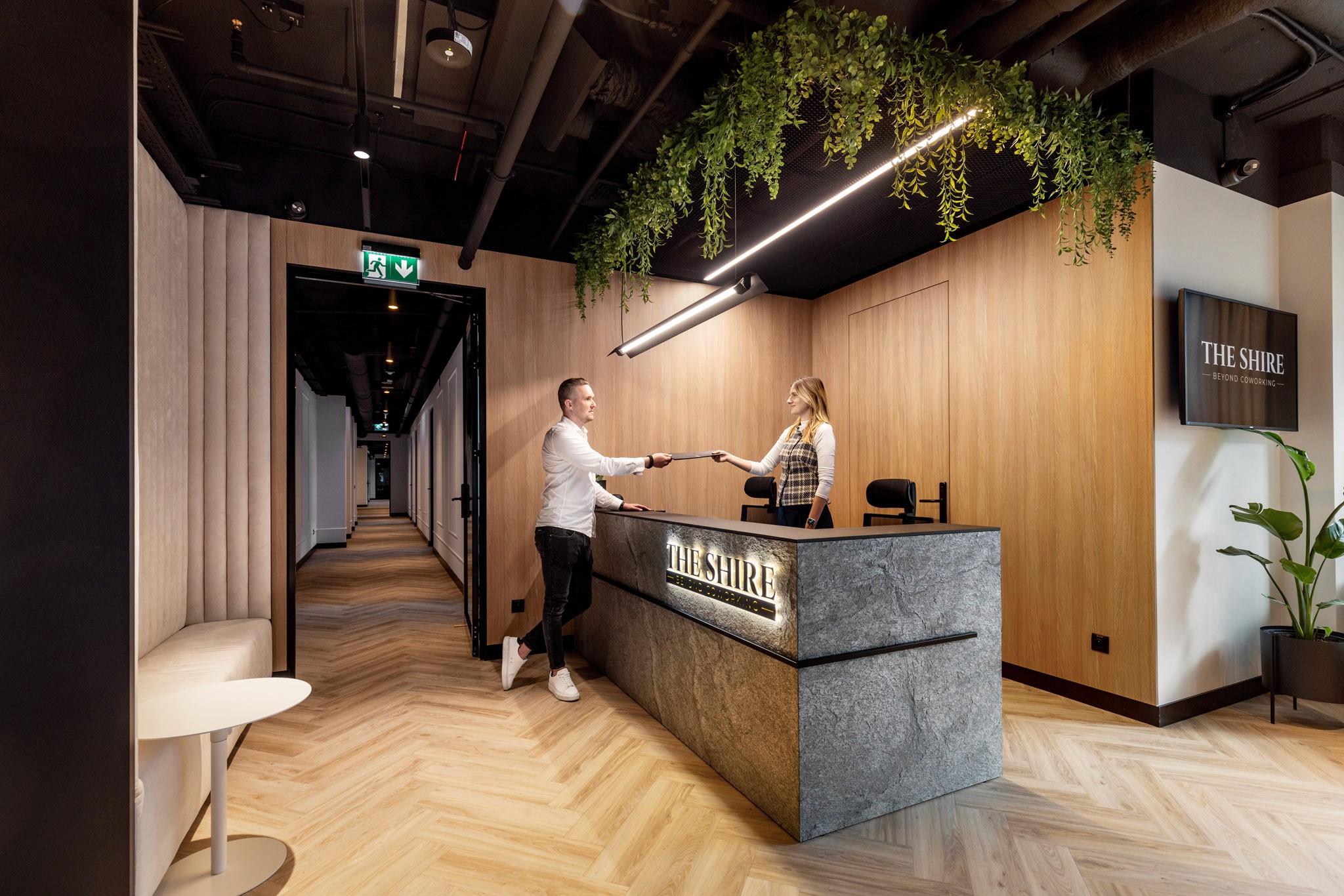
An added value is the ready facilities and service. Shared zones, coffee on site and a professional reception mean the event looks polished from the first moment, without having to build the whole infrastructure from scratch. That takes weight off the organiser and allows them to focus on the content and the guests.
Atmosphere matters too. A coworking space is neutral and modern, and its community character encourages conversation more than a formal banqueting hall. For events where relationships and exchanging contacts are what count, this is an advantage that is hard to overstate.
Budget and event format
Budget and format start with one question: why are you organising the event, and for how many people? The purpose determines the format - team-building, education, sales or employer branding. The number of guests determines the scale of costs. Only with these two things settled is it worth breaking the budget down into specific items. A small workshop for a dozen or so people is planned quite differently from a conference for well over a hundred.
Quotes are easiest to compare through the main cost categories. The largest are usually room or space hire and catering. Added to these are AV technology, the programme and attractions, staffing, and materials and promotion. Setting these items out in advance protects you from unpleasant surprises at the settlement stage.
Always leave a reserve. Ten to fifteen per cent of the budget for unforeseen expenses lets you respond calmly when an additional attraction is added at the last minute, the number of guests changes, or extra equipment has to be ordered. A good budget is flexible rather than stretched to the limit.
Match the format to the purpose, not the other way round. A conference, a workshop, a team-building event, a business breakfast and an evening networking session are different tools for different jobs. Choosing the right one at the outset saves a great many compromises later over the room, the catering and the programme.
Choosing the room
Choose the room according to the format of the event, not the number of guests. The same group needs a different floor area in a theatre layout than at workshop tables. Always check how many people fit in a specific configuration, rather than the maximum the room will hold. Pay attention to light, acoustics, back-of-house facilities and the scope for reconfiguring the space. A room that is too cramped is tiring, while one that is too large is distracting and drains the group's energy.
Start with the layout. Theatre style seats the most people and works well for presentations. A layout with tables gives room for taking notes and working on a laptop. A horseshoe arrangement or separate tables encourages discussion and teamwork. A good room for a company event allows the layout to be changed between parts of the programme.
Check the additional space around the room itself as well: somewhere for guest registration, a coffee corner, an area for conversation and easy access to every table. These are the elements that a description of "capacity for so many people" usually omits, and they determine how comfortable the event is. With a busy agenda, it is worth thinking in terms of two areas: the main room and additional space for networking and refreshments.
Do not put off booking. Attractive rooms in good locations find tenants quickly, especially in the conference season. The earlier the date is confirmed, the greater the choice and the easier it is to arrange the rest of the logistics around a specific space.
AV equipment and technical logistics
Audio-visual technology is the foundation the whole event stands on. When it fails, even the best programme will not save you. Before booking, confirm the specifics: the size and legibility of the screen, sound reinforcement appropriate to the room, stable internet, and microphones with a full set of adapters. Always plan a technical rehearsal before the start. Ask about details, because "a room with a projector" can mean anything from a modern screen to a tired projector from years ago.
Start with picture and sound. A large, legible screen or monitor matters more than you might think - in the back rows, slides with small type simply disappear. With larger groups a microphone is essential, ideally wireless, so the speaker can move freely. If the programme includes recordings or remote connections, you will need good speakers and a camera.
Confirm the internet separately. A fast, stable connection that copes with many devices at once is a basic requirement today, especially when guests use online tools or some participants join remotely. Ask how many simultaneous connections the network will support. Check the small things that save events, too: sockets at the workstations, a presentation clicker, and access to prompt technical support.
A great advantage of coworking is that AV equipment and internet are usually available on site, and the space operator can help with operating them. When booking, though, establish the exact scope of equipment and whether technical support will be available during the event should something stop working.
Catering
Match catering to the time of day and the length of the event - from a coffee break, through lunch, to finger food or dinner at an evening gathering. Plan vegetarian, vegan and gluten-free options, and ask guests about diets and allergies at registration. Establish where food will be served, so that it does not clash with the substantive part of the programme. Participants who are hungry and short of fresh air stop absorbing content after about an hour.
Constant access to drinks is fundamental. Coffee, tea and water available throughout the event is a standard whose absence immediately reduces guests' comfort. Ideally the drinks point should be in the room or right next to it. Trekking for coffee to the other end of the building lengthens breaks and disperses the group.
Longer events raise the question of a full meal. Check whether the space offers catering, or whether there are places to eat lunch nearby. It is good to provide an eating area outside the main room; stepping away from the working table lets guests genuinely rest and return with fresh energy. Many coworking spaces have their own kitchen and established catering partners, which simplifies the logistics.
Attractions and programme
Build the programme from clear blocks and breaks. An overloaded agenda is tiring and reduces engagement. Alternate substantive sections with lighter ones, look after the energy in the room, and leave space for conversation. Choose attractions to fit the purpose of the event, not the other way round. Participants will remember an event that gave them room to breathe better than a marathon of presentations without a pause.
The repertoire depends on the character of the meeting. It might be an expert talk or keynote, a workshop, a panel discussion, a special guest, team-building elements or a photo area. Ideally the programme should have one clear high point, around which the rest of the agenda is arranged.
Breaks are part of the programme, not an interruption to it. A short walk, a coffee and a moment for informal conversation often give participants more than another slot with slides. Plan them deliberately: their length and placement have a real effect on how the whole event is received.
Logistics: parking, registration, security
Logistics is invisible when it works and painfully visible when it fails. Plan it in advance and write it down in one place. Arrange guest parking, smooth registration, building access and clear signage showing the way to the room. Establish a contact person on the building's side and the security procedures. In Class A office buildings, reception and security are usually already in place, which makes looking after guests considerably easier.
Start with access and parking. Check how many parking spaces are available, whether they are chargeable and whether they need to be reserved. For guests travelling from further away, prepare alternatives in advance in the form of nearby car parks, or encourage them to use public transport. Ideally the location should be describable in one simple sentence in the invitation.
The second pillar is registration and access. Prepare a guest list, reception staffing and, if needed, badges at the entrance. Establish the rules for entering the building, the hours and any security requirements. Clear signage from the entrance to the room saves guests stress and lateness.
Accessibility for everyone must not be overlooked. A lift, the absence of architectural barriers and a convenient entrance are the condition for anyone to take part without difficulty. It is also a signal of professionalism that reflects well on the organiser. Settling these details in advance with the building manager or space operator closes off the logistics.
Networking
Networking rarely happens by itself. It is best designed in, by creating the space and the moments that encourage conversation. Provide relaxation zones, well-planned coffee breaks and an informal section where guests can get to know one another freely. Make first contact easier with simple tools; even small touches can get conversations going between participants.
Space is decisive. Open shared zones, comfortable seating and a coffee point naturally gather people and encourage conversation - far more than rows of chairs in a closed room. Coworking spaces have an advantage here, because their layout and community character are built for interaction.
A few simple devices also help. Name badges and a short ice-breaker at the start lower the barrier to that first conversation, and at larger events they matter all the more. For many guests, networking turns out to be the most valuable part of an event. It is worth planning as carefully as the substantive programme.
Promoting the event
How you promote depends on whether the event is internal or open. Internal channels work for company events; for open ones, external channels are worth adding. The invitation should state clearly what, where and when, and include a clear call to register together with a summary of the agenda. Plan reminders before the event too. Well-run communication translates directly into attendance.
For an internal event, the channels the team already uses work best: email, the intranet or company messaging tools. For an open event, external channels come into play - LinkedIn, a newsletter or a dedicated event page - which help you reach guests from outside the organisation.
Communication should not end on the day of the event. Afterwards, thank participants, share materials and photographs, and send a short survey. The feedback gathered becomes a ready-made knowledge base for future events. Closing the communication loop also creates a good impression and makes it easier to invite the same people next time.
A company event at The Shire
At The Shire, we offer conference rooms and event spaces in prestigious locations, with ready AV facilities, high-speed internet, comfortable relaxation zones, good coffee and support from the team on site. This makes organising an event simpler, and the space looks professional from the outset.
We focus on flexibility, because we understand that rigid terms can be costly. A room can be booked for a few hours, a full day or a series of meetings, and the scope of services matched to the format of the event. Our locations in Warsaw, Kraków and Wrocław are well connected, which makes it easier for guests from across the city and beyond to reach you - and from September 2026 they are joined by Gdynia, followed by Poznań in October.
Planning a training session, a conference or a team-building event? Get in touch. We will help you choose a room, check available dates and finalise the logistics so that the event simply works.