The Partnership Model in Flexible Offices – How The Shire Creates Value Together with Property Owners

Published: Dec 17, 2025


The Partnership Model: The Future of Flexible Office Management
The office market is undergoing a dynamic transformation. Occupier expectations are shifting, work models are becoming increasingly hybrid, and property owners are seeking solutions that allow for efficient asset monetization while mitigating risk. In response to these challenges, the partnership model for flexible office management is gaining traction—a model that The Shire – Beyond Coworking is consistently advancing across the Polish market.
From Traditional Leasing to the Partnership Model
Classic lease agreements, based on fixed rent and long-term commitments, are increasingly giving way to more flexible solutions. The partnership model, based on profit-sharing, aligns the interests of the operator and the property owner more effectively.
In this approach, The Shire does not act as a traditional tenant but as an experienced operator and business partner. The property owner invests in the adaptation and furnishing of the space—analogous to the hotel management model—while The Shire takes full responsibility for project management and commercial success.
How Does The Shire’s Partnership Model Work?
The collaboration is built on a clear division of roles and a shared goal: maximizing the property's value and ensuring stable revenue.
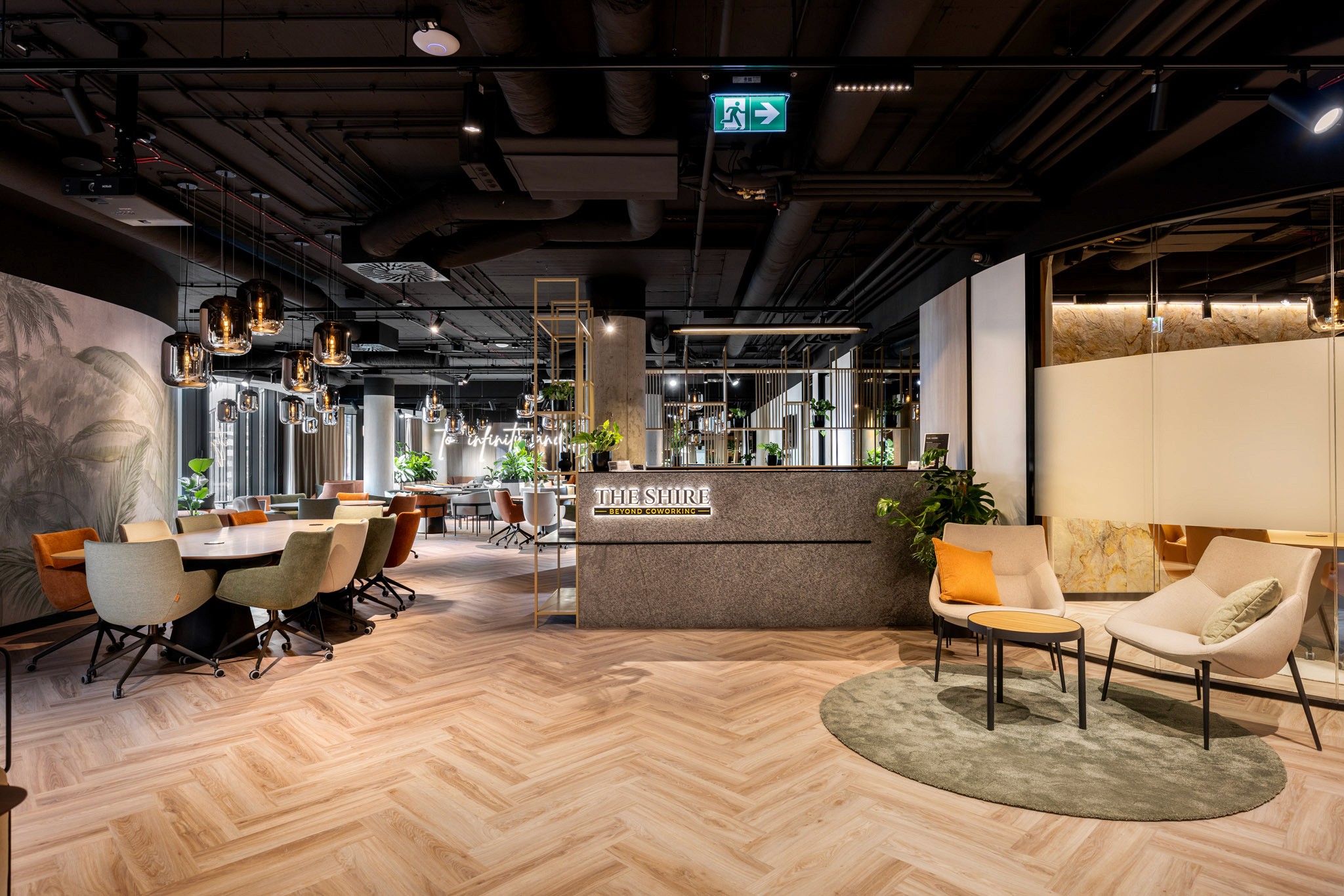
The Property Owner finances the fit-out of the office space, including interior design, furnishing, technological infrastructure, and common areas. This ensures the space is fully prepared to function as a modern flexible office.
The Shire – Beyond Coworking brings its brand, operational know-how, management team, technology, and access to a broad client base. The operator is responsible for the day-to-day operations, sales, marketing, user services, and community building.
Revenue Sharing: Instead of a fixed rent, both parties share the profits generated by private offices, workstations, meeting rooms, and value-added services. This model fosters transparency, long-term cooperation, and true partnership.
One of the key advantages of this model is the reduction of capital expenditure and financial liabilities on the operator's side. This makes the expansion of the flexible office network more resilient to economic fluctuations and shifts in demand.
For property owners, this means partnering with an operator whose business model is stable, scalable, and focused on long-term value rather than short-term occupancy spikes.
Benefits for Property Owners
The Shire’s partnership model allows owners to:
Efficiently utilize vacant or hard-to-lease spaces.
Generate recurring revenue without the need to build in-house operational structures.
Significantly increase the market value and attractiveness of the building.
Enhance the building's competitiveness through increased brand recognition.
Directly participate in the project's success.
Value for End-Users
For the companies and teams utilizing flexible offices, the partnership model translates into high service quality and workplace comfort. Users receive fully equipped offices, flexible lease terms, access to comprehensive amenities, and professional support—all creating an environment conducive to productivity and business growth.
Partnership Over Leasing
In an era where flexibility and risk-sharing are key elements of real estate strategies, the partnership model for flexible office management offers a viable alternative to traditional leasing. The Shire – Beyond Coworking continues to develop this approach, collaborating with forward-thinking property owners looking for modern solutions for their assets.
Published: Jan 6, 2026
Serviced Office vs Apartment for Office HQ
Serviced Office vs. Apartment Rental for Office Headquarters — What Really Pays Off?
The workplace market is evolving faster than ever. With hybrid work becoming the norm, more and more companies are facing a key decision: serviced office or renting an apartment as a registered office headquarters?
While an apartment may seem like a cheaper and simpler option at first — especially for new businesses — in reality, serviced and flexible offices increasingly prove to be a more functional, cost-effective, and professional solution.
Why Turning an Apartment into an Office Means Compromises and Hidden Costs
Adapting a residential space into an office comes with limitations that quickly become noticeable — especially as the company grows.
The most common challenges include:
no clear separation between work zones and meeting areas,
lack of space for professional client meetings,
the need to organize internet, cleaning, and mail handling on your own,
additional purchases for furniture and office infrastructure,
difficulty maintaining a boundary between private and business life.
Even if apartment rent looks lower, the real operating cost increases every month due to added operational expenses.
Serviced Office — A Plug & Work Space That Starts Working from Day One
Serviced offices operate in a true "plug & work" model — meaning no need for self-managed fit-out or service coordination.
What does one monthly fee include in a serviced office?
high-speed internet and utilities,
professional cleaning service,
24/7 building security,
administrative and mail support,
reception services and a prestigious company address.
Most importantly, companies can choose flexible agreements such as: office for a day, office for a month, or flex office scaling — without changing the headquarters address.
Design and Infrastructure That Build Brand Credibility
An office is no longer just a place to work — it’s also a brand asset and business statement.
Client meetings held in adapted apartments rarely meet the standards expected by business partners.
Serviced offices offer companies:
representative reception areas,
modern meeting and conference rooms,
professional fit-out and premium interior design,
a business address that strengthens trust and recognition.
These elements are extremely difficult or impossible to recreate in an apartment without heavy investment.
Shared Areas That Cannot Be Replaced
Work comfort goes far beyond a desk — it includes a full environment that supports the team’s daily rhythm.
In coworking and serviced offices, employees benefit from:
stocked kitchens with unlimited hot drinks,
phone booths for online calls,
chillout and regeneration zones,
comfortable spaces that enable natural conversations and collaboration.
All of this increases team wellbeing, comfort, and efficiency — without extra operational costs.
Community and Networking as a Real Business Advantage
An apartment cannot provide what is one of coworking’s greatest strengths: community, relationships, and business inspiration.
In coworking spaces:
companies meet potential clients and partners on-site,
members exchange contacts and knowledge daily,
new employees go through onboarding faster in a dynamic professional ecosystem,
networking happens naturally — without pressure or scripted scenarios.
These interactions often generate real, unplanned business opportunities.
Conclusion: Apartment as Office or Serviced Office?
Criteria | Apartment Adapted into Office | Serviced / Coworking Office |
|---|---|---|
Costs | Lower rent, rising hidden costs | One fee, full predictability |
Equipment | Self-purchased | Included in the fee |
Image | Often compromised | Premium, professional |
Flexibility | Usually long contracts | Day, month, flex |
Networking | No community | Real business value |
Renting an apartment as an office works only temporarily.
For companies that want to grow responsibly, work comfortably, and scale without risk — serviced offices, coworking, and flex spaces are the natural choice.
READ MORE

Published: Jan 6, 2026
Serviced Office vs Apartment for Office HQ
Serviced Office vs. Apartment Rental for Office Headquarters — What Really Pays Off?
The workplace market is evolving faster than ever. With hybrid work becoming the norm, more and more companies are facing a key decision: serviced office or renting an apartment as a registered office headquarters?
While an apartment may seem like a cheaper and simpler option at first — especially for new businesses — in reality, serviced and flexible offices increasingly prove to be a more functional, cost-effective, and professional solution.
Why Turning an Apartment into an Office Means Compromises and Hidden Costs
Adapting a residential space into an office comes with limitations that quickly become noticeable — especially as the company grows.
The most common challenges include:
no clear separation between work zones and meeting areas,
lack of space for professional client meetings,
the need to organize internet, cleaning, and mail handling on your own,
additional purchases for furniture and office infrastructure,
difficulty maintaining a boundary between private and business life.
Even if apartment rent looks lower, the real operating cost increases every month due to added operational expenses.
Serviced Office — A Plug & Work Space That Starts Working from Day One
Serviced offices operate in a true "plug & work" model — meaning no need for self-managed fit-out or service coordination.
What does one monthly fee include in a serviced office?
high-speed internet and utilities,
professional cleaning service,
24/7 building security,
administrative and mail support,
reception services and a prestigious company address.
Most importantly, companies can choose flexible agreements such as: office for a day, office for a month, or flex office scaling — without changing the headquarters address.
Design and Infrastructure That Build Brand Credibility
An office is no longer just a place to work — it’s also a brand asset and business statement.
Client meetings held in adapted apartments rarely meet the standards expected by business partners.
Serviced offices offer companies:
representative reception areas,
modern meeting and conference rooms,
professional fit-out and premium interior design,
a business address that strengthens trust and recognition.
These elements are extremely difficult or impossible to recreate in an apartment without heavy investment.
Shared Areas That Cannot Be Replaced
Work comfort goes far beyond a desk — it includes a full environment that supports the team’s daily rhythm.
In coworking and serviced offices, employees benefit from:
stocked kitchens with unlimited hot drinks,
phone booths for online calls,
chillout and regeneration zones,
comfortable spaces that enable natural conversations and collaboration.
All of this increases team wellbeing, comfort, and efficiency — without extra operational costs.
Community and Networking as a Real Business Advantage
An apartment cannot provide what is one of coworking’s greatest strengths: community, relationships, and business inspiration.
In coworking spaces:
companies meet potential clients and partners on-site,
members exchange contacts and knowledge daily,
new employees go through onboarding faster in a dynamic professional ecosystem,
networking happens naturally — without pressure or scripted scenarios.
These interactions often generate real, unplanned business opportunities.
Conclusion: Apartment as Office or Serviced Office?
Criteria | Apartment Adapted into Office | Serviced / Coworking Office |
|---|---|---|
Costs | Lower rent, rising hidden costs | One fee, full predictability |
Equipment | Self-purchased | Included in the fee |
Image | Often compromised | Premium, professional |
Flexibility | Usually long contracts | Day, month, flex |
Networking | No community | Real business value |
Renting an apartment as an office works only temporarily.
For companies that want to grow responsibly, work comfortably, and scale without risk — serviced offices, coworking, and flex spaces are the natural choice.
READ MORE

Published: Jan 6, 2026
Serviced Office vs Apartment for Office HQ
Serviced Office vs. Apartment Rental for Office Headquarters — What Really Pays Off?
The workplace market is evolving faster than ever. With hybrid work becoming the norm, more and more companies are facing a key decision: serviced office or renting an apartment as a registered office headquarters?
While an apartment may seem like a cheaper and simpler option at first — especially for new businesses — in reality, serviced and flexible offices increasingly prove to be a more functional, cost-effective, and professional solution.
Why Turning an Apartment into an Office Means Compromises and Hidden Costs
Adapting a residential space into an office comes with limitations that quickly become noticeable — especially as the company grows.
The most common challenges include:
no clear separation between work zones and meeting areas,
lack of space for professional client meetings,
the need to organize internet, cleaning, and mail handling on your own,
additional purchases for furniture and office infrastructure,
difficulty maintaining a boundary between private and business life.
Even if apartment rent looks lower, the real operating cost increases every month due to added operational expenses.
Serviced Office — A Plug & Work Space That Starts Working from Day One
Serviced offices operate in a true "plug & work" model — meaning no need for self-managed fit-out or service coordination.
What does one monthly fee include in a serviced office?
high-speed internet and utilities,
professional cleaning service,
24/7 building security,
administrative and mail support,
reception services and a prestigious company address.
Most importantly, companies can choose flexible agreements such as: office for a day, office for a month, or flex office scaling — without changing the headquarters address.
Design and Infrastructure That Build Brand Credibility
An office is no longer just a place to work — it’s also a brand asset and business statement.
Client meetings held in adapted apartments rarely meet the standards expected by business partners.
Serviced offices offer companies:
representative reception areas,
modern meeting and conference rooms,
professional fit-out and premium interior design,
a business address that strengthens trust and recognition.
These elements are extremely difficult or impossible to recreate in an apartment without heavy investment.
Shared Areas That Cannot Be Replaced
Work comfort goes far beyond a desk — it includes a full environment that supports the team’s daily rhythm.
In coworking and serviced offices, employees benefit from:
stocked kitchens with unlimited hot drinks,
phone booths for online calls,
chillout and regeneration zones,
comfortable spaces that enable natural conversations and collaboration.
All of this increases team wellbeing, comfort, and efficiency — without extra operational costs.
Community and Networking as a Real Business Advantage
An apartment cannot provide what is one of coworking’s greatest strengths: community, relationships, and business inspiration.
In coworking spaces:
companies meet potential clients and partners on-site,
members exchange contacts and knowledge daily,
new employees go through onboarding faster in a dynamic professional ecosystem,
networking happens naturally — without pressure or scripted scenarios.
These interactions often generate real, unplanned business opportunities.
Conclusion: Apartment as Office or Serviced Office?
Criteria | Apartment Adapted into Office | Serviced / Coworking Office |
|---|---|---|
Costs | Lower rent, rising hidden costs | One fee, full predictability |
Equipment | Self-purchased | Included in the fee |
Image | Often compromised | Premium, professional |
Flexibility | Usually long contracts | Day, month, flex |
Networking | No community | Real business value |
Renting an apartment as an office works only temporarily.
For companies that want to grow responsibly, work comfortably, and scale without risk — serviced offices, coworking, and flex spaces are the natural choice.
READ MORE

Published: Dec 22, 2025
Serviced Office vs Traditional Lease - Key Differences - The Shire
Serviced Office vs Traditional Lease – Key Differences and Costs
Choosing the right office space is a crucial decision for any company – from startups to large corporations. Today, there are different ways to rent office space, with two of the most popular options being serviced offices and traditional leases. In this article, we’ll explore the main differences between them and examine the costs associated with each option.
Serviced Office vs Traditional Lease – What You Should Know
A serviced office is a fully equipped workspace ready for immediate use. This means tenants don’t need to invest in furniture or interior design. The rental price often includes administrative services, reception, cleaning, utilities, access to meeting rooms, and IT/technical support.
In contrast, a traditional lease requires tenants to furnish the office themselves and manage additional services. Leases are usually long-term, limiting the flexibility to adjust office space during the rental period.
Main Differences Between Serviced Offices and Traditional Leases
Lease Flexibility: Serviced offices allow short-term rentals and easy adjustments of space, while traditional leases are rigid and long-term.
Furniture and Infrastructure: Serviced offices come fully furnished with IT infrastructure, whereas traditional lease tenants cover these costs themselves.
Additional Services: Serviced offices include reception, administrative support, and cleaning. Traditional leases require separate arrangements.
Initial Costs: Serviced offices reduce upfront costs, while traditional leases often involve significant initial investments.
Scalability and Accessibility: Serviced offices allow rapid scaling of space and business address usage without physical presence. Traditional leases offer exclusive use of space but less flexibility.
Networking and Collaboration: Serviced offices facilitate business networking and cooperation with other tenants, which is less common in traditional offices.
Serviced Offices vs Traditional Lease – Are They Really More Expensive?
There are many myths about serviced offices, one of the most common being that they are more expensive than traditional leases. However, more and more companies, regardless of size, are recognizing the real benefits of the flexible model – not only in terms of flexibility but also cost. Let’s take a closer look at how these two options compare, including examples from The Shire – Beyond Coworking.
Price Is More Than Just Rent
In a traditional lease, the cost per square meter is just the beginning. Tenants also need to cover:
Operating expenses – building services, security, cleaning of common areas
Utilities – electricity, heating, air conditioning, water
Furniture and equipment – desks, chairs, cabinets, kitchen and meeting room equipment
Supplies – coffee, tea, cleaning products, office materials
Administrative support – reception, technical support, space management
Additionally, companies must invest time and resources in setting up the office – from vendor negotiations to ongoing maintenance.
Serviced Offices – One All-Inclusive Payment
In serviced offices, such as those offered by The Shire:
tenants pay a single monthly invoice covering almost all of the above. The space is:
Fully furnished and ready to work
Equipped with high-speed internet, printers, meeting rooms, and kitchens stocked with coffee and tea
Covered by daily cleaning services and front desk support
Importantly, companies don’t need to invest in fit-outs or bear the risk of purchasing equipment. If needed, they can quickly scale the space up or down without long-term commitments.
Flexibility That Pays Off
For many companies, the greatest value of serviced offices lies in their flexibility. Agreements are shorter, and the space can be adjusted to current team needs. In practice, this means:
No CAPEX – no upfront investment
Predictable budgets – no surprises on invoices
Time savings – no supplier management, equipment handling, or office maintenance
As a flexible space operator, The Shire understands these needs well – offering private offices and shared spaces in multiple cities, with terms tailored to a tenant’s current business situation.
When Does Traditional Leasing Make Sense?
A traditional lease may be better suited for large, stable organizations with long-term strategies and in-house administrative teams capable of managing the space independently. In such cases, with sufficient area and a long lease term, it may be possible to achieve a lower cost per square meter – but only if all additional aspects are managed efficiently.
Focus on TCO, Not Just the Rent
When comparing office options, it’s important to consider TCO – Total Cost of Occupancy. TCO reveals the real cost of using the space, not just base rent. Often, a serviced office – despite seeming more expensive at first glance – turns out to be more cost-effective once all expenses are considered.
Check out our blog article comparing serviced offices vs coworking and discover which option suits your business best!
Choosing Between Serviced Office and Traditional Lease
The decision depends on factors such as lease duration, team size and stability, and needs for furniture and services. Serviced offices provide flexible, ready-to-use spaces ideal for dynamic companies and startups, while traditional leases suit companies planning a fixed location and long-term office investments.
Serviced offices offer not only convenience and flexibility but increasingly – a cost-effective choice. Especially for companies that want to operate quickly, efficiently, and without unnecessary commitments. The Shire – Beyond Coworking meets these needs by providing premium flexible offices with full service and a clear cost structure, allowing companies to focus on what truly matters – growth.
READ MORE

Published: Dec 22, 2025
Serviced Office vs Traditional Lease - Key Differences - The Shire
Serviced Office vs Traditional Lease – Key Differences and Costs
Choosing the right office space is a crucial decision for any company – from startups to large corporations. Today, there are different ways to rent office space, with two of the most popular options being serviced offices and traditional leases. In this article, we’ll explore the main differences between them and examine the costs associated with each option.
Serviced Office vs Traditional Lease – What You Should Know
A serviced office is a fully equipped workspace ready for immediate use. This means tenants don’t need to invest in furniture or interior design. The rental price often includes administrative services, reception, cleaning, utilities, access to meeting rooms, and IT/technical support.
In contrast, a traditional lease requires tenants to furnish the office themselves and manage additional services. Leases are usually long-term, limiting the flexibility to adjust office space during the rental period.
Main Differences Between Serviced Offices and Traditional Leases
Lease Flexibility: Serviced offices allow short-term rentals and easy adjustments of space, while traditional leases are rigid and long-term.
Furniture and Infrastructure: Serviced offices come fully furnished with IT infrastructure, whereas traditional lease tenants cover these costs themselves.
Additional Services: Serviced offices include reception, administrative support, and cleaning. Traditional leases require separate arrangements.
Initial Costs: Serviced offices reduce upfront costs, while traditional leases often involve significant initial investments.
Scalability and Accessibility: Serviced offices allow rapid scaling of space and business address usage without physical presence. Traditional leases offer exclusive use of space but less flexibility.
Networking and Collaboration: Serviced offices facilitate business networking and cooperation with other tenants, which is less common in traditional offices.
Serviced Offices vs Traditional Lease – Are They Really More Expensive?
There are many myths about serviced offices, one of the most common being that they are more expensive than traditional leases. However, more and more companies, regardless of size, are recognizing the real benefits of the flexible model – not only in terms of flexibility but also cost. Let’s take a closer look at how these two options compare, including examples from The Shire – Beyond Coworking.
Price Is More Than Just Rent
In a traditional lease, the cost per square meter is just the beginning. Tenants also need to cover:
Operating expenses – building services, security, cleaning of common areas
Utilities – electricity, heating, air conditioning, water
Furniture and equipment – desks, chairs, cabinets, kitchen and meeting room equipment
Supplies – coffee, tea, cleaning products, office materials
Administrative support – reception, technical support, space management
Additionally, companies must invest time and resources in setting up the office – from vendor negotiations to ongoing maintenance.
Serviced Offices – One All-Inclusive Payment
In serviced offices, such as those offered by The Shire:
tenants pay a single monthly invoice covering almost all of the above. The space is:
Fully furnished and ready to work
Equipped with high-speed internet, printers, meeting rooms, and kitchens stocked with coffee and tea
Covered by daily cleaning services and front desk support
Importantly, companies don’t need to invest in fit-outs or bear the risk of purchasing equipment. If needed, they can quickly scale the space up or down without long-term commitments.
Flexibility That Pays Off
For many companies, the greatest value of serviced offices lies in their flexibility. Agreements are shorter, and the space can be adjusted to current team needs. In practice, this means:
No CAPEX – no upfront investment
Predictable budgets – no surprises on invoices
Time savings – no supplier management, equipment handling, or office maintenance
As a flexible space operator, The Shire understands these needs well – offering private offices and shared spaces in multiple cities, with terms tailored to a tenant’s current business situation.
When Does Traditional Leasing Make Sense?
A traditional lease may be better suited for large, stable organizations with long-term strategies and in-house administrative teams capable of managing the space independently. In such cases, with sufficient area and a long lease term, it may be possible to achieve a lower cost per square meter – but only if all additional aspects are managed efficiently.
Focus on TCO, Not Just the Rent
When comparing office options, it’s important to consider TCO – Total Cost of Occupancy. TCO reveals the real cost of using the space, not just base rent. Often, a serviced office – despite seeming more expensive at first glance – turns out to be more cost-effective once all expenses are considered.
Check out our blog article comparing serviced offices vs coworking and discover which option suits your business best!
Choosing Between Serviced Office and Traditional Lease
The decision depends on factors such as lease duration, team size and stability, and needs for furniture and services. Serviced offices provide flexible, ready-to-use spaces ideal for dynamic companies and startups, while traditional leases suit companies planning a fixed location and long-term office investments.
Serviced offices offer not only convenience and flexibility but increasingly – a cost-effective choice. Especially for companies that want to operate quickly, efficiently, and without unnecessary commitments. The Shire – Beyond Coworking meets these needs by providing premium flexible offices with full service and a clear cost structure, allowing companies to focus on what truly matters – growth.
READ MORE

Published: Dec 22, 2025
Serviced Office vs Traditional Lease - Key Differences - The Shire
Serviced Office vs Traditional Lease – Key Differences and Costs
Choosing the right office space is a crucial decision for any company – from startups to large corporations. Today, there are different ways to rent office space, with two of the most popular options being serviced offices and traditional leases. In this article, we’ll explore the main differences between them and examine the costs associated with each option.
Serviced Office vs Traditional Lease – What You Should Know
A serviced office is a fully equipped workspace ready for immediate use. This means tenants don’t need to invest in furniture or interior design. The rental price often includes administrative services, reception, cleaning, utilities, access to meeting rooms, and IT/technical support.
In contrast, a traditional lease requires tenants to furnish the office themselves and manage additional services. Leases are usually long-term, limiting the flexibility to adjust office space during the rental period.
Main Differences Between Serviced Offices and Traditional Leases
Lease Flexibility: Serviced offices allow short-term rentals and easy adjustments of space, while traditional leases are rigid and long-term.
Furniture and Infrastructure: Serviced offices come fully furnished with IT infrastructure, whereas traditional lease tenants cover these costs themselves.
Additional Services: Serviced offices include reception, administrative support, and cleaning. Traditional leases require separate arrangements.
Initial Costs: Serviced offices reduce upfront costs, while traditional leases often involve significant initial investments.
Scalability and Accessibility: Serviced offices allow rapid scaling of space and business address usage without physical presence. Traditional leases offer exclusive use of space but less flexibility.
Networking and Collaboration: Serviced offices facilitate business networking and cooperation with other tenants, which is less common in traditional offices.
Serviced Offices vs Traditional Lease – Are They Really More Expensive?
There are many myths about serviced offices, one of the most common being that they are more expensive than traditional leases. However, more and more companies, regardless of size, are recognizing the real benefits of the flexible model – not only in terms of flexibility but also cost. Let’s take a closer look at how these two options compare, including examples from The Shire – Beyond Coworking.
Price Is More Than Just Rent
In a traditional lease, the cost per square meter is just the beginning. Tenants also need to cover:
Operating expenses – building services, security, cleaning of common areas
Utilities – electricity, heating, air conditioning, water
Furniture and equipment – desks, chairs, cabinets, kitchen and meeting room equipment
Supplies – coffee, tea, cleaning products, office materials
Administrative support – reception, technical support, space management
Additionally, companies must invest time and resources in setting up the office – from vendor negotiations to ongoing maintenance.
Serviced Offices – One All-Inclusive Payment
In serviced offices, such as those offered by The Shire:
tenants pay a single monthly invoice covering almost all of the above. The space is:
Fully furnished and ready to work
Equipped with high-speed internet, printers, meeting rooms, and kitchens stocked with coffee and tea
Covered by daily cleaning services and front desk support
Importantly, companies don’t need to invest in fit-outs or bear the risk of purchasing equipment. If needed, they can quickly scale the space up or down without long-term commitments.
Flexibility That Pays Off
For many companies, the greatest value of serviced offices lies in their flexibility. Agreements are shorter, and the space can be adjusted to current team needs. In practice, this means:
No CAPEX – no upfront investment
Predictable budgets – no surprises on invoices
Time savings – no supplier management, equipment handling, or office maintenance
As a flexible space operator, The Shire understands these needs well – offering private offices and shared spaces in multiple cities, with terms tailored to a tenant’s current business situation.
When Does Traditional Leasing Make Sense?
A traditional lease may be better suited for large, stable organizations with long-term strategies and in-house administrative teams capable of managing the space independently. In such cases, with sufficient area and a long lease term, it may be possible to achieve a lower cost per square meter – but only if all additional aspects are managed efficiently.
Focus on TCO, Not Just the Rent
When comparing office options, it’s important to consider TCO – Total Cost of Occupancy. TCO reveals the real cost of using the space, not just base rent. Often, a serviced office – despite seeming more expensive at first glance – turns out to be more cost-effective once all expenses are considered.
Check out our blog article comparing serviced offices vs coworking and discover which option suits your business best!
Choosing Between Serviced Office and Traditional Lease
The decision depends on factors such as lease duration, team size and stability, and needs for furniture and services. Serviced offices provide flexible, ready-to-use spaces ideal for dynamic companies and startups, while traditional leases suit companies planning a fixed location and long-term office investments.
Serviced offices offer not only convenience and flexibility but increasingly – a cost-effective choice. Especially for companies that want to operate quickly, efficiently, and without unnecessary commitments. The Shire – Beyond Coworking meets these needs by providing premium flexible offices with full service and a clear cost structure, allowing companies to focus on what truly matters – growth.
READ MORE

Published: Dec 18, 2025
Serviced Office vs Coworking Space - What to Choose? - The Shire
Serviced Office vs Coworking Space – Which Solution Should You Choose?
Choosing the right workspace is a key decision that impacts not only costs but also comfort, productivity, and work culture. Among modern solutions, serviced offices and coworking spaces are increasingly popular, each offering unique benefits. Let’s take a closer look at how these options differ and how to match them to the needs of your team.
What is a Serviced Office?
A serviced office is a fully equipped, ready-to-use workspace available under flexible terms. It includes private offices with a full range of services such as reception support, cleaning, high-speed internet, and access to meeting rooms. Serviced offices are ideal for companies that need a stable, professional workspace while avoiding the long process of setting up and furnishing an office.
Advantages of a Serviced Office:
Privacy and comfort – space exclusively for your company.
Complete infrastructure – furniture, office equipment, fast internet, and administrative support included.
Flexible rental terms – short-term contracts without long-term commitments.
Predictable costs – one monthly fee covering all services.
For those looking for locations in major cities, check out:
These spaces allow you to start operating quickly, with minimal effort spent on organizing your workspace.
Who is a Serviced Office Best For?
Serviced offices are an excellent choice for small and medium-sized businesses seeking a professional work environment. With comprehensive services included, tenants can focus on growing their business in a fully equipped and ready-to-use workspace.
What is Coworking?
Coworking is a dynamic workspace where various professionals – freelancers, startups, and remote employees – can rent desks or meeting rooms by the hour, day, or month. It’s a great solution for those who value flexibility and an inspiring atmosphere.
Advantages of Coworking:
Lower costs – pay only for the time and space you actually use.
Networking opportunities – meet new people and collaborate with other professionals.
Flexibility – work in different locations and at any time.
Creative environment – inspiring space full of ambitious individuals.
Who is Coworking Best For?
Coworking is ideal for freelancers, startups, and professionals who thrive in a dynamic work environment. These spaces provide opportunities to build new business contacts, expand professional networks, and exchange experiences with experts from different industries.
For vibrant coworking spaces, explore:
The Shire offers coworking spaces designed to promote networking, collaboration, and professional community growth.
Curious about serviced office vs traditional lease? Read our blog to explore the key differences and benefits!
Serviced Office vs Coworking Space – Which Should You Choose?
The choice between a serviced office vs coworking space depends on your work style and priorities:
Choose a serviced office if you value privacy, stability, and a professional environment.
Choose coworking if you need flexibility, lower costs, and a dynamic atmosphere.
Regardless of the choice, modern workspaces at The Shire combine comfort, flexibility, and professionalism, allowing you to focus on what matters most – growing your business.
READ MORE

Published: Dec 18, 2025
Serviced Office vs Coworking Space - What to Choose? - The Shire
Serviced Office vs Coworking Space – Which Solution Should You Choose?
Choosing the right workspace is a key decision that impacts not only costs but also comfort, productivity, and work culture. Among modern solutions, serviced offices and coworking spaces are increasingly popular, each offering unique benefits. Let’s take a closer look at how these options differ and how to match them to the needs of your team.
What is a Serviced Office?
A serviced office is a fully equipped, ready-to-use workspace available under flexible terms. It includes private offices with a full range of services such as reception support, cleaning, high-speed internet, and access to meeting rooms. Serviced offices are ideal for companies that need a stable, professional workspace while avoiding the long process of setting up and furnishing an office.
Advantages of a Serviced Office:
Privacy and comfort – space exclusively for your company.
Complete infrastructure – furniture, office equipment, fast internet, and administrative support included.
Flexible rental terms – short-term contracts without long-term commitments.
Predictable costs – one monthly fee covering all services.
For those looking for locations in major cities, check out:
These spaces allow you to start operating quickly, with minimal effort spent on organizing your workspace.
Who is a Serviced Office Best For?
Serviced offices are an excellent choice for small and medium-sized businesses seeking a professional work environment. With comprehensive services included, tenants can focus on growing their business in a fully equipped and ready-to-use workspace.
What is Coworking?
Coworking is a dynamic workspace where various professionals – freelancers, startups, and remote employees – can rent desks or meeting rooms by the hour, day, or month. It’s a great solution for those who value flexibility and an inspiring atmosphere.
Advantages of Coworking:
Lower costs – pay only for the time and space you actually use.
Networking opportunities – meet new people and collaborate with other professionals.
Flexibility – work in different locations and at any time.
Creative environment – inspiring space full of ambitious individuals.
Who is Coworking Best For?
Coworking is ideal for freelancers, startups, and professionals who thrive in a dynamic work environment. These spaces provide opportunities to build new business contacts, expand professional networks, and exchange experiences with experts from different industries.
For vibrant coworking spaces, explore:
The Shire offers coworking spaces designed to promote networking, collaboration, and professional community growth.
Curious about serviced office vs traditional lease? Read our blog to explore the key differences and benefits!
Serviced Office vs Coworking Space – Which Should You Choose?
The choice between a serviced office vs coworking space depends on your work style and priorities:
Choose a serviced office if you value privacy, stability, and a professional environment.
Choose coworking if you need flexibility, lower costs, and a dynamic atmosphere.
Regardless of the choice, modern workspaces at The Shire combine comfort, flexibility, and professionalism, allowing you to focus on what matters most – growing your business.
READ MORE

Published: Dec 18, 2025
Serviced Office vs Coworking Space - What to Choose? - The Shire
Serviced Office vs Coworking Space – Which Solution Should You Choose?
Choosing the right workspace is a key decision that impacts not only costs but also comfort, productivity, and work culture. Among modern solutions, serviced offices and coworking spaces are increasingly popular, each offering unique benefits. Let’s take a closer look at how these options differ and how to match them to the needs of your team.
What is a Serviced Office?
A serviced office is a fully equipped, ready-to-use workspace available under flexible terms. It includes private offices with a full range of services such as reception support, cleaning, high-speed internet, and access to meeting rooms. Serviced offices are ideal for companies that need a stable, professional workspace while avoiding the long process of setting up and furnishing an office.
Advantages of a Serviced Office:
Privacy and comfort – space exclusively for your company.
Complete infrastructure – furniture, office equipment, fast internet, and administrative support included.
Flexible rental terms – short-term contracts without long-term commitments.
Predictable costs – one monthly fee covering all services.
For those looking for locations in major cities, check out:
These spaces allow you to start operating quickly, with minimal effort spent on organizing your workspace.
Who is a Serviced Office Best For?
Serviced offices are an excellent choice for small and medium-sized businesses seeking a professional work environment. With comprehensive services included, tenants can focus on growing their business in a fully equipped and ready-to-use workspace.
What is Coworking?
Coworking is a dynamic workspace where various professionals – freelancers, startups, and remote employees – can rent desks or meeting rooms by the hour, day, or month. It’s a great solution for those who value flexibility and an inspiring atmosphere.
Advantages of Coworking:
Lower costs – pay only for the time and space you actually use.
Networking opportunities – meet new people and collaborate with other professionals.
Flexibility – work in different locations and at any time.
Creative environment – inspiring space full of ambitious individuals.
Who is Coworking Best For?
Coworking is ideal for freelancers, startups, and professionals who thrive in a dynamic work environment. These spaces provide opportunities to build new business contacts, expand professional networks, and exchange experiences with experts from different industries.
For vibrant coworking spaces, explore:
The Shire offers coworking spaces designed to promote networking, collaboration, and professional community growth.
Curious about serviced office vs traditional lease? Read our blog to explore the key differences and benefits!
Serviced Office vs Coworking Space – Which Should You Choose?
The choice between a serviced office vs coworking space depends on your work style and priorities:
Choose a serviced office if you value privacy, stability, and a professional environment.
Choose coworking if you need flexibility, lower costs, and a dynamic atmosphere.
Regardless of the choice, modern workspaces at The Shire combine comfort, flexibility, and professionalism, allowing you to focus on what matters most – growing your business.
READ MORE
For Partners
Services
Copyright 2025 The Shire. All rights reserved.
For Partners
Services
Copyright 2025 The Shire. All rights reserved.
For Partners
Services
Copyright 2025 The Shire. All rights reserved.