Open Plan or Private Offices - Which Should You Choose?

This dilemma resurfaces in every company that is growing or changing its working model. Some want an open space because "people will be closer to each other"; others prefer enclosed rooms because quiet and privacy matter most. The office layout should serve your way of working, not a trend or photos from the internet. This article will help you decide practically - by examining the situations in which each layout works, common mistakes, costs, and the hybrid model.
Quick Answer:
Open plan works best where there is a lot of collaboration and fast communication, but it requires rules (noise and conversations will not sort themselves out).
Private offices win when focused work, sensitive conversations, or "on-call" roles dominate, but they can weaken the flow of information.
In the open plan vs private offices comparison, the key factor is how much quiet work, meetings, and teamwork you have in a typical week.
Cost is not just about square metres: acoustics, partitions, meeting rooms, ergonomics, and the time consumed by "managing" the office all add up.
In a hybrid model, a mix usually wins: shared space plus a few enclosed rooms and conversation zones.
What is open plan and when does it work?
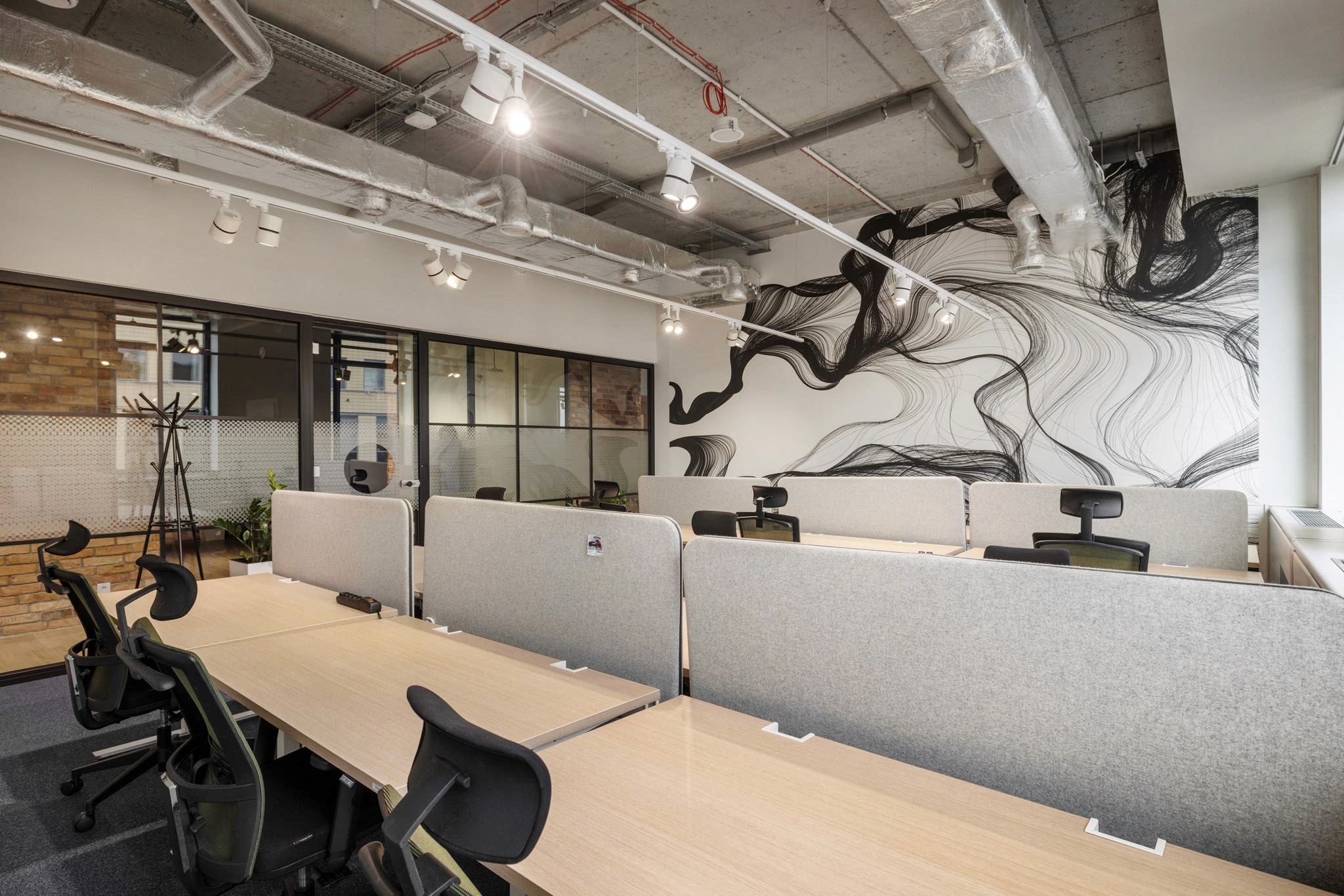
Open plan is simply an open workspace where the team sits in one larger room rather than in separate offices. This layout makes sense when work involves frequent consultations, rapid decisions, and "walking up to someone for two minutes," because barriers disappear. It also works well in companies that are building a culture of collaboration and want onboarding to be straightforward - a new joiner picks up context faster because they can see how the team operates.
Open plan starts to break down when focused work and calls dominate. If half the day is spent on calls and the other half on tasks requiring silence, an open space without additional zones becomes exhausting - for those on calls and for those trying to concentrate. In practice, open plan works best when it has support: usage rules, designated areas for calls and meetings, and a genuine division into zones.
Pros and cons of open plan
The biggest advantage of open plan is simple: communication happens faster because people are next to each other. This shortens the time from question to answer, facilitates collaboration, and in many teams genuinely accelerates delivery. An open space also tends to make management easier - it is simpler to notice when something is stuck, and leaders have natural contact with the team.
The biggest disadvantage is equally simple: noise and distractions. In an open-plan office, the company that wins is not the one with the "nicest desks" but the one with the best rules and the best-resolved acoustics. A typical mistake is assuming "people will be quiet," only to find that every conversation spills across the entire office and deep-work professionals retreat to working from home. A second mistake is the absence of call spaces - calls then happen at desks, which in practice ruins the day for everyone. If open plan is to work, it needs a plan: where do we talk, where is it quiet, and what do we do when everyone is on a call simultaneously?
If the team has many short consultations and works in a project-based mode, open plan is a natural fit; if the dominant roles are "headphones-on" and focused work, an open space alone - without zones and rooms - will be frustrating.
Private offices - who are they better for?
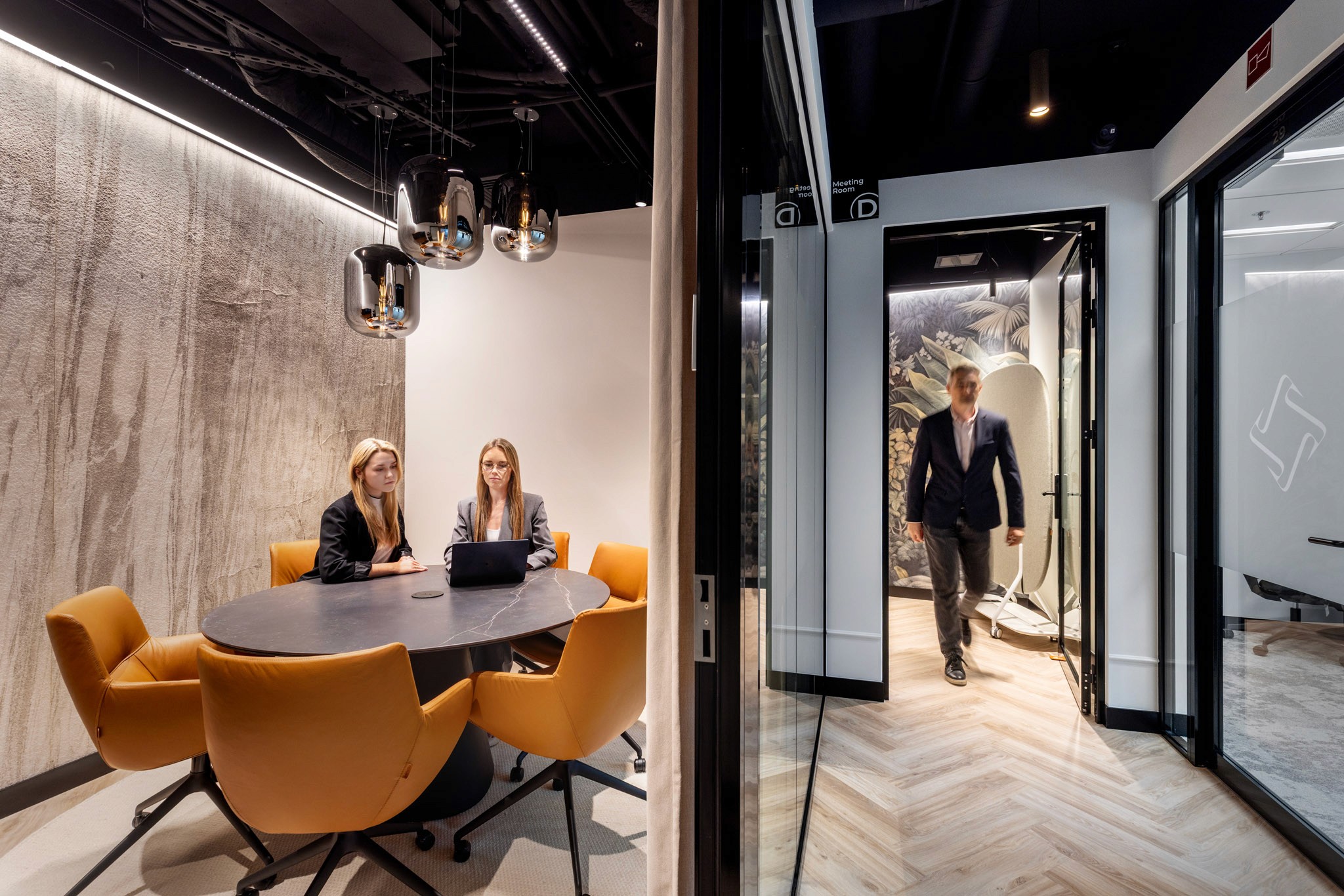
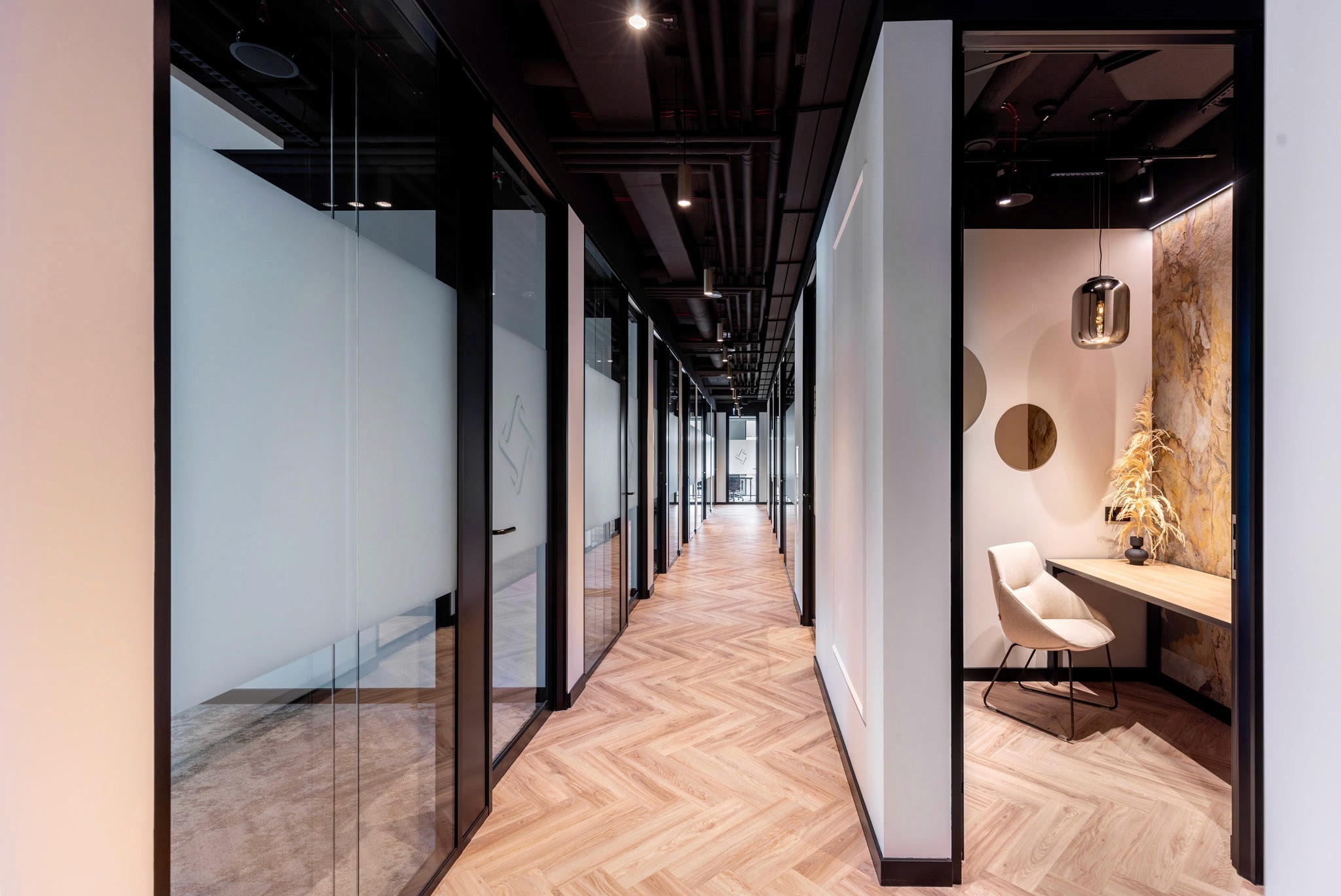
A private-office layout is based on enclosed rooms - sometimes single-occupancy, more often shared by a small group, depending on the company. This model wins when work requires quiet, confidentiality, or a steady rhythm without the "background" of other people's conversations. It also works well in teams that regularly conduct recruitment, sales, legal, or financial conversations - i.e. where privacy is a daily need, not an exception.
Private offices are also a practical choice when you have a team that does not want to "fight through" noise and work is based on long blocks of focus. At the same time, there is a flip side to watch for: if everything happens behind closed doors, the risk of silos increases - people share information less spontaneously, and the company culture can become more "closed" and formal.
Pros and cons of private offices
The advantage of private offices is predictability: you know you can speak, work in silence, and not disturb others. For many roles, this is not a luxury but a condition for good work - especially in companies where confidential topics, client or candidate conversations, and sustained concentration matter.
The disadvantage of private offices appears where the company thrives on collaboration and rapid information exchange. If people sit in separate rooms, they more often "do not disturb," but they also less often resolve problems spontaneously. A second pitfall is a layout poorly matched to company size: too many small rooms with variable office attendance means you pay for space that is frequently empty. A third pitfall is the absence of shared spaces - private offices without a sensible area for meetings and socialising can weaken team culture.
If the priority is privacy and focus, private offices win; if the priority is collaboration and fast communication, private offices need to be complemented by shared space - otherwise the company will start operating more slowly.
Costs and floor space - a comparison
The question "open plan or private offices" almost always comes down to costs - and here it is easy to make a mistake, because it is not just about square metres. Open plan tends to be more "efficient" on paper because it is easier to fit workstations in, but it often requires investment in acoustics, call spaces, and meeting rooms. Private offices naturally have more walls and doors, which can be more expensive to set up and less flexible to reconfigure, but they may save costs "over time" (less friction, fewer disruptions, less improvisation with calls).
Below is a cost-and-space comparison based on the logic of "what typically increases," without quoting rates - as these depend on the city, building, and standard.
Cost / Space Area | Open Plan | Open Plan |
|---|---|---|
Layout flexibility | Usually greater (easier to rearrange) | Usually less (rooms are "permanent") |
Acoustics & privacy | Requires dedicated solutions (zones, booths, rooms) | "Built in" to the room layout |
Call & meeting spaces | Critical; without them, chaos follows | Still needed, but the pressure is lower |
Distraction risk | Higher without rules | Lower, but the risk of silos increases |
Team scaling | Easier with a variable headcount | Good with a stable roster; harder with turnover |
If you want a layout that combines privacy with flexibility and has "operations in the background," serviced offices are a sensible direction - they make it easier to choose the right mix (rooms vs shared areas) without building everything from scratch.
Checklist - how to choose an office layout without guessing
Review what a typical week looks like - how much focused work, how many calls, and how many meetings.
Count "calls across the company" - if the volume is high, you need a plan for privacy (rooms or well-designed zones).
Assess attendance variability - if part of the team works in a hybrid model, the layout must tolerate fluctuations without paying for empty square metres.
Determine whether the priority is the pace of collaboration or the comfort of focus - and where the company is currently losing the most time.
Run a "one-day test": where will people make calls, where will they hold meetings, where will they work in silence, and what happens when everyone is on a call at the same time?
The impact of office layout on organisational culture
Office layout is not neutral. Open plan fosters a culture of accessibility: it is easier to approach someone, faster to reach agreement, faster to spot problems. This can strengthen collaboration and pace, but it can also create a culture of "constant availability" if the company does not protect time for deep work. Private offices foster a culture of calm and focus, but they can reinforce distance between departments and hinder spontaneous information sharing. More often than not, the point is not to choose the "better" model but to consciously select the one that supports your values: transparency, collaboration, confidentiality, autonomy.
A typical cultural mistake is choosing open plan in a company with a lot of individual work and sensitive conversations - it ends in frustration and a retreat to working from home. A second mistake is choosing only private offices in a company that is growing and needs strong collaboration - it ends in "separate islands" and slower decision-making. In both cases, the same thing saves the day: a mixed model and clear rules.
The hybrid model
In a hybrid setup, the question "open space or enclosed offices" often has a third answer: both - but in proportions matched to how people actually come to the office. When part of the team is on-site less frequently, maintaining many permanent private offices can generate empty square metres. Conversely, open plan without call and meeting spaces hurts more in a hybrid model, because the days when "everyone is in the office" become loud and chaotic.
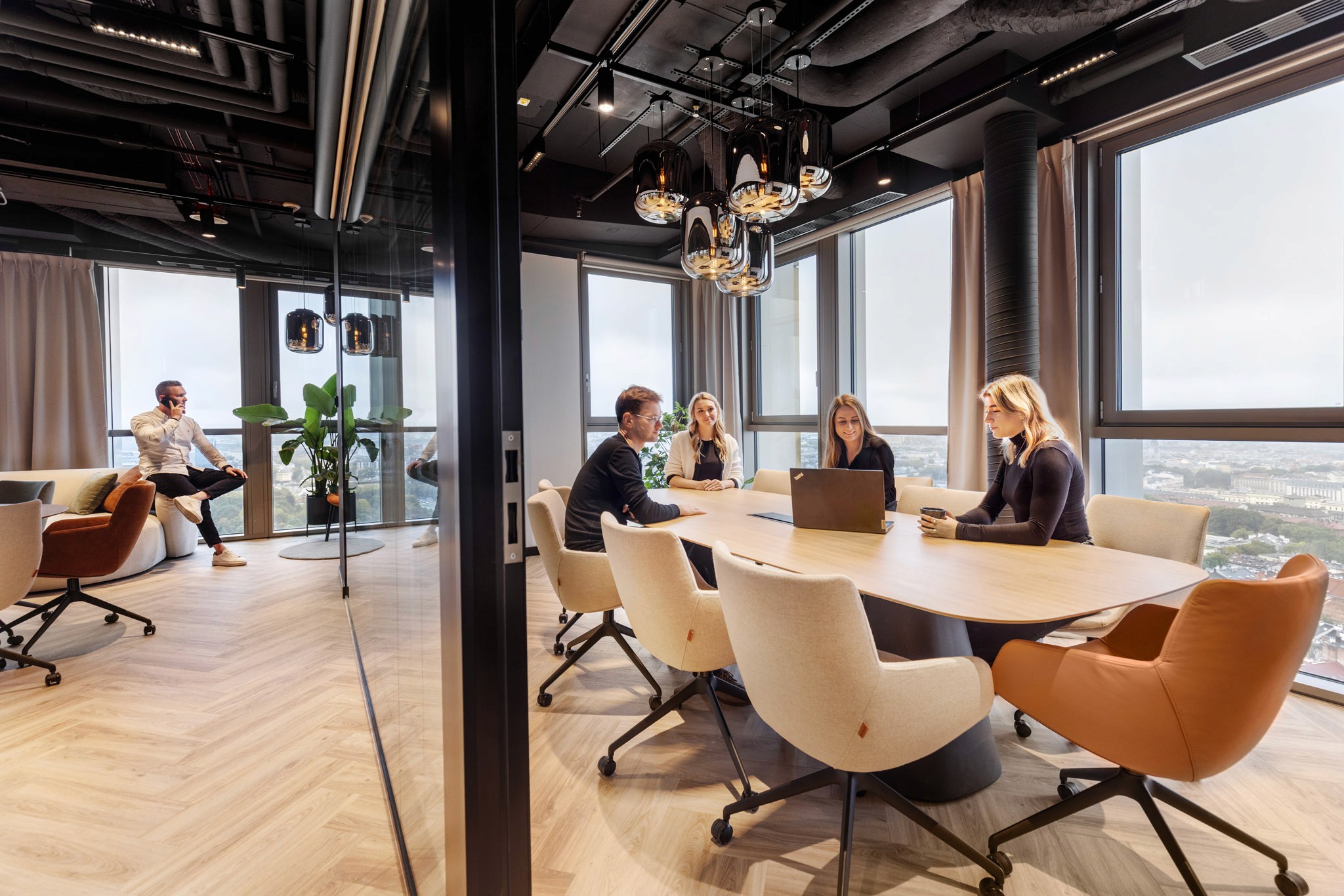
What most commonly works is a layout in which the open area serves as a space for collaboration and quick consultations, while private offices (or enclosed rooms) are reserved for teams that need privacy and focused work. On top of that, you need one more element: "conversation zones" so that calls do not overwhelm the entire space. In practice, it is this mixed model that delivers the best compromise between cost, comfort, and work culture - especially in growing companies that do not want to overhaul their office every few months.
What decision should you make?
Open plan works when it supports collaboration and has rules; private offices work when they protect focus and privacy; and a hybrid layout most often wins when it combines both in sensible proportions. Instead of choosing "on faith," work through the checklist, review a realistic working week, and only then decide whether you need more open space or more enclosed rooms.
If you want to see how these models look in practice at The Shire, take a look: