Coworking - What Is It and When Does It Pay Off?


If you are considering coworking, you probably want to work in a professional environment without having to deal with the entire "office management" layer: contracts, renovations, utility bills, breakdowns, or space organisation. In practice, coworking is a fully equipped workspace where you choose a usage model tailored to your needs - from a flexible desk to a private room - while the day-to-day maintenance and management are handled by the operator. This guide will help you match the type of coworking to your working style, avoid common mistakes, and assess when a coworking zone truly pays off.
Quick Answer:
Coworking works when you want an immediate start and minimal operational overhead on the company's side.
The choice of model depends on privacy, the volume of calls, and whether you need a permanent spot.
Price is driven mainly by location, standard, contract flexibility, access to meeting rooms, and the level of privacy.
The most common mistakes are: "buying too many desks," a lack of team rules, and ignoring acoustics.
It is safest to start with a flexible model and scale up later.
Coworking in practice - what does a working day in a coworking space look like?
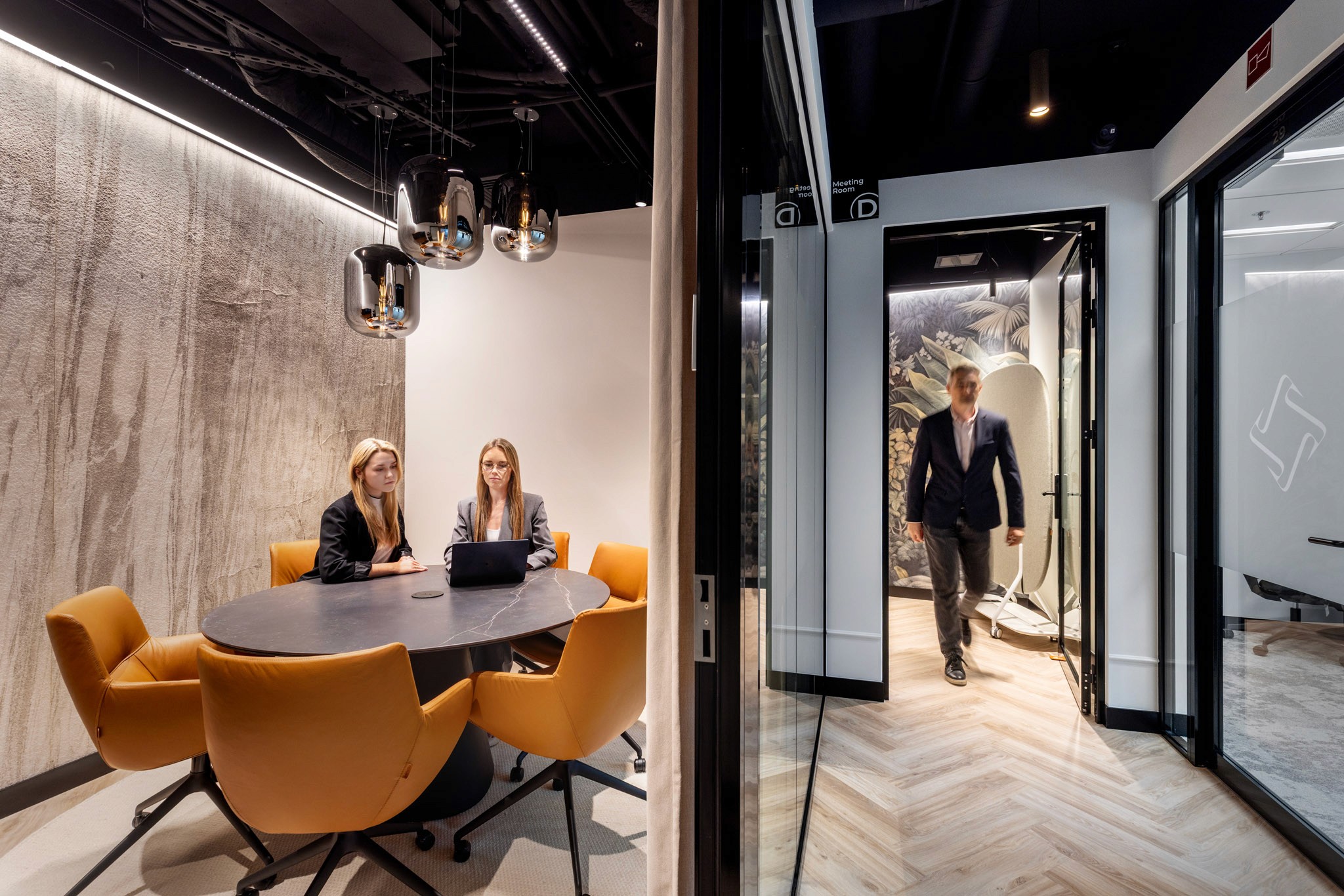
A well-designed coworking space functions as a ready-made back office: you arrive and work without having to set up an "office" from scratch. In the morning, you pick a spot (or sit at your assigned desk if you have a dedicated one) and get started. Throughout the day, you switch between modes: focused work, quick conversations, a client meeting, a fast video call. The key point is that coworking gives you different zones - and a coworking zone is not a decorative label but a real division of space into quiet work, conversations, and meetings, making it easier to maintain momentum without disturbing others.
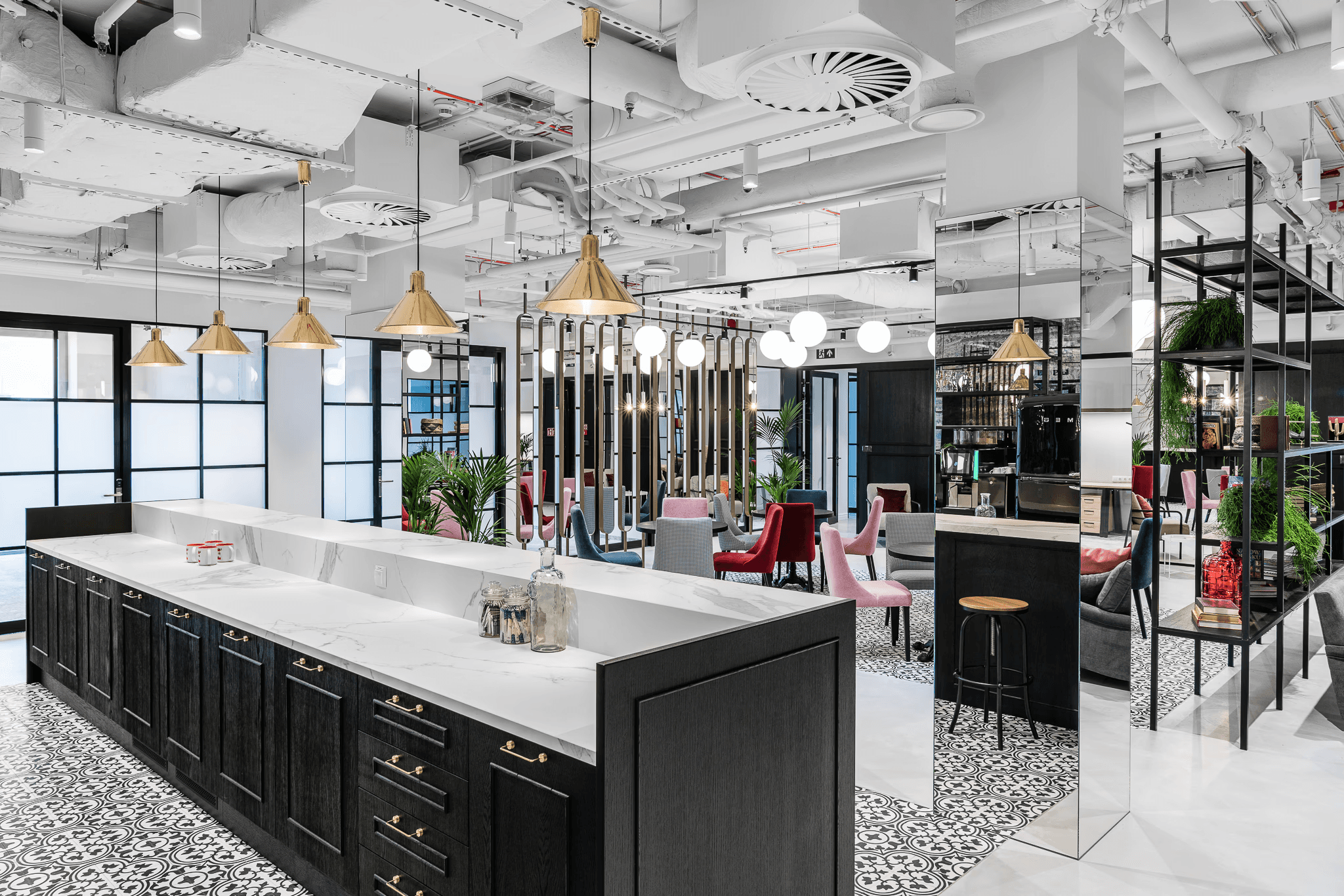
If you want to see this layout in practice (work zones, conversation areas, meeting facilities), take a look at The Shire coworking zone in Warsaw.
Coworking for teams - how do companies "set it up" so that it works?
For companies, coworking is most cost-effective when it is simple to use and does not generate chaos. Typically, it works like this: HR or a team leader establishes who comes in on which days (to avoid "everyone on Wednesday"), and the team has clear rules about where phone calls happen and where meetings take place. Without these, even the best coworking space can turn into a problem: some people search for a free spot, others have nowhere to make a call, and managers see a decline in work quality. The good news is that a few simple rules and a one-week trial are usually enough to get everything in order.
What are the types of coworking?
Types of coworking differ primarily in the "permanence" of the spot and the level of privacy. This matters because many people choose an option that is too flexible (and then become frustrated by the variability) or too rigid (and overpay for unused workstations).
Type | How It Works | Best For | Key Benefit | Watch Out For |
|---|---|---|---|---|
Sit wherever a spot is free | Hybrid workers, soloists, rotating schedules | Maximum flexibility | Less predictability and "no spot of your own" | |
Dedicated desk | You have an assigned, permanent desk | Permanent roles, small teams, work with accessories | Comfort and a "home base" routine | Less flexibility when headcount changes |
A separate, private office within the coworking space | Teams, roles requiring confidentiality, heavy call load | Privacy without managing an office | Match the number of seats and meeting-room needs carefully |
Which option to choose depending on the situation?
If you work 1–2 days a week in the office and simply want to drop in, work, and leave - a hot desk usually wins.
If your work requires a stable setup (equipment, documents, routine) or you want to eliminate "finding a spot" entirely - a dedicated desk is typically more comfortable.
If the team has a high volume of sales calls, recruitment conversations, or confidential topics, or you simply need quiet and control - a private office is the most predictable option.
Who does coworking pay off for?
For business owners and individuals who want to operate "without office logistics"
Coworking pays off when you want a fast start and working conditions that support focus rather than consume it. It is a good direction if working from home is starting to blur with personal life, if you need regular meetings with clients or candidates, or if you do not want to commit to a long contract because you know your needs may look different in a month or two. In practice, coworking also serves as a "safe transitional stage" during company growth: instead of investing in a full office fit-out, you have a ready-made coworking space, and your budget stays focused on what actually drives the business.
For HR / office managers and teams (on behalf of the company)
For HR, coworking pays off when flexibility and the ability to quickly organise workspaces without a large investment matter. It is a good solution for hybrid working, distributed teams, periods of organisational change, or whenever you want to give people a sensible alternative to home. It is worth remembering, however, that "coworking for a company" requires a minimal rollout: attendance rules, zones (quiet vs conversations), and a room-booking process.
When coworking may not be the best choice
If you need absolute silence for most of the day and any background noise disturbs you, coworking with an open section may be draining - in that case, look for options with greater privacy or a better zone layout. If you have very specific infrastructure requirements (storage, specialist equipment) or need full control over the fit-out and branding of the space, coworking may be more of a transitional stage than a long-term destination.
How much does coworking cost and what drives the price?
In coworking, the biggest pitfall is comparing only the "price per desk," because in practice you pay not just for a spot but also for the standard, flexibility, and access to meeting infrastructure. Cost is driven primarily by location and building class, level of privacy (open space vs dedicated desk vs private room), availability of meeting rooms and call zones, and how easily you can change the number of desks or the usage model over time.
What Is included in the price and what Is typically an "add-on"
Usually, the package covers core work infrastructure and space management, while the differentiators are: quality and availability of meeting rooms, quiet-work options, flexibility (shorter commitments, easy scaling), and whether the space is designed for different work modes or merely "looks nice." If you want to start as safely as possible and see how coworking works for you or your team, a sensible starting point is our flexible membership at The Shire - it lets you test real needs before committing to a more permanent model.
Common cost mistakes (and how to avoid them)
The most common overspend happens when you buy more desks "just in case" instead of measuring actual occupancy over 2–4 weeks. The second mistake is underestimating calls and meetings: if the team has a heavy call load, the absence of a plan for conversation zones and room bookings quickly hits productivity. The third mistake is a lack of simple team rules - at that point, coworking starts costing "hidden" time because people spend more effort organising than working. Best practice is straightforward: pilot, measure, adjust.
How to test coworking without risk (a short plan)
First, choose a small test group (e.g. 2–5 people), establish attendance days, and after two weeks gather feedback: where is quiet missing, where are conversation spaces lacking, how does meeting logistics work? Only then choose the model. This way, you match the solution to the work - not to the assumptions.
Pros and cons of coworking
Pros
The biggest advantage of coworking is very down-to-earth: you reclaim time and peace of mind because you are not managing an office. Instead of dealing with utility contracts, servicing, breakdowns, and space organisation, you have a ready-made work environment that supports the rhythm of the day. For a business owner, this often means a faster start and fewer operational decisions; for HR, it means easier workspace provisioning in a hybrid model. Additionally, a well-executed coworking space provides a natural division into zones: where quiet is needed, it is quieter; where conversations happen, the conditions are right; and meetings can be held in a more professional setting than "on headphones at a desk."
Cons (and how to work around them)
Coworking also has limitations, and it is worth naming them directly. First: noise and distractions in the open area - this can be resolved by selecting the right zone, using conversation rooms, and choosing a model (dedicated desk or a more private option). Second: less privacy compared to your own office - if you handle sensitive conversations or documents, the key is matching the space to the specifics of your work, not opting for the "cheapest option." Third: in hot-desking, the workspace can vary day to day, which does not suit everyone - if you find yourself losing time to "settling in" every morning, switching to a dedicated desk can radically improve comfort.
Decision Checklist: Is coworking right for You or Your Company?
Do you want to start working in an office quickly, without fit-out and service contracts?
Could the number of people and office days change over time?
Does the team have a high volume of calls and need meeting/call spaces?
Is a professional setting important for clients or candidates?
Does working from home reduce focus or blur into personal life?
Do you need a sensible division into zones (quiet, conversations, meetings)?
Are you able to implement simple usage rules (especially for a company)?
Coworking at The Shire
Coworking pays off most when you are buying not "a desk" but an efficient working system: a ready-made space, sensible zones, meeting capability, and flexibility tailored to your situation. If you want to see how coworking looks in practice and choose a location that suits you or your team, explore the available locations across the 3 cities where we offer coworking zones:
If you want to start as simply as possible and test the model without "overshooting" your assumptions, a good first step may be our flexible membership.