Serviced Office vs Apartment for Office HQ



Serviced Office vs. Apartment Rental for Office Headquarters — What Really Pays Off?
The workplace market is evolving faster than ever. With hybrid work becoming the norm, more and more companies are facing a key decision: serviced office or renting an apartment as a registered office headquarters?
While an apartment may seem like a cheaper and simpler option at first — especially for new businesses — in reality, serviced and flexible offices increasingly prove to be a more functional, cost-effective, and professional solution.
Why Turning an Apartment into an Office Means Compromises and Hidden Costs
Adapting a residential space into an office comes with limitations that quickly become noticeable — especially as the company grows.
The most common challenges include:
no clear separation between work zones and meeting areas,
lack of space for professional client meetings,
the need to organize internet, cleaning, and mail handling on your own,
additional purchases for furniture and office infrastructure,
difficulty maintaining a boundary between private and business life.
Even if apartment rent looks lower, the real operating cost increases every month due to added operational expenses.
Serviced Office — A Plug & Work Space That Starts Working from Day One
Serviced offices operate in a true "plug & work" model — meaning no need for self-managed fit-out or service coordination.
What does one monthly fee include in a serviced office?
high-speed internet and utilities,
professional cleaning service,
24/7 building security,
administrative and mail support,
reception services and a prestigious company address.
Most importantly, companies can choose flexible agreements such as: office for a day, office for a month, or flex office scaling — without changing the headquarters address.
Design and Infrastructure That Build Brand Credibility
An office is no longer just a place to work — it’s also a brand asset and business statement.
Client meetings held in adapted apartments rarely meet the standards expected by business partners.
Serviced offices offer companies:
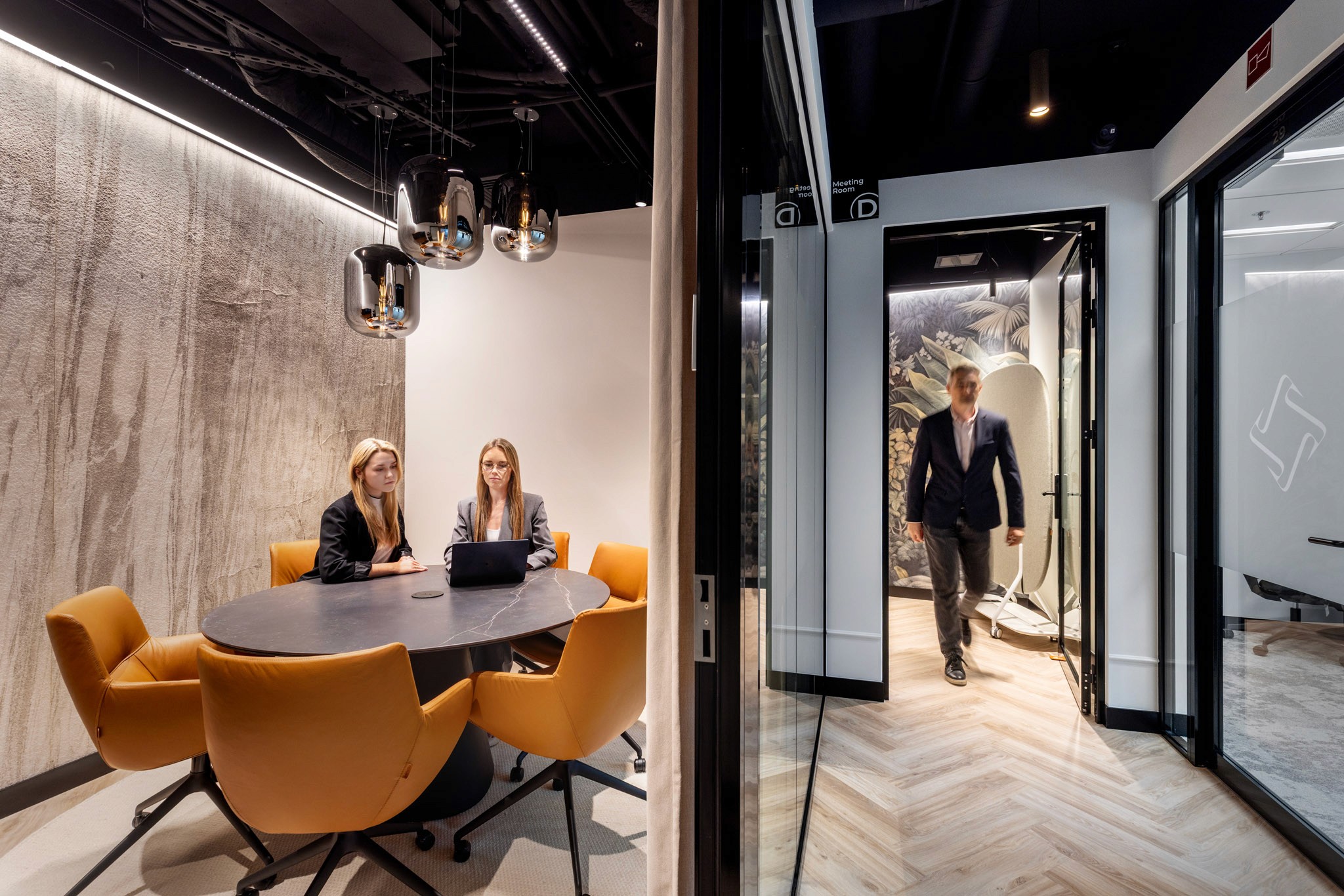
representative reception areas,
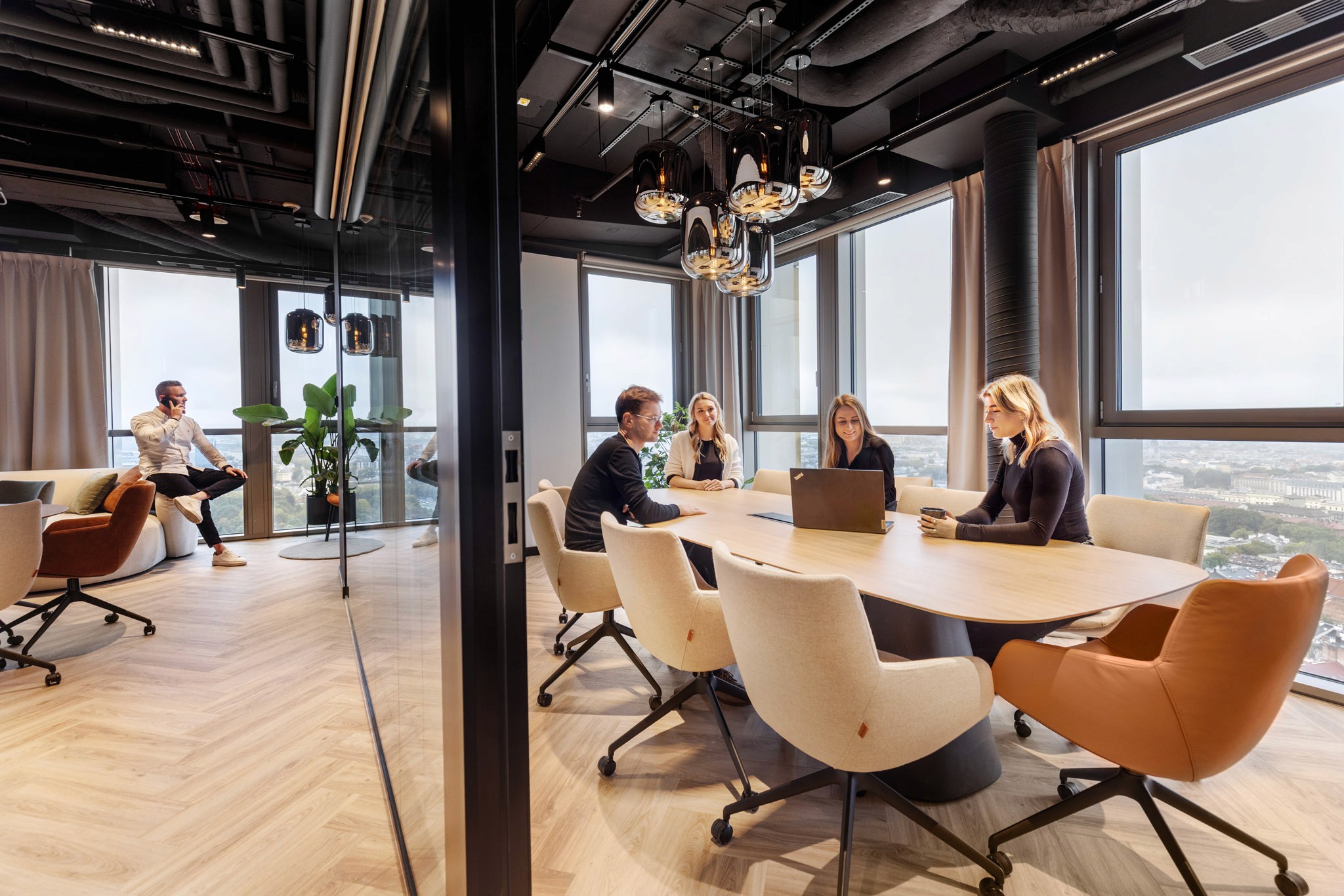
professional fit-out and premium interior design,
a business address that strengthens trust and recognition.
These elements are extremely difficult or impossible to recreate in an apartment without heavy investment.
Shared Areas That Cannot Be Replaced
Work comfort goes far beyond a desk — it includes a full environment that supports the team’s daily rhythm.
In coworking and serviced offices, employees benefit from:
stocked kitchens with unlimited hot drinks,
phone booths for online calls,
chillout and regeneration zones,
comfortable spaces that enable natural conversations and collaboration.
All of this increases team wellbeing, comfort, and efficiency — without extra operational costs.
Community and Networking as a Real Business Advantage
An apartment cannot provide what is one of coworking’s greatest strengths: community, relationships, and business inspiration.
In coworking spaces:
companies meet potential clients and partners on-site,
members exchange contacts and knowledge daily,
new employees go through onboarding faster in a dynamic professional ecosystem,
networking happens naturally — without pressure or scripted scenarios.
These interactions often generate real, unplanned business opportunities.
Conclusion: Apartment as Office or Serviced Office?
Criteria | Apartment Adapted into Office | Serviced / Coworking Office |
|---|---|---|
Costs | Lower rent, rising hidden costs | One fee, full predictability |
Equipment | Self-purchased | Included in the fee |
Image | Often compromised | Premium, professional |
Flexibility | Usually long contracts | Day, month, flex |
Networking | No community | Real business value |
Renting an apartment as an office works only temporarily.
For companies that want to grow responsibly, work comfortably, and scale without risk — serviced offices, coworking, and flex spaces are the natural choice.